Oct 19, 8:02 PM
France Burns While Macron Wanders the Gulf
Faced with soaring public debt and collapsing public order, the French presidency has run out of answers and authority.
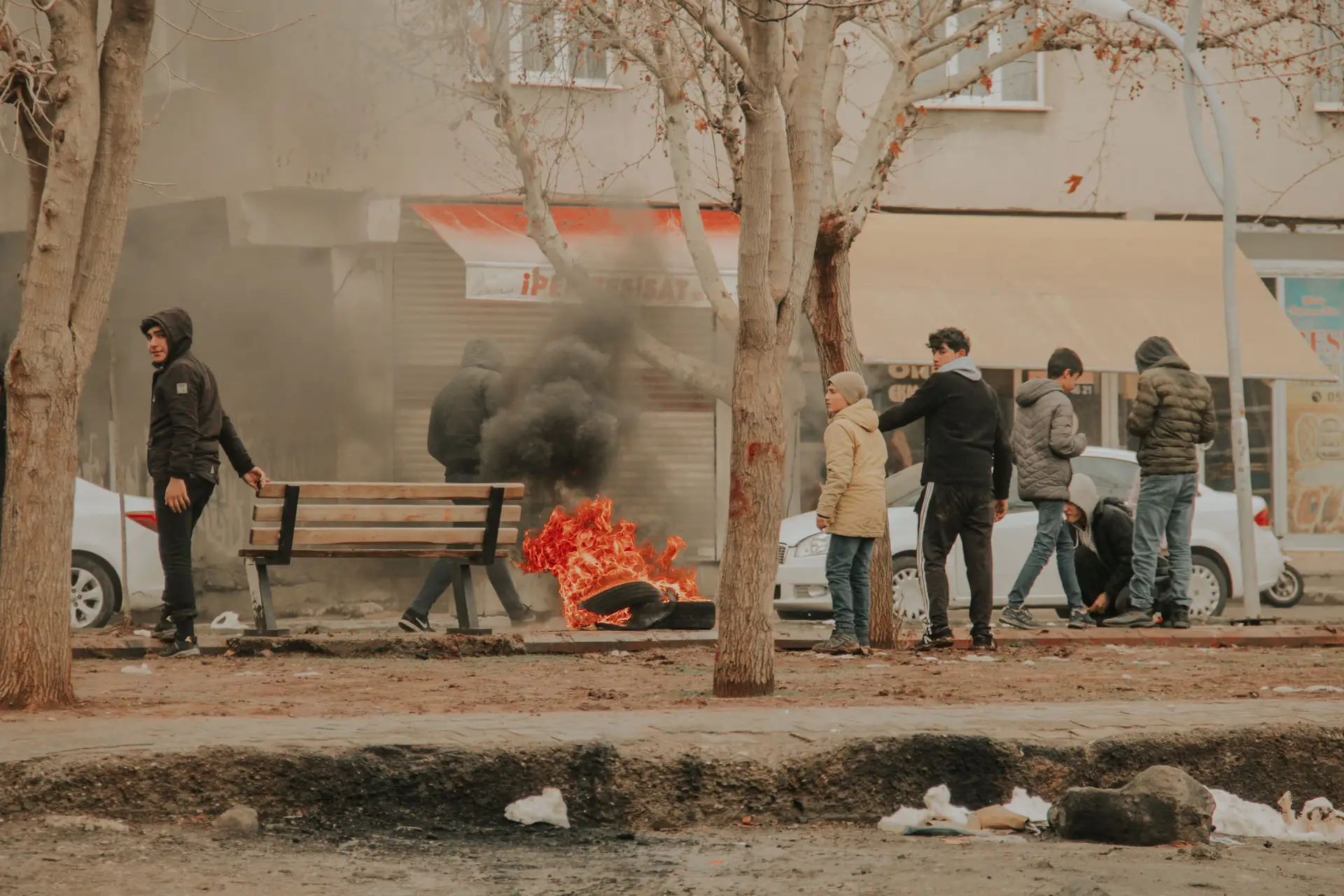
When public order collapses, French presidents traditionally retreat to high-minded rhetoric. Emmanuel Macron went one step further: he retreated to the Gulf. As town halls in Limoges and Marseille suffered arson and vandalism, the Élysée justified the president’s absence by citing energy security. Yet back home, eighty-two percent of voters view his performance unfavorably, watching a state that appears entirely incapable of maintaining elementary security.
The violent street actions, sparked by student demonstrations over living standards, quickly degenerated into widespread looting across the country. The official numbers—855 arrests and 557 individuals held in custody, nearly four-fifths of them adults—tell only part of the story. What they reveal is an administration caught completely unprepared.
Interior Minister Laurent Nuñez offered his resignation after admitting to a total lack of anticipation, while Justice Minister Gérald Darmanin conceded that state intelligence had failed. Macron rejected the resignation, preferring to retain a cabinet whose confession of impotence is now a matter of public record. Addressing the nation, Macron condemned the violence, asserting that nothing justifies it, nothing explains it, nothing excuses it while promising new operational procedures.
This security breakdown is not an isolated incident; it is the symptom of a broader structural decline. France is burdened with record public debt, high inflation, and soaring energy costs, left politically paralyzed ever since Macron’s reckless decision to dissolve the National Assembly in June 2024. Having stripped his own government of a functional majority, he has left successive cabinets exposed to constant no-confidence threats, incapable of delivering necessary fiscal or economic discipline.
The political vultures are already circling ahead of the 2027 presidential election. Former prime ministers Édouard Philippe and Gabriel Attal have taken steps to distance themselves from their former chief, with Attal calling for facial recognition technology and army intervention. Conservative contender Bruno Retailleau pronounced the president out of his depth, while left-wing MEP Raphaël Glucksmann spoke of a disintegrating Republic.
Meanwhile, the right is capitalizing on the chaos. Marine Le Pen and National Rally president Jordan Bardella are pitching themselves as the only viable alternative. Le Pen attributed the unrest to an alliance of suburban criminals and professional rioters, while Bardella observed that France is caught between powerlessness and violence. With the Yellow Vests preparing a second wave of actions, the French model of heavy taxation and weak governance is running out of road.
Written by Christiane Hofreiter christiane.hofreiter@alpineweekly.com