Jul 23, 6:01 AM
Chillon’s polished walls hide a long record of cruelty
The lake castle near Montreux draws the crowds, but its history is less about romance than about prison cells, executions and a massacre that should not be airbrushed away.
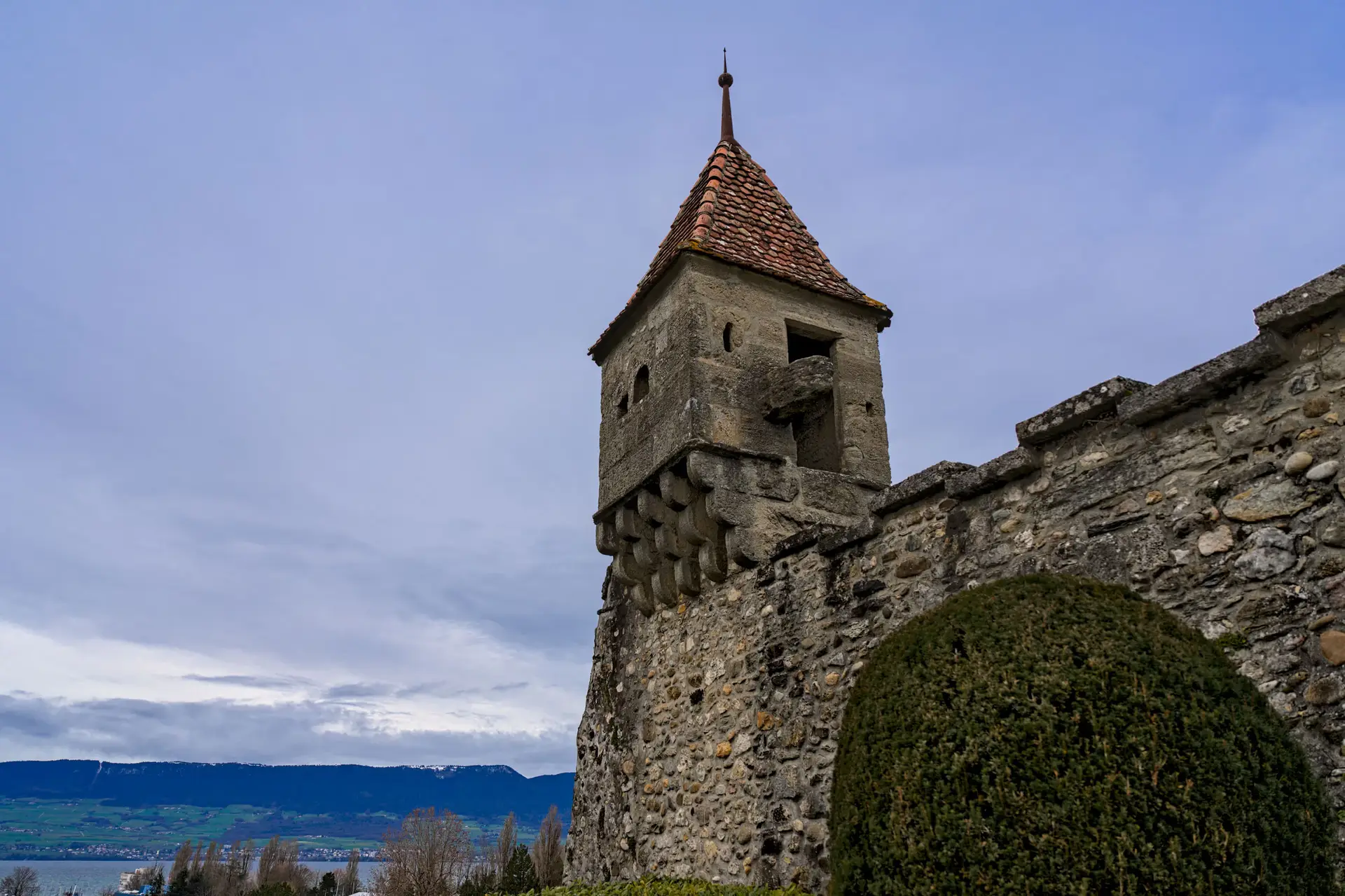
Château Chillon is one of those Swiss landmarks that sells itself effortlessly: lake, stone, arches, history, the whole carefully managed package. About 420,000 visitors buy a ticket each year, and most come for the views and the grandeur. The trouble is that the castle was never just a scenic stop. For centuries, it also functioned as a prison, a place of torture and, when authority needed to make a point, a site of execution.
The most direct reminder lies below ground. In the cellar, just above the waterline of Lake Geneva, food and weapons were once stored, but prisoners were held there as well. A gallows from the 19th century still sits in that space, a rather blunt souvenir from a less decorative age. The best-known captive was François Bonivard, the Genevan freedom fighter who was chained to a column from 1530 until the Bernese captured the castle in 1536 and freed him.
Bonivard’s fame, naturally, owes as much to literature as to history. Lord George Byron learned of his fate after settling in Cologny near Geneva in 1816, and later turned him into the hero of a celebrated poem. Byron also scratched his name into the column said to have held Bonivard. Tourism loves a myth, especially when it can be paired with a view; the suffering that produced it tends to be tidied away.
Higher up in the castle, the story becomes no less uncomfortable. The canton of Vaud used Chillon as a prison until the end of the 19th century. Men were held in the Aula Nova, while women were placed one floor above, in the Wappensaal, a room that had once served as a reception hall. Among the last women imprisoned there was Charlotte Stirling, a Scot who came to Switzerland in 1888 at the age of 23 to work for the Salvation Army.
Her case was not a grand political trial, which only makes it more revealing. In Orbe, she was accused of trying to win children over to another faith through religious songs and prayers. The charge was proselytism, and a court sentenced her to 100 days in prison. She was sent to Chillon, and the affair sparked a political row as well as diplomatic tension between Switzerland and Great Britain. Small country, tidy reputation, awkward consequences.
The castle courtyards, now used for events, theatre and concerts, carry yet another layer of violence. In the Middle Ages, women accused of witchcraft were held there before being burned on stakes in Vevey or La Tour-de-Peilz. Jews were also interned at Chillon after pogroms. One documented massacre is especially stark: during a plague epidemic, Jews were accused in Villeneuve of poisoning wells. Jewish men, women and children were taken from the castle, beaten and burned on several pyres by the lakeshore.
The first written sources mentioning Chillon date from 1150. At the time, it belonged to the Savoyards, who used it to control the passage from northern to southern Europe. From 1536 to 1798 it was in Bernese hands, and since then it has belonged to the canton of Vaud. The castle has been enlarged, rebuilt and restored many times. The result is a polished monument with an unpolished past — and, for once, the past deserves more attention than the souvenir shop.
Written by Martina Kirchner martina.kirchner@alpineweekly.com