Oct 27, 3:02 PM
Hardware in Warsaw, Committees in Brussels
Poland and the UK tighten defense ties and affirm reliance on Washington, while the EU forms another diplomatic team.
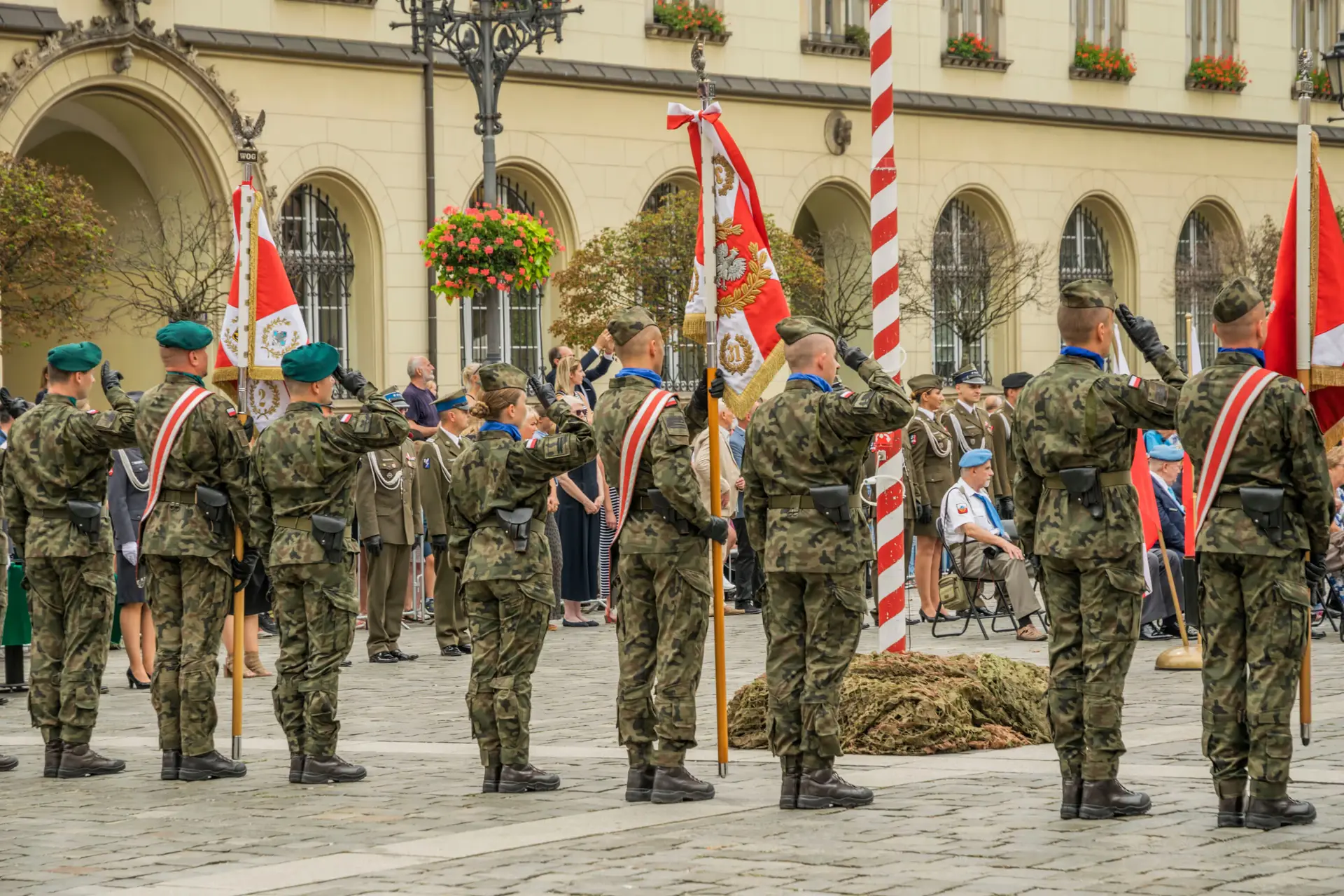
When it comes to military ambition, Warsaw rarely misses an opportunity to project strength. The latest demonstration took place on Tuesday, as Polish Deputy Prime Minister and Defence Minister Władysław Kosiniak-Kamysz met with British Defence Secretary Wes Streeting to formalize a three-year defense plan. Born from a bilateral treaty adopted a few months ago, the agreement maps out a joint operational future centered on modern hardware, artificial intelligence, and drone integration.
The specifics of the deal leave little doubt about Poland's strategic trajectory. Joint initiatives will focus on anti-drone capabilities, modern deterrence measures, and standard multi-domain exercises. Key industrial projects are already moving ahead. As Kosiniak-Kamysz stated at the press conference: "The Miecznik programme, whose successive stages are progressing according to plan, the construction of an integrated air defence system, including the Narew, Pilica and Pilica+ programmes, and the project to build an independent production line for 155 mm ammunition: these are only part of our joint initiatives."
Beyond technical integration, the meeting served to reaffirm a shared stance on Eastern European security and support for Ukraine. Streeting took a sharp tone regarding hybrid operations against Poland, explicitly describing daily force mobilizations against drone incursions as state-sponsored terrorism. Both ministers expressed complete unity on supporting Ukraine, while emphasizing that European security cannot be detached from American power.
Indeed, for all the talk of building up continental defense, neither Warsaw nor London harbors illusions about military autonomy without Washington. Kosiniak-Kamysz made it clear that while both nations favor strengthening Europe's internal capabilities, complete independence from the United States is out of the question, reminding observers that the transatlantic alliance remains the ultimate anchor of European stability.
This demonstration of military resolve comes as diplomatic activity picks up elsewhere. The United States administration and European figures are preparing for a fourth round of negotiations aimed at resolving the conflict in Ukraine, following talks held in Geneva in February. According to a Kremlin spokesman, the next round is likely to take place in Abu Dhabi around mid-November. Western governments involved acknowledge that critical issues regarding territory and security remain unresolved.
Inevitably, Brussels is responding in its traditional fashion. The European Commission and the European Council are currently working to set up a joint team to represent the Union's position. Whether an administrative committee in Belgium can shape peace negotiations brokered by Washington and tested on Eastern battlefields remains an open question.
Written by Andreas Hofer andreas.hofer@alpineweekly.com