Oct 27, 3:02 PM
Capital, Not Collections: Why Private Fossil Sales Drive Scientific Discovery
Academic outcry over a multi-million-dollar Nanotyrannus auction ignores the private capital that unearths prehistory in the first place.
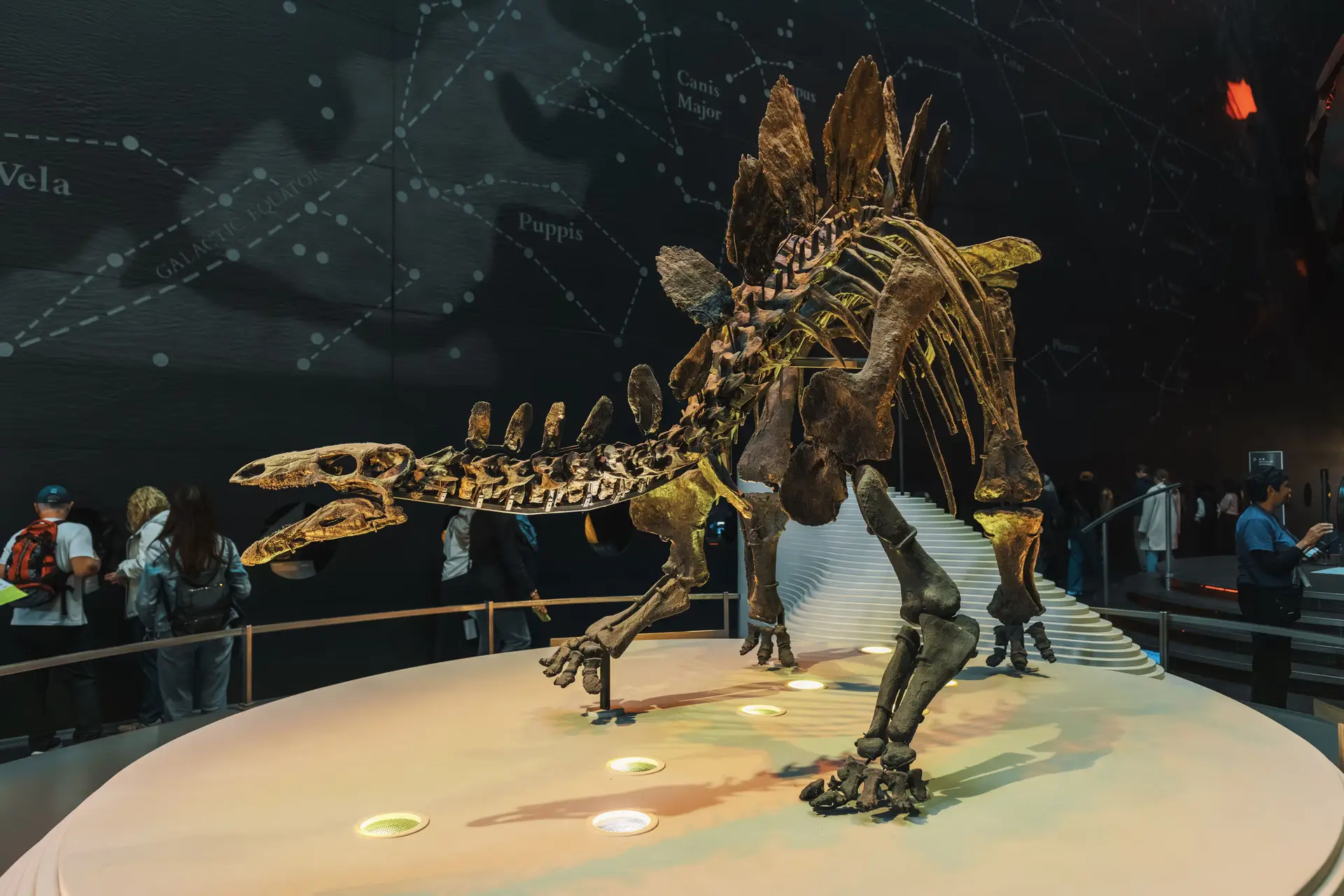
Sotheby’s latest high-profile auction in New York features a roughly ten-foot-tall skeleton known as Jodi, expected to command between $6 million and $9 million. The fossil, containing 191 bone elements and a virtually complete skull, belongs to Nanotyrannus—a sleek, blade-toothed carnivore that roamed alongside Tyrannosaurus rex roughly 67 million years ago. Coming just months after the auction house hammered down another specimen for $50.1 million in July, the sale demonstrates that fine art has a formidable rival in prehistory.
Predictably, the academic establishment is wringing its hands. University palaeontologists have lined up to decry the sale, lamenting that public institutions cannot match the financial firepower of wealthy buyers. Steve Brusatte, a palaeontologist at the University of Edinburgh, described the prospect of the fossil disappearing into private vaults as harrowing, comparing the situation to a world where private owners hide away masterpieces like the Mona Lisa from public view.
This panic overlooks the basic economic engine that brought the specimen into the light in the first place. The skeleton was not uncovered by a taxpayer-funded academic expedition, but spotted on a Montana ranch by landowner Jodi Pierson and excavated by Clayton Phipps, a commercial palaeontologist. Phipps spent significant time and capital unearthing the fossil in the Hall Creek Formation—the exact region where he previously discovered the famed Dueling Dinosaurs specimen that enabled researchers Lindsay Zanno and James Napoli to establish Nanotyrannus as a distinct genus rather than a juvenile T. rex.
Before its true identity was classified, the specimen was even displayed as a young T. rex at London's Frieze Masters art fair in October 2023. Without the profit motive and private interest, many of these extraordinary remains would simply decay in North American dirt, entirely ignored by underfunded university departments.
Megan Jenkins of the University of Portsmouth offered a rare voice of economic sense among her academic peers, acknowledging the immense labor, time, and money required to extract such specimens. She noted that commercial excavators should not be begrudged their return, adding that many private acquisitions wind up in public museums eventually. Private enterprise assumes the financial risk of discovery and extraction; scientific progress and the public inevitably benefit down the line.
Written by Christiane Hofreiter christiane.hofreiter@alpineweekly.com