Oct 21, 6:01 PM
Blame the Bots: Macron’s Foreign Scapegoats for Domestic Decay
When civil order breaks down in French cities, Élysée strategy dictates scolding foreign politicians and digital algorithms.
When street violence sweeps through French cities, the script from the Élysée Palace is as predictable as it is defensive. Speaking from Doha, President Emmanuel Macron found a convenient target for France’s latest episode of urban breakdown: foreign politicians and digital algorithms. Rather than reflecting on why his own security apparatus briefly admitted to losing control during recent violent riots, the French leader preferred to lecture foreign counterparts against exploiting his domestic troubles for their own electoral gain.
The targets of Macron’s ire were clear enough. With elections looming in their respective countries, Israeli Prime Minister Benjamin Netanyahu and US President Donald Trump promptly seized on the unrest. Netanyahu declared that France was suffering from an invasion of extremist Islam, framing the turmoil as a fulfillment of warnings he had delivered following the Hamas attacks in October 2023. Trump was equally blunt, attributing the chaos in France and Italy to mass immigration and advising Paris to close its borders before it was too late.
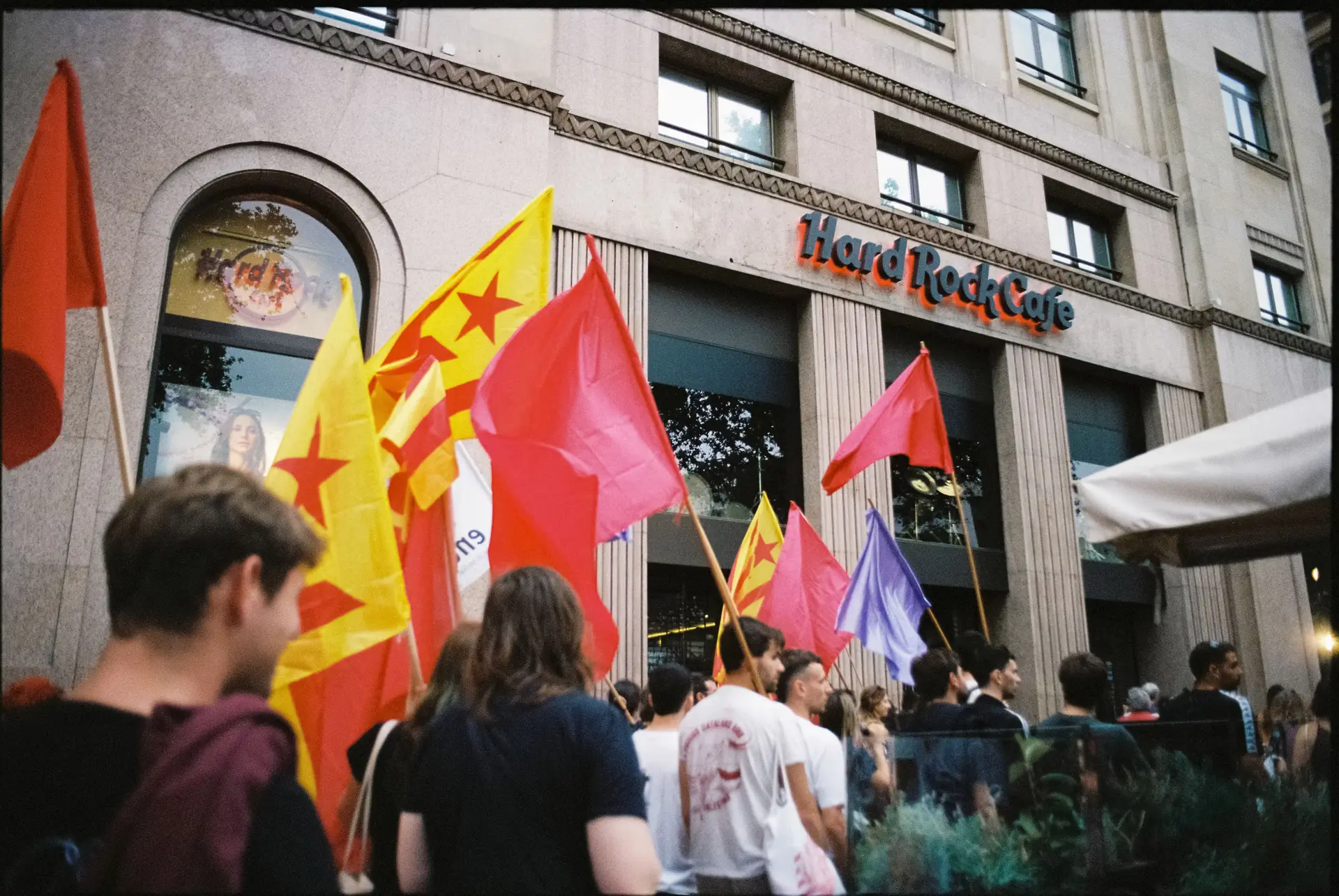
Macron dismissed such commentary as unacceptable and foolish, insisting there was no evidence of direct foreign interference triggering the riots. Yet the facts on the ground reflect a deeper crisis of domestic authority. What began as high school student protests over education conditions rapidly escalated into running battles between masked rioters and overwhelmed police in Paris, Lyon, Marseille, and Lille. Over 800 individuals have been brought before courts, with nearly 150 jailed, while property was destroyed and commercial stores looted. Macron himself promised an uncompromising stance against ultra-left fringe groups, whom he blamed for driving much of the trouble.
Where Macron does see external hands at work is in the post-riot narrative warfare. According to security reports, EU regulators and academic researchers have identified coordinated campaigns amplifying violent footage on social media. Network operations linked to Russian disinformation actors, such as Matryoshka and Storm-1516, circulated synthetic news videos imitating major French outlets like Le Monde and Euronews. In one instance, a fake AI-generated image depicting an elderly couple robbed in Paris amassed over six million views on X after being published by the website Infos-Israel.News, despite originating from a simple ChatGPT prompt without verified factual backing. Suspicions of online amplification have also pointed toward Iranian and Algerian networks.
Foreign manipulation and synthetic media are real enough, but they flourish primarily when the underlying domestic reality is already fractured. For a French state struggling with deep-seated social friction and fragile public order, pointing fingers at foreign political opportunists offers a comfortable distraction. Scolding foreign campaign rhetoric and online algorithms may soothe official pride in Paris, but it leaves a fundamental question unanswered: why does the French state lose control of its own streets so effortlessly in the first place?
Written by Thorben Thiede thorben.thiede@alpineweekly.com