Oct 21, 4:02 PM
Manufactured Intimacy at the Guggenheim
Steve McQueen stages a phantom duet between David Bowie and Nina Simone in Bilbao.
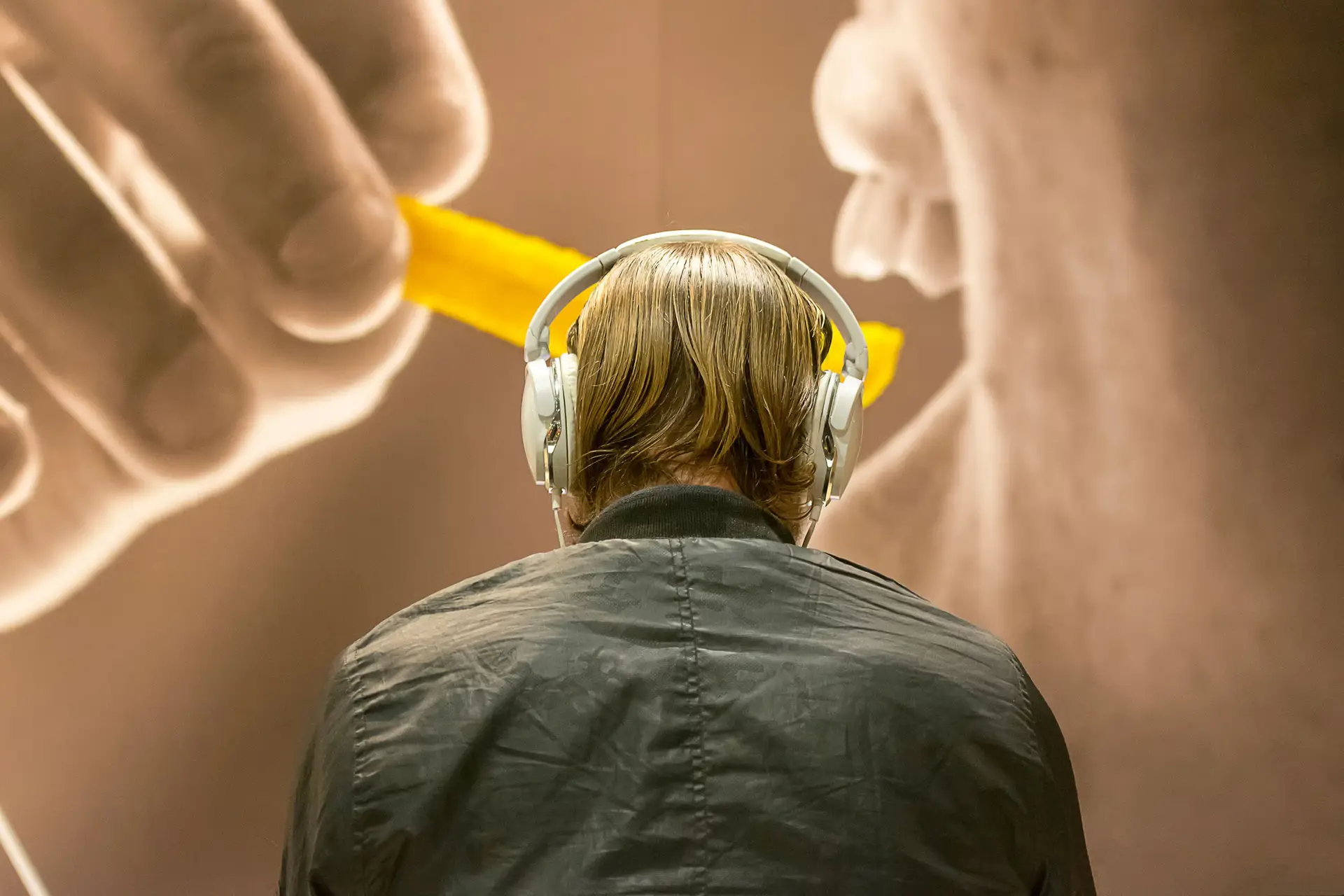
High culture has long maintained a soft spot for manufactured nostalgia, but the Guggenheim Bilbao has taken the practice to its logical, soundproofed conclusion. Inside a dimly lit room lined with plush carpet, visitors are invited to sit in the dark and eavesdrop on a musical conversation that never actually occurred.
The installation, titled "66–76–26" and created by artist and filmmaker Steve McQueen, pairs two separate recordings of the exact same song: Nina Simone’s 1966 acapella rendition of "Wild is the Wind" and David Bowie’s 1976 tribute. From opposite corners of the dark space, the two deceased icons deliver matching lyrics in A major, bound together by little more than high-end acoustics and McQueen's conviction that their juxtaposition creates fire.
The history behind the tracks is genuine enough. Originally written in 1957 by Dmitri Tiomkin and Ned Washington for a forgotten film and first performed by Johnny Mathis, the song was radically transformed when Simone reinvented it. Bowie, who met Simone in 1975 after her daughter persuaded her to attend his concert, recorded his own dramatic iteration the following year as an explicit homage. McQueen took these distinct recorded moments—separated by a decade of social movement and political scandal—and wove them into a single virtual performance.
According to exhibition curator Lekha Hileman, the work is designed to be purely experiential, encouraging audiences to slow down and absorb the mood rather than dissect the art history. McQueen himself frames the installation around the pervasive turbulence of both the mid-twentieth century and the present, offering romantic yearning as a necessary anchor in uncertain times. The numerical title charts this temporal arc, linking Simone's 1966 recording, Bowie's 1976 cover, and the 2026 presentation in Spain.
The project, six years in development, opened on McQueen's 57th birthday and runs alongside a broader retrospective of his cinematic work at the museum. Before winning an Academy Award for 12 Years a Slave and receiving the Caméra d’Or at Cannes for Hunger, McQueen established his credentials as a contemporary artist representing Great Britain at the Venice Biennale.
Whether an engineered duet between two dead pop stars in a dark room provides genuine solace from current anxieties remains open to debate. The exhibition runs in Bilbao until February 13, 2027, offering museumgoers plenty of time to weigh acoustic illusion against reality.
Written by Andreas Hofer andreas.hofer@alpineweekly.com