Oct 21, 10:01 AM
The State Monopoly on Rights Enforcement
Restricting private lawsuits hands executive bureaucracies total control over which laws actually matter.
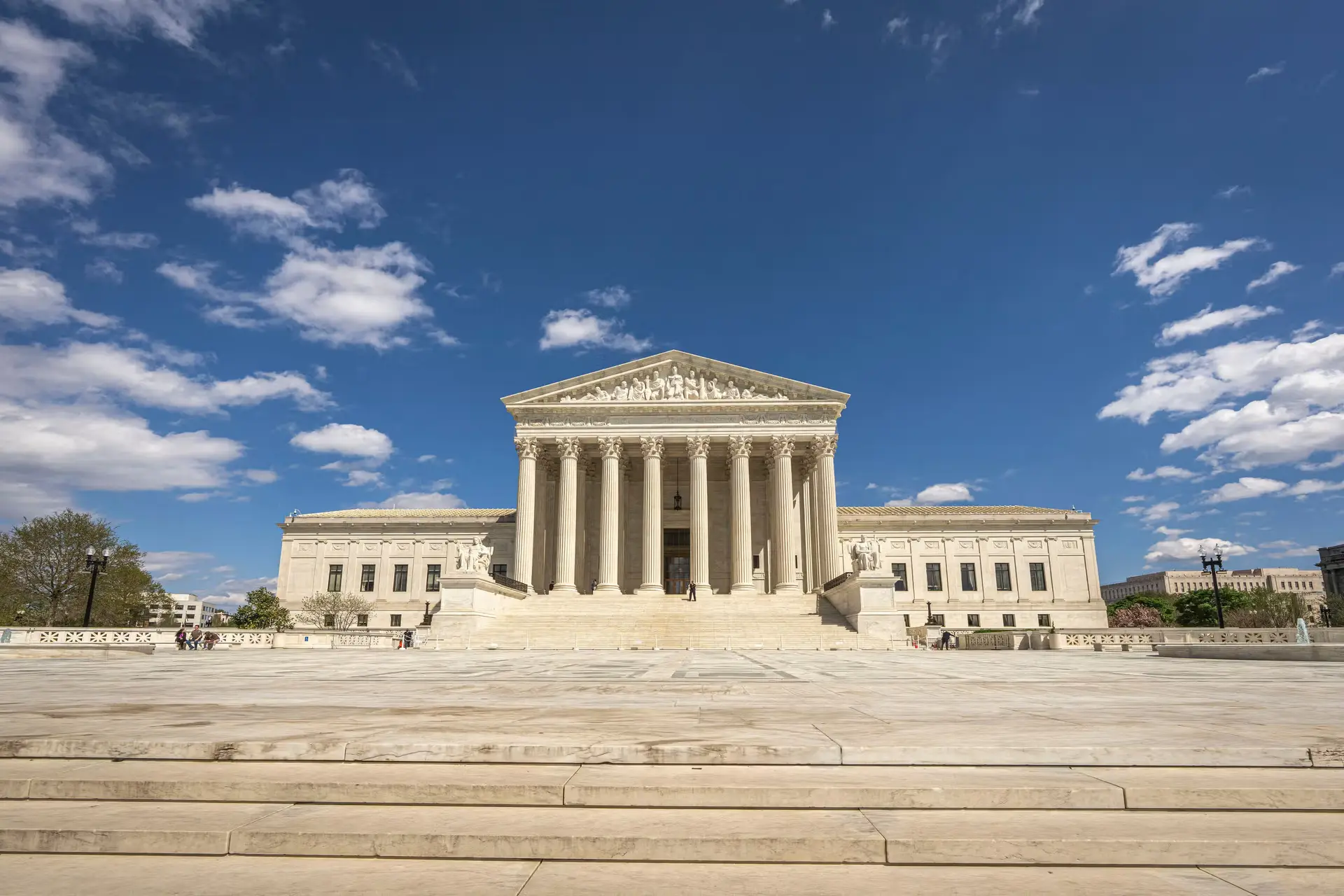
On November 30, the United States Supreme Court will consider whether university employees can bring private sex discrimination lawsuits under Title IX. The Trump administration has urged the justices to rule against the practice, arguing that Congress never explicitly authorized private citizens to take such claims to court.
What sounds like an esoteric debate over civil procedure is, in truth, a quiet battle over who controls the law. A private right of action allows citizens and advocacy groups to seek judicial remedy when statutes are breached. Without it, statutory compliance depends entirely on whether government regulators choose to act.
For decades, conservative legal thinkers and business interests like the US Chamber of Commerce Institute for Legal Reform have argued that implied private rights of action encourage frivolous litigation. That critique is not without merit; unbridled litigation places heavy costs on institutions. Justice Antonin Scalia articulated this restraint in the 2001 Alexander v Sandoval decision, restricting private suits under Title VI. Since then, conservative jurists have pushed the principle much further. In a 2021 concurrence, Justices Neil Gorsuch and Clarence Thomas questioned whether key provisions of the Voting Rights Act of 1965 furnish any private right to sue at all.
That logic is now working its way through federal courts. In June, the Supreme Court declined to hear a challenge to an Eighth Circuit ruling that prevented the advocacy group Arkansas United from enforcing voting assistance provisions under Section 208 of the Voting Rights Act. Similar arguments have been advanced by Republican-led state governments in Mississippi and North Dakota, asserting that only the Department of Justice can initiate voting rights litigation.
Outsourcing enforcement exclusively to state authorities transforms the fundamental nature of legal protections. As law professor George Rutherglen observed, converting private rights into public enforcement shifts power from individual litigants to political administrators. Bureaucracies have finite resources and fickle priorities. In 2024, of 216 active voting rights cases tracked by Democracy Docket, the Department of Justice was involved in just five.
Executive agencies are also inherently political. The current Justice Department has reoriented its Civil Rights Division toward cases alleging reverse discrimination against white plaintiffs, while actively suppressing private suits that conflict with administration policy. In Mississippi, the Department even petitioned the Fifth Circuit to block a private suit brought under the Clean Air Act against an xAI power facility supporting its Memphis data centre, citing national security and AI supremacy.
When the executive branch claims both the sole authority to enforce statutes and the power to quash private claims that conflict with its political goals, legal protections lose their bite. The question for the Supreme Court is not merely how to interpret statutory text, but whether individual rights can survive when the state holds a total monopoly on their enforcement.
Written by Thorben Thiede thorben.thiede@alpineweekly.com