
Oct 22, 2:01 PM
Recycled Winter on the Glacier
How preserved snow and commercial logic keep the World Cup opener running in Sölden.
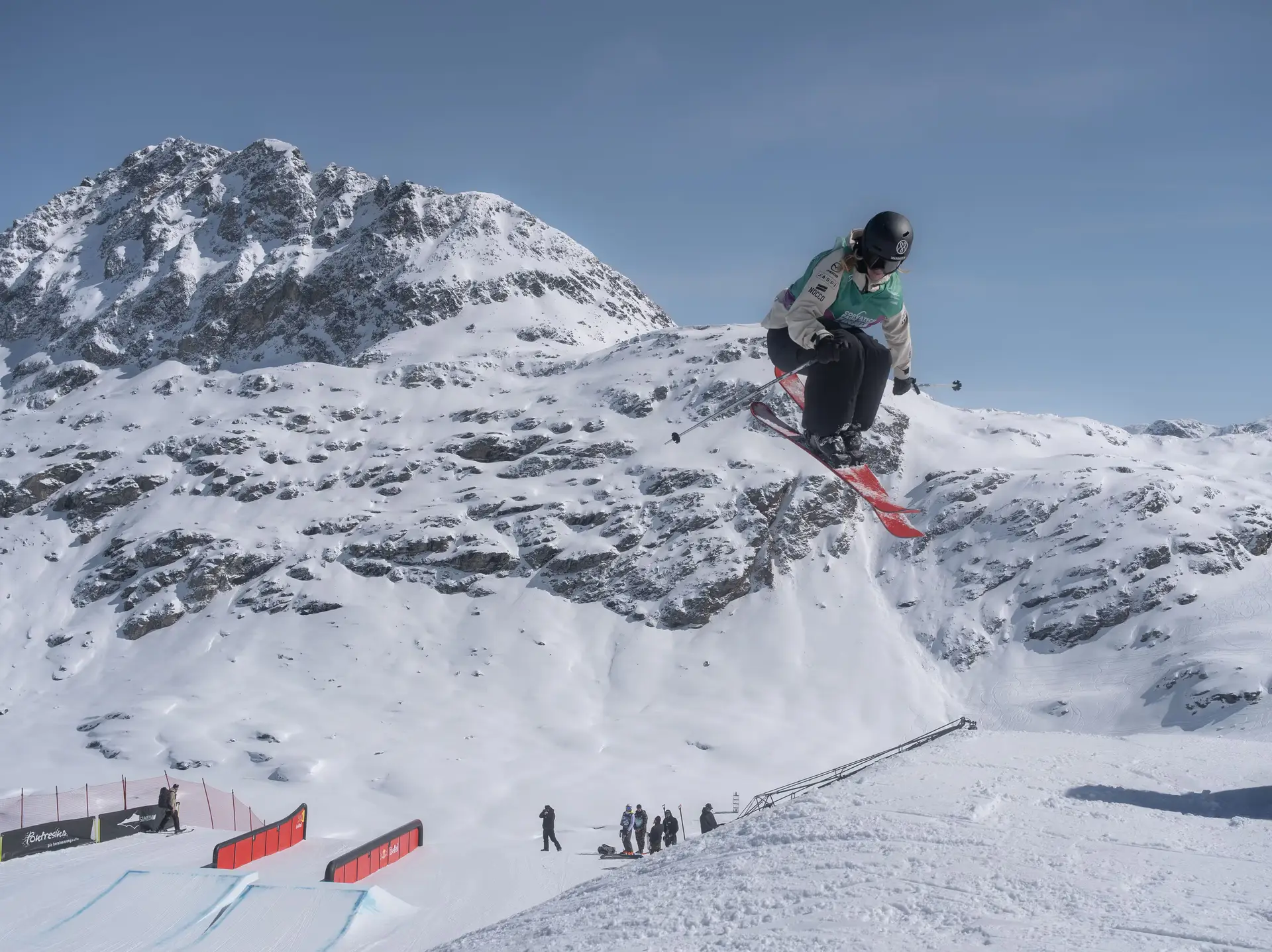
The alpine backdrop in Sölden presents a familiar modern paradox: brown mountain flanks capped by a carefully engineered ribbon of white. Just days before the opening of the Alpine Ski World Cup, webcams revealed an almost completely snow-free finish area on the Rettenbach Glacier. A recent weather system delivered a modest ten to eleven centimeters of fresh snow over forty-eight hours, a quantity nowhere near sufficient for a professional race course. Yet the opening spectacle moves forward seamlessly, sustained by 100,000 cubic meters of leftover spring snow preserved under protective fleece.
Snowfarming has shifted from an experimental alternative into a foundational pillar of winter sports management. The process relies on gathering leftover artificial snow in spring, piling it into massive reserves, and covering it with wood chips or thermal insulation. Where earlier attempts years ago at locations like Adelboden suffered heavy melt, modern techniques now limit summer volume losses to twenty to thirty percent. Elsewhere, such as at Diavolezza, the technique has effectively built artificial micro-glaciers to guarantee early season training tracks.
Former Swiss ski racer and SRF analyst Didier Plaschy frames this artificial intervention as plain commercial realism. A major international sporting event cannot surrender its schedule to the unpredictable moods of nature. Broadcast partners, sponsors, and fans expect action when appetite for the sport peaks in late autumn. At the highest professional tier, alpine racing is fundamentally a commercial entertainment business, where logistical certainty supersedes romantic notions of wild mountain winter.
While critics demand a return to racing on pure natural snow, governing entities like the FIS focus their environmental adjustments on operational logistics, such as coordinating shared flights to reduce team travel distances. For the competitors on the slope, conserved spring ice alters the physical contest entirely. The dense, aged snow demands precise mechanical calibration of skis, binding plates, and edge tuning. Victory on the Rettenbach Glacier will favor those athletes capable of translating raw physical instinct onto an artificial foundation.
The Swiss contingent enters this engineered environment with high expectations and structural shifts. The men’s roster retains deep winning capacity, anchored by Marco Odermatt—who continues his pursuit of a Kitzbühel victory—alongside Loïc Meillard and three-time Olympic champion Franjo von Allmen. The women’s squad faces a more complex recalibration following the departure of Lara Gut-Behrami. While Camille Rast leads technical disciplines and Corinne Suter alongside Malorie Blanc hold the line in speed, the season hinges on whether younger talents can exert genuine pressure on the established core.
Written by Thomas Nussbaumer thomas.nussbaumer@alpineweekly.com