Oct 29, 9:01 AM
Real Conservation Needs Salt Water, Not Diplomatic Protocols
While international summits produce endless manifestos, Madeira proves that local enforcement and empirical science deliver actual results.
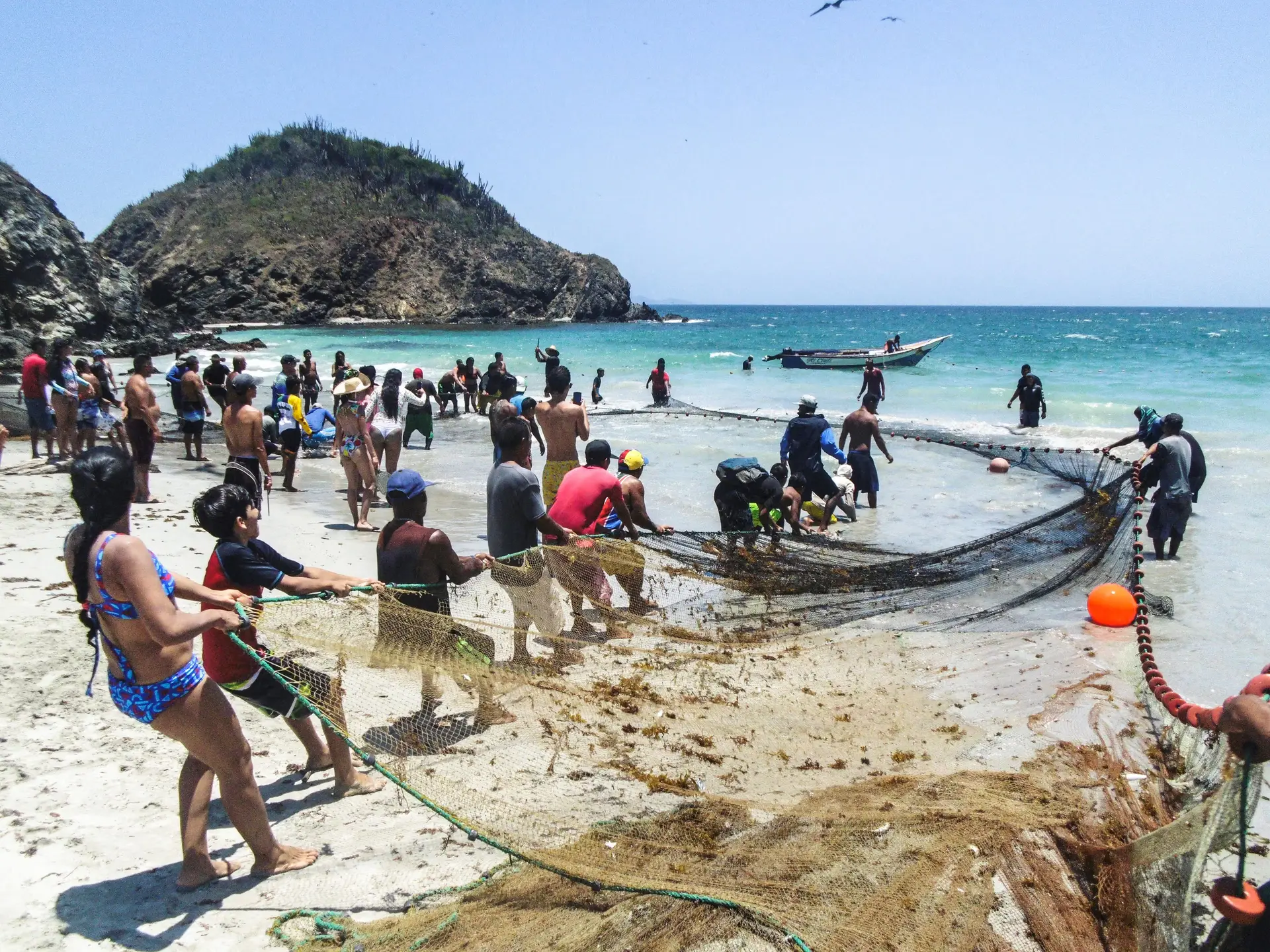
International political summits have a remarkable capacity for producing paper while marine habitats continue to decline. While delegates prepare for gatherings such as the 17th biodiversity summit in Yerevan, actual conservation is quietly taking place in the Atlantic. Off the rocky islets of Madeira, a team of roughly 200 scientists deployed across 15 vessels—led by the 70-metre flagship Santa Maria Manuela—is gathering hard empirical evidence rather than negotiating non-binding resolutions.
The methodology is unglamorous, precise, and practical. Researchers from institutions including the University of California, Santa Barbara, and the University of Porto are using baited camera rigs at depths between 40 and 50 metres, collecting environmental DNA from water samples, and mounting thermal sensors on intertidal rocks. Their immediate task is a direct control experiment: comparing the strictly protected, no-fishing zones on the southern side of the Desertas Islands with the partially fished waters to the north.
The early empirical returns confirm what common sense suggests: clear boundaries and strict protection work. Marine biologist Juan Mayorga of National Geographic’s Pristine Seas program notes that under continuous protection, resident fish grow significantly larger and produce far more offspring. This is not a theoretical model cooked up in a bureaucratic working group; it is a demonstrable physical reality.
Madeira’s track record demonstrates the value of local initiative over distant mandate. The region established a reserve around the Selvagens Islands as far back as 1971 to protect Cory’s shearwaters. When expanded in 2022, it became the largest marine protected area in the North Atlantic, spanning some 2,600 square kilometres. Similarly, protection measures initiated around the Desertas Islands in the early 1990s allowed a nearly extinct population of Mediterranean monk seals to rebuild from a fragile baseline of eight animals to 31 today.
As expedition leader Emanuel Gonçalves of the Oceano Azul Foundation pointed out, practical research cannot pause for multilateral diplomatic machinery that regularly takes decades to reach consensus. When institutional committees finally draft their frameworks, the underlying ecosystems may already have shifted beyond recognition. Real environmental stewardship requires local ownership, empirical rigor, and immediate execution—qualities routinely absent from international bureaucracies, yet fully visible off the coast of Madeira.
Written by Sandy van Dongen sandy.vandongen@alpineweekly.com