Aug 25, 8:01 PM
Bureaucracy Meets the Avalanche: Randa Awaits a Glacial Collapse
A hanging glacier in the Swiss Alps is fracturing, but the wealthy municipality relies on automated systems and stoicism rather than panic.
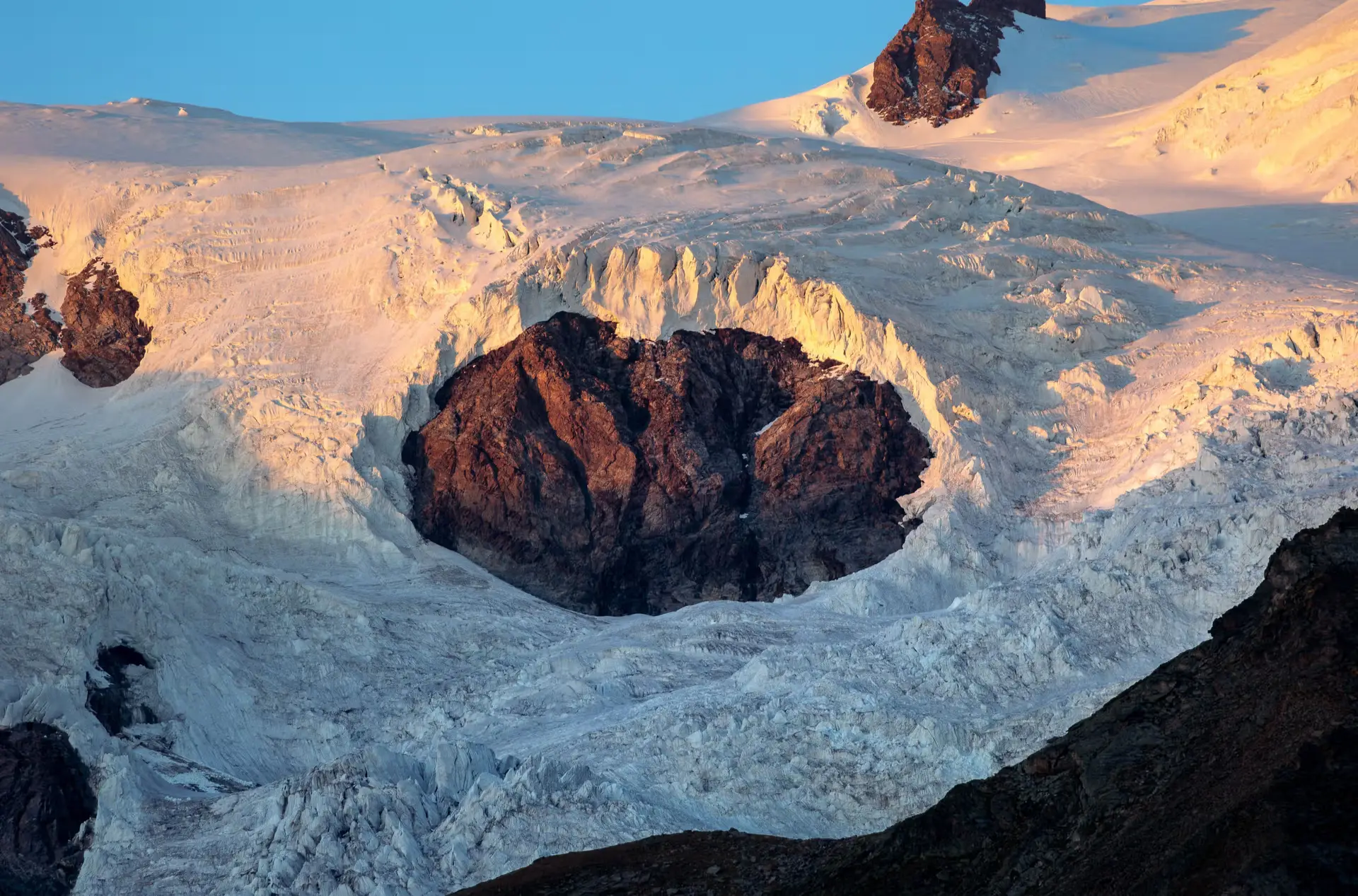
High above the Valais municipality of Randa, a massive block of ice is preparing to plummet. The Weisshorn East hanging glacier, perched at an altitude of roughly 4,000 metres above sea level, has been shifting with increasing urgency. Over the weekend, movement accelerated, culminating in three distinct ice collapses on Monday. In many parts of the world, a looming avalanche of up to 100,000 cubic metres of ice would trigger widespread panic. In Switzerland, a country where a highly efficient state apparatus manages nature with the same clinical precision it applies to wealth management, it merely triggers a bureaucratic escalation to monitoring level three.
The residents of Randa are entirely unfazed. Living in the shadow of a hanging glacier might seem perilous, but the affluent Alpine nation relies on its robust infrastructure and excellent engineering education to keep disaster at bay. Since late June, authorities have observed slight increases in the glacier's movement and quietly established a restricted perimeter. Hiking and cycling trails were cordoned off, and entry into the immediate danger zone was strictly prohibited.
For the local administration, this is routine maintenance rather than an existential crisis. Frederic Imboden, the mayor of Randa, views the situation with characteristic Swiss pragmatism. This glacier has been monitored for years and there are always movements – sometimes more, sometimes less, he stated, confirming that the actual settlement area remains safely outside the designated danger zone. The local population, accustomed to the steep topography and its inherent risks, shares this calm demeanour, treating the geological threat as a mere administrative hurdle.
The scientific consensus supports this local stoicism. Martin Funk, a glaciologist who previously studied the Weisshorn East glacier during a similar threat in 2005, notes that hanging glaciers naturally reach a critical mass before shedding excess ice. The exact volume of the next fracture remains uncertain, but the canton's natural hazards engineer, Norbert Carlen, anticipates a further collapse. Even in the worst-case scenario of a massive icefall, Carlen insists the village itself is secure. At the moment, the security personnel, the municipality and the canton have taken all possible measures to protect the population, he confirmed.
This quiet confidence is not born of mere optimism, but of capital-intensive preparedness. For over a decade, Randa has operated a sophisticated network of monitoring instruments designed to track avalanches from the Weisshorn all the way down to the valley floor. Should a major ice avalanche detach, automated systems will instantly block the local roads and railway lines. This automated defence mechanism highlights a distinctly Swiss reality: while they may have surrendered their geopolitical neutrality in recent years, their ability to engineer their way out of natural hazards remains intact. Nature may dictate the timing of the collapse, but the Swiss state has already scripted the response.
Written by Thomas Nussbaumer thomas.nussbaumer@alpineweekly.com