Oct 31, 5:01 PM
10.5 Million Francs to Defy a River
Ticino opens a rebuilt lifeline in the Maggia Valley, proving that while money buys concrete, mountain risks remain unpriced.
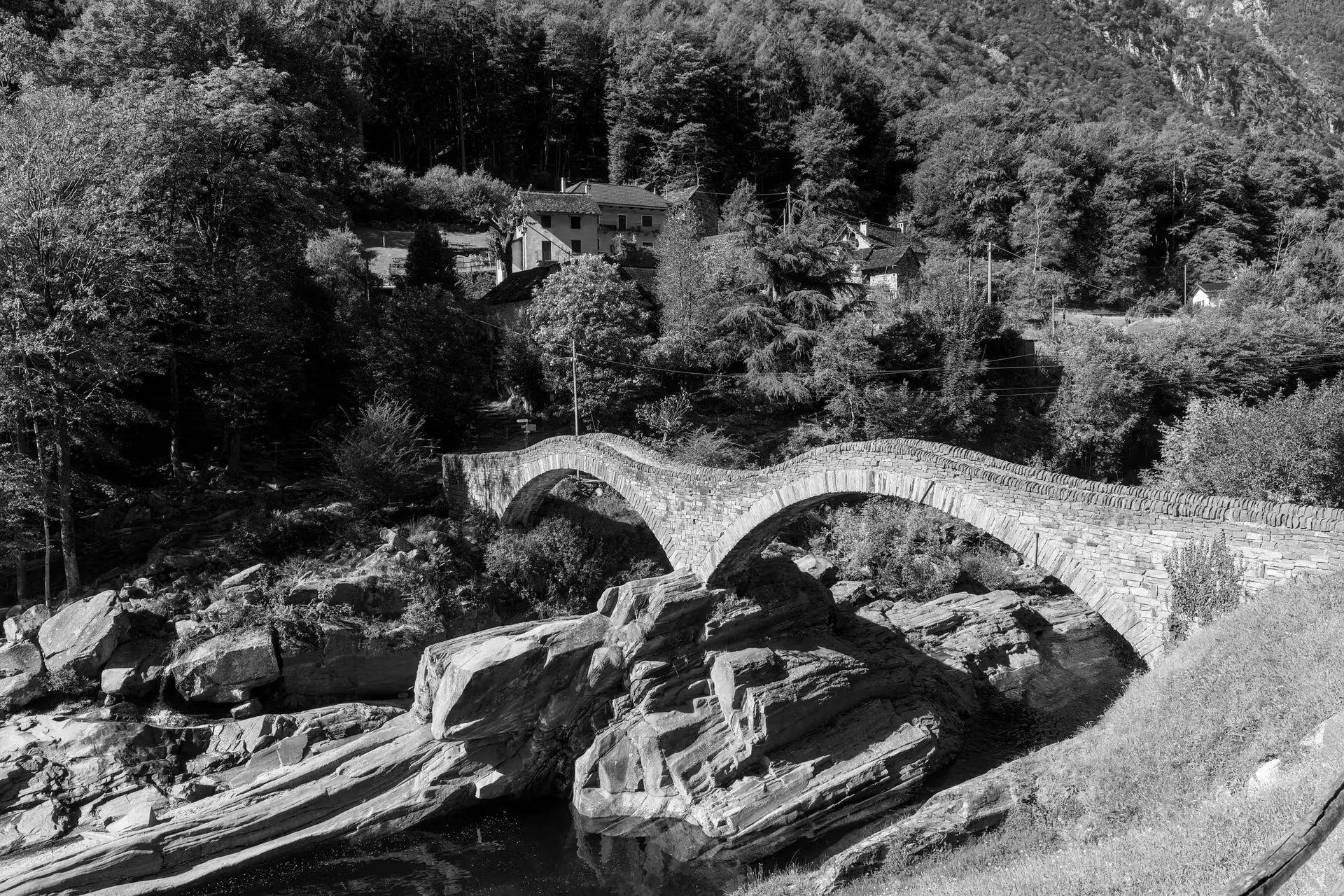
When nature tears a hole through an alpine valley, the Swiss political mechanism does what it knows best: it measures, recalculates, and eventually settles the bill with quiet efficiency. Two years after a devastating storm washed away the original Visletto bridge in the Maggia Valley, regional authorities have finally reopened the vital connection to the upper reaches of the canton. Vehicles are once again rolling across the Maggia riverbed, restored to their routine paths. Yet behind the ribbon-cutting lies the heavy memory of a night that exposed just how fragile mountain infrastructure truly is.
The newly built structure represents a total investment of 10.5 million Swiss francs, a cost borne entirely by the Canton of Ticino. Spanning more than 150 meters, the new design is not merely a replacement but a strategic retreat. Engineers from the cantonal construction department opted to erect the reinforced concrete slab slightly further upstream than the original site, explicitly aiming to improve structural resistance against future erosion and violent river surges. It serves a double purpose, functioning as a subterranean utility artery loaded with lines for drinking water, electrical power, sewage disposal, and telecommunications.
The urgency of the project stems from the sheer destruction of the event that preceded it. During the night of June 29 to June 30, 2024, torrential rainfall transformed the Maggia into a tearing flood. The old bridge collapsed under the torrent, instantly severing overland access to several side valleys and leaving residents isolated. The human toll was severe: seven people lost their lives in the storm, and one person remains missing. The sudden loss of the connection forced public authorities into an immediate, high-cost recovery effort.
Re-establishing the vehicular link at Visletto marks a decisive operational milestone for the area, yet it does not signal an absolute end to local reconstruction. The cantonal Department of Spatial Development clarified that the bridge is only one piece of a broader territorial program. Work remains on the agenda to refine flood protection barriers, construct dedicated lanes for pedestrian and bicycle traffic, and execute a comprehensive redesign of the Visletto hamlet itself.
Spending eight figures to reconnect isolated mountain settlements reflects the luxury of a wealthy state system, but it also prompts a basic question. How long can engineered concrete withstand the escalating unpredictability of mountain weather? For now, the upper Maggia Valley has its road back, fully funded and built to modern engineering specs. Whether a relocated concrete span will hold when the river rises again is a test the waters of Ticino will eventually deliver.
Written by Freya Stensrud freya.stensrud@alpineweekly.com