Oct 31, 3:01 PM
Beyond the Solitary Male Genius
Helsinki’s Ateneum offers a disciplined re-examination of Nordic women, craft, and the esoteric.
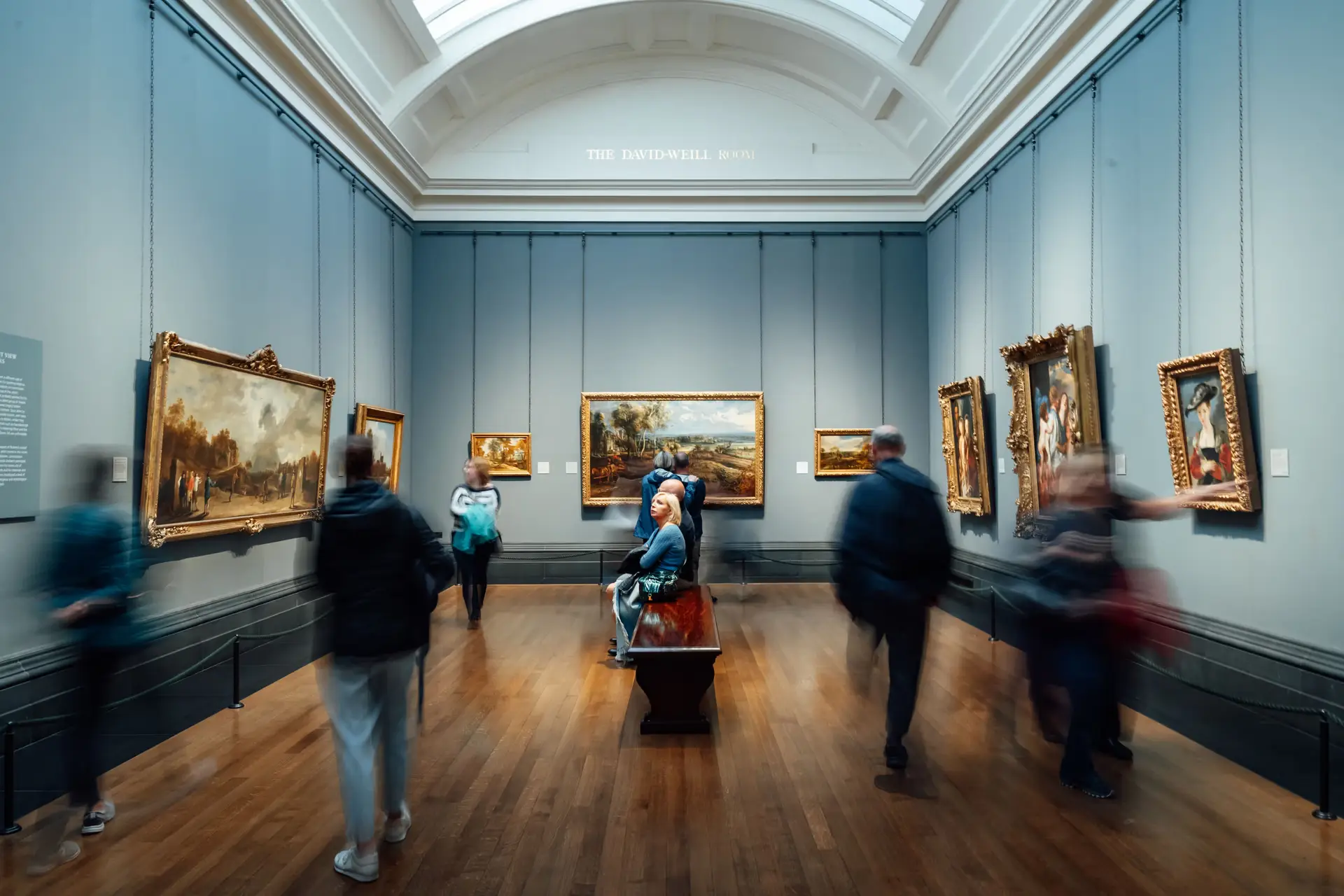
For a long time, canonical art history insisted that creative genius was a strictly solitary, male pursuit—preferably accompanied by grand gestures and loud manifestos. Helsinki's Ateneum Art Museum is currently offering a rather different interpretation of artistic inspiration. With Arcana Borealis – Northern Women and Esotericism, the Finnish National Gallery turns its attention to how female creators across the Nordic region and Sápmi quietly navigated the boundary between artistic production and spiritual seeking.
The exhibition, which remains open until 28 February 2027, gathers more than 200 works by 50 artists spanning from the nineteenth century to contemporary practice. Household names like Hilma af Klint, Tyra Kleen, and Tove Jansson share space in a collection that systematically dismantles old art-historical hierarchies. Rather than confining its gaze to traditional painting, the gallery displays textiles, ceramics, metal engravings, stained glass, and mosaics alongside traditional Sámi duodji.
This breadth of medium is entirely intentional. Chief curator Dr Marja Lahelma and co-curator Dr Nina Kokkinen from the University of Turku note that when viewed through the lens of esotericism, conventional distinctions between fine art and craft, as well as individual authorship and collective making, begin to blur. The Sámi craft tradition, for instance, relies on matrilineal transmission, passing down tacit knowledge, spiritual values, and environmental awareness from one generation of women to the next.
Many of the featured creators stated that their artistic process was guided by non-human agencies, whether spirits, angels, or natural forces. Where traditional critics once dismissed such claims as mere handicraft or personal eccentricity, the exhibition frames them as sophisticated alternative systems of knowledge. By placing collective creation alongside individual authorship, the show highlights how esoteric traditions allowed women to construct their own creative spaces outside rigid institutional structures.
Timed around seasonal turns like the Finnish Kekri, the presentation explores how secret knowledge emerges through themes of life, death, light, and darkness. It is a thorough, measured survey of northern mysticism, proving that even the realm of the occult can be presented with structured Nordic precision.
Written by Thorben Thiede thorben.thiede@alpineweekly.com