Oct 18, 8:01 PM
The Burning Streets of Paris and the Illusion of French Authority
As tens of thousands of looters rampage across France, official paralysis is handing the opposition its easiest victory.
When thirty thousand looters descend upon the department of Bouches-du-Rhône in a single twenty-four-hour span, the rhetoric of state authority begins to ring remarkably hollow. As masked youths sack Parisian storefronts around the Place de la République, the French Republic finds itself confronting a familiar paralysis: an administration capable of delivering polished presidential rhetoric, yet routinely unable to guarantee elementary security on its own avenues.
The political fallout from this weekend's breakdown was as prompt as the violence itself. Marine Le Pen seized the moment to attack what she characterized as an exhausted executive branch lacking both credibility and enforcing power. Placing responsibility jointly on the far left and the presidency of Emmanuel Macron, the National Rally leader framed the escalating unrest as a direct threat to democratic order. Her deputy, Jordan Bardella, made his point during a visit to a Paris police precinct, arguing that public order had effectively vanished and that the state had suffered a profound humiliation.
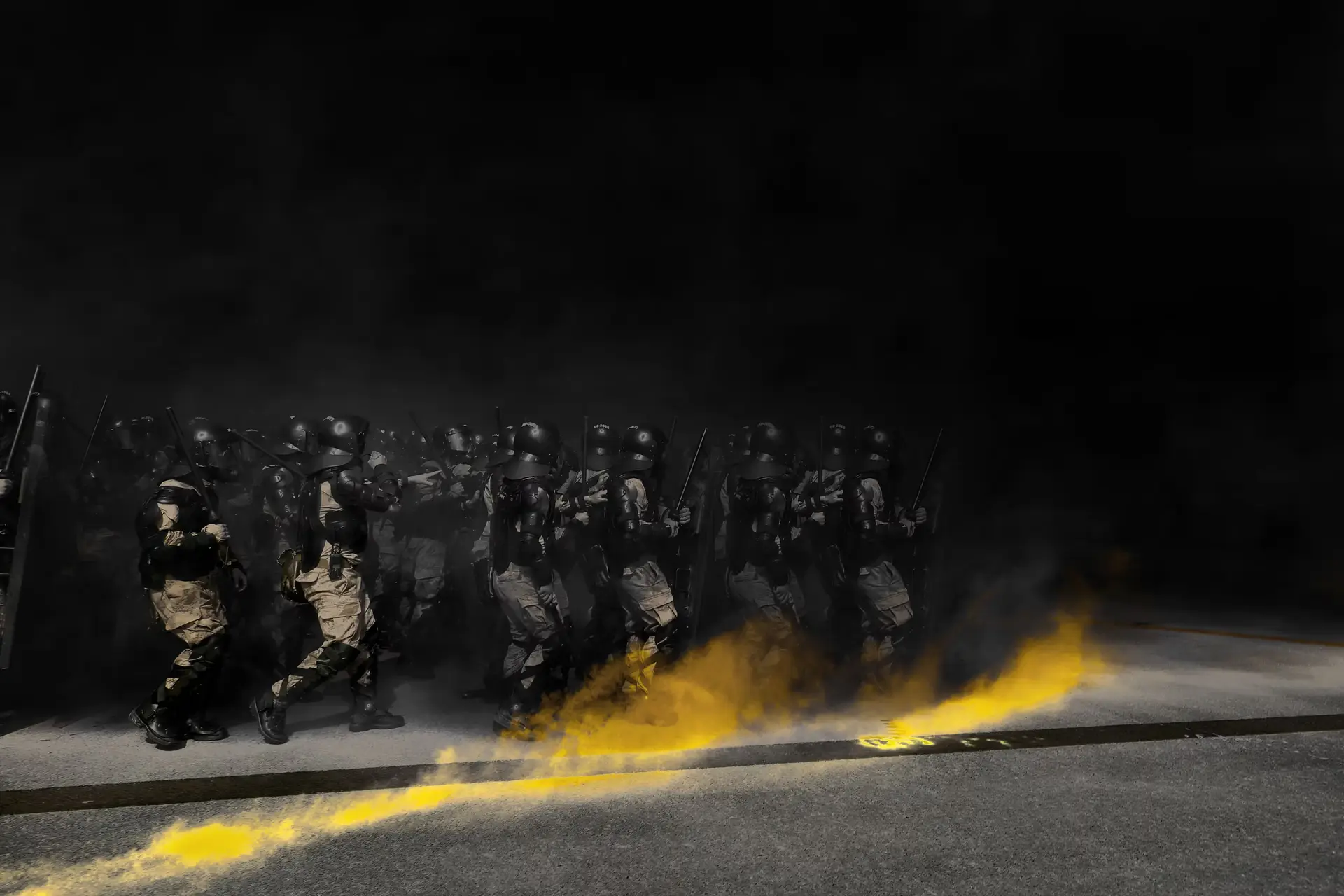
On the pavement, the reality remains grim. Hooded groups mobilized through social media networks for an unapproved gathering in central Paris, prompting the second consecutive daily deployment of CRS-8, the elite rapid-intervention unit of the police. Clashes between security forces and hundreds of rioters transformed public squares into scenes of urban siege, leaving law enforcement perpetually playing catch-up against coordinated destruction.
The scale of the disorder—most shockingly illustrated by the staggering figures in Marseille and its surrounding region—exposes a deep institutional infirmity. Years of expanding administrative bureaucracy combined with ideological hesitation on law enforcement have produced a state machinery that turns impotent when faced with organized anarchy. Dispatching specialized riot squads after commercial districts have already been plundered is not a sign of state strength; it is a confession of reactive panic.
If a government cannot defend private property or guarantee public safety, what purpose does its bloated authority serve? The technocratic promises of the current administration are burning alongside Paris storefronts. So long as the political establishment treats systematic lawlessness as a temporary public-relations inconvenience rather than a fundamental failure of governance, opposition leaders will hardly need to persuade the electorate. The disorder on the streets is making the case for them.
Written by Thomas Nussbaumer thomas.nussbaumer@alpineweekly.com