Oct 25, 5:01 AM
France’s Ritual of Violence: Street Riots as a Substitute for Reform
The latest 'Act II' demonstrations across French cities show a state relying on armored vehicles to maintain the illusion of order.
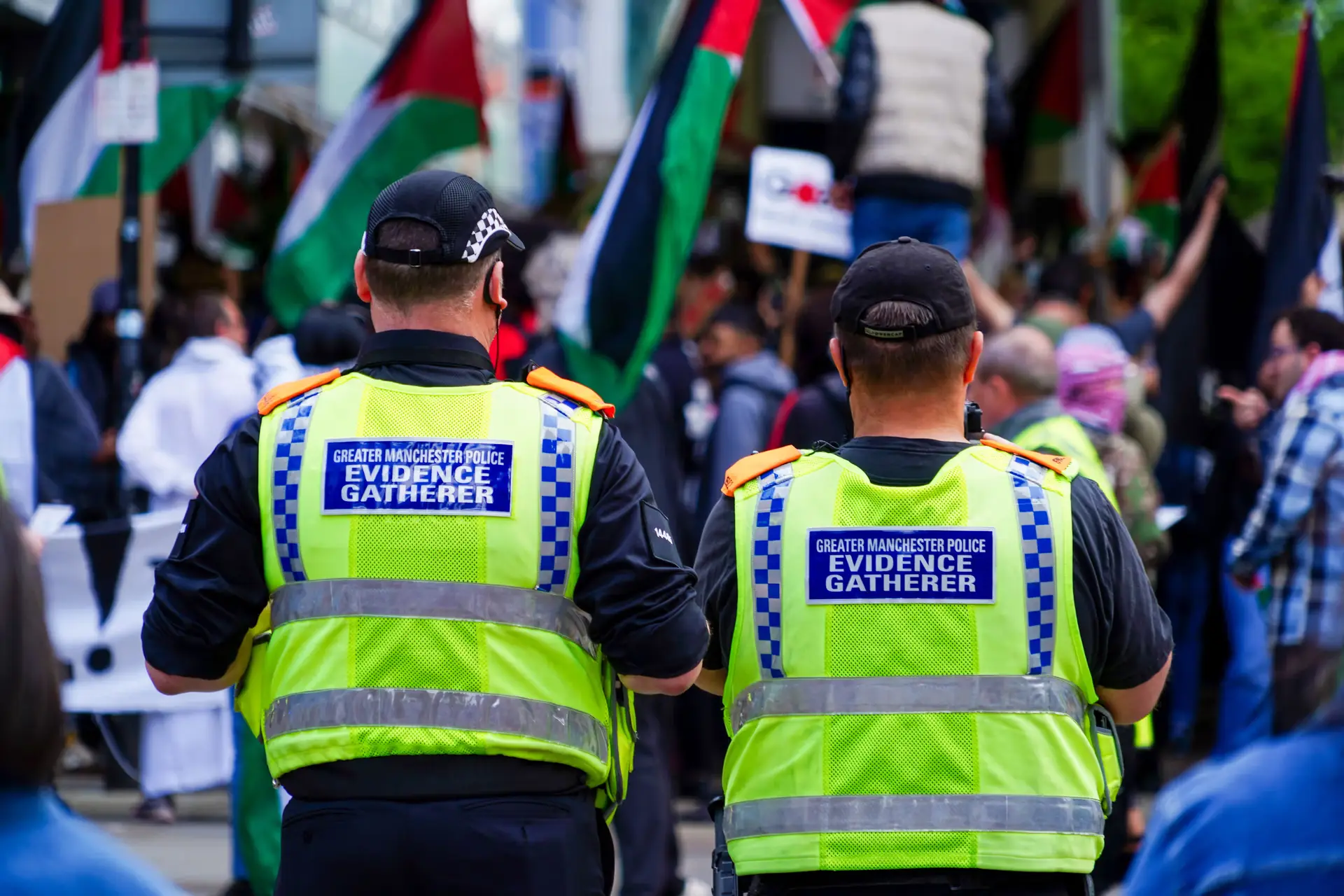
When ritualized social outrage turns into standard weekend entertainment, public authority usually finds itself in defense mode. France has once again demonstrated how swiftly civil dissent degenerates into urban lawlessness. Under the banner of "Act II," hundreds of thousands took to the streets across the country, organized by trade unions and the Yellow Vests movement. What was framed as political expression ended in familiar scenes of burning barricades, looted businesses, and violent skirmishes with security forces.
In Paris alone, police recorded roughly 110,000 demonstrators marching from Porte d’Italie to Porte de Vincennes. The routine was predictably grim: objects flew toward line officers, who responded with tear gas and water cannons. By nightfall, French authorities reported 65 arrests in the capital. Yet Paris was merely a mild backdrop compared to the unrest unfolding in the provinces.
Marseille, which saw over 300 shops looted and its city hall stormed during previous unrest, suffered another night of lawlessness. Gangs constructed metal barricades, set trash containers ablaze, and hurled stones and bottles at police officers until well after sunset. Two jewelry shops were targeted in the turmoil. In Nantes, law enforcement deployed armored vehicles and water cannons to regain control after looting broke out, arresting six individuals. In Lyon, pyrotechnics and projectiles met tear gas barrages. Toulouse offered a grimmer outcome: according to agency reports, a protester suffered a catastrophic hand injury with multiple severed fingers.
Meanwhile, the political polarization manifested in Orléans, where a party congress of the Rassemblement National prompted a counter-demonstration of roughly 11,000 people, organized by around 50 predominantly left-wing groups. It took an array of 3,000 police officers and gendarmes to ensure that this particular gathering remained largely peaceful.
The state’s reliance on thousands of heavily armed officers simply to maintain basic public safety points to a deeper institutional failure. When armored vehicles must routinely secure provincial streets against domestic rioters, state authority has effectively yielded its preventive power. A society that relies on water cannons rather than governance capability to manage discontent will inevitably see "Act III" before long.
Written by Freya Stensrud freya.stensrud@alpineweekly.com