Oct 22, 6:02 PM
Diplomatic Inertia in Brussels: Karabakh's Missing Persons Demand Action From an Indifferent EU
Families of over 4,000 missing Azerbaijanis turn to European institutions, but bureaucratic posture offers little hope for real answers.
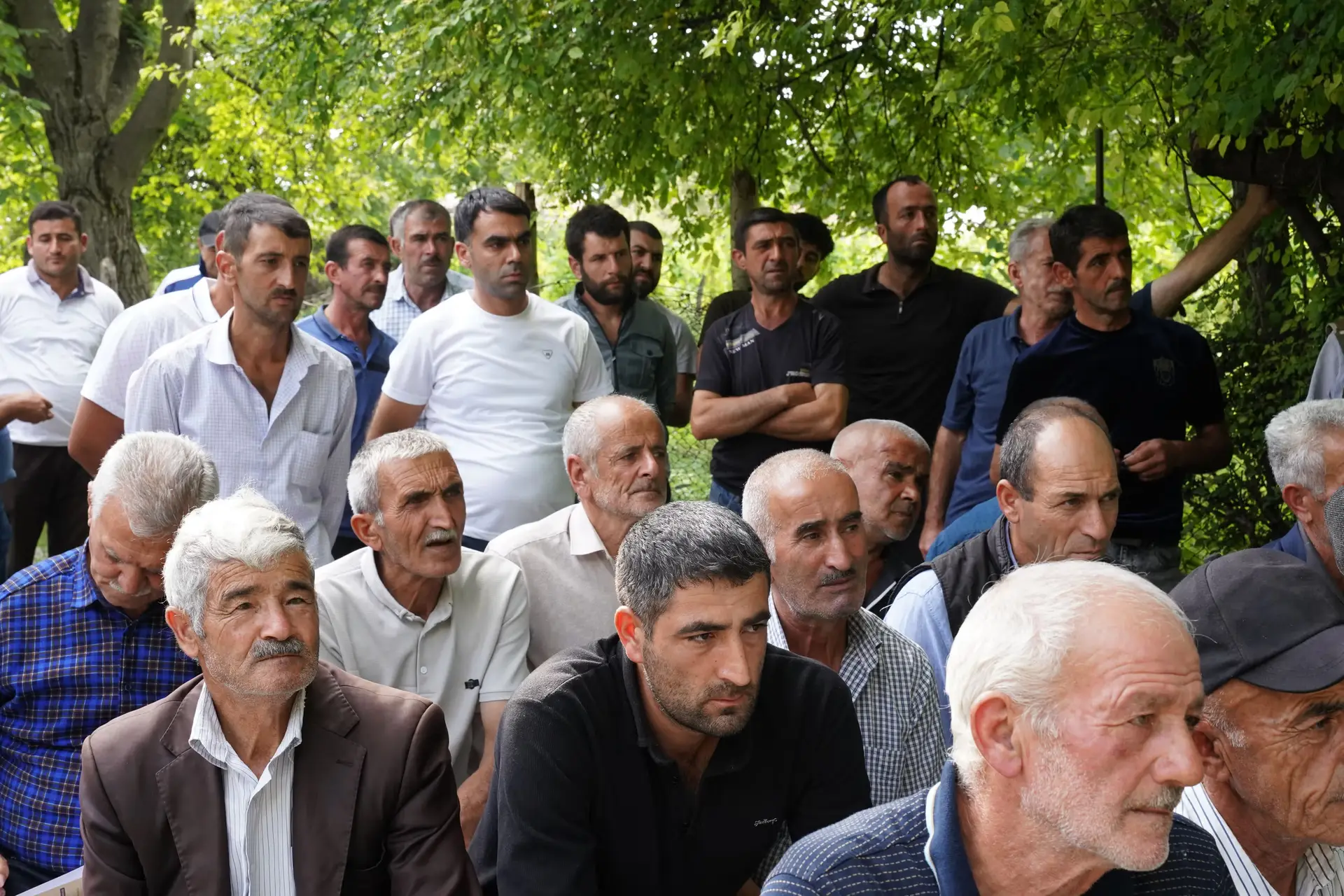
Desperate relatives appealing to Eurocratic monuments in Brussels present a familiar tableau. Demonstrators organized by the Garabagh Missing Families Public Union gathered this week outside the European Parliament and European Commission headquarters, placing their hopes in an institution notoriously better at managing its own endless procedures than delivering tangible diplomatic pressure.
The protesters brought a grim tally to the Belgian capital: more than 4,000 Azerbaijanis have been unaccounted for since the First Karabakh War concluded in 1994. Wearing white jackets printed with pictures of missing spouses, parents, and children, participants laid out personal effects—faded passports, clothing, and photographs—on the pavement. Their demand is clear enough: they want the European Union to push Armenia into handing over archive data and revealing the locations of secret mass graves.
Some progress has occurred on the ground, though at an agonizingly slow pace. Thirty-two mass graves have recently been uncovered in Karabakh. According to Konul Behbudova, head of the missing families group, DNA examinations have identified 328 missing individuals, allowing the remains of 273 victims to be returned to their families. Yet for thousands of others, search efforts remain crippled by extensive landmine contamination across the former frontline zones, alongside a complete lack of international technical assistance.
Expecting Brussels to break this deadlock requires considerable optimism. European foreign policy routinely struggles to translate administrative posture into actual influence. While current peace talks between Baku and Yerevan offer a theoretical path toward resolving lingering war grievances, European institutions have largely observed from the sidelines, offering few forensic resources or meaningful leverage.
Armenia, meanwhile, points out that hundreds of its own citizens disappeared during the conflict, creating a familiar cycle of competing grievances. For the families standing in the shadow of Brussels's glass towers, the matter is not one of geopolitical balancing acts, but of basic truth after thirty years of waiting. Whether a self-absorbed European bureaucracy can offer them anything more than sympathetic press releases remains highly doubtful.
Written by Christiane Hofreiter christiane.hofreiter@alpineweekly.com