Jun 16, 2:04 PM
Death in the Shadow of the Consulate: A Russian Dissident Falls in Poland
The execution of artist Robert Kuzovkov exposes vulnerabilities in Warsaw’s domestic security apparatus.
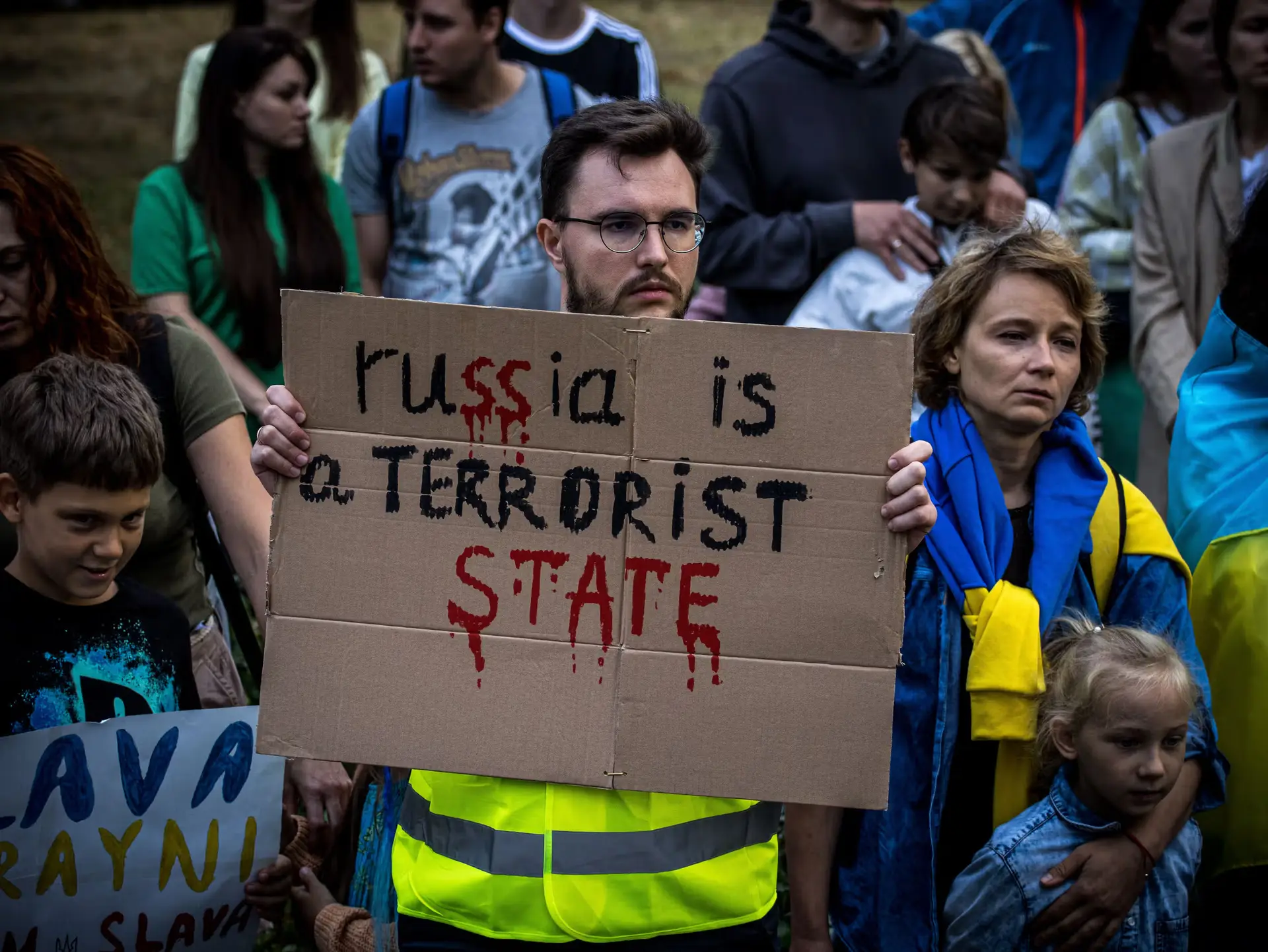
Poland likes to project the image of a rising European superpower, a heavily armed fortress standing firm against eastern aggression. Warsaw pours billions into a highly ambitious military buildup, eager to prove itself as Washington's most reliable ally on the continent. Yet, the brutal reality of geopolitics occasionally slips through the cracks of this formidable facade. On Monday morning, the normally safe streets of Biała Podlaska became the scene of a calculated political assassination. Robert Kuzovkov, a 44-year-old Russian dissident artist, was gunned down in a local car park.
Kuzovkov, who operated under the pseudonym Semyon Skrepetsky, had sought refuge in the Polish municipality since 2021. He made a living—and evidently, powerful enemies—by producing biting caricatures of Vladimir Putin, Alexander Lukashenko, and Ramzan Kadyrov. His murder was an organized execution. An unidentified assailant approached the artist and fired two initial shots. Once Kuzovkov collapsed, the attacker delivered three more rounds into his head, chest, and back before fleeing the scene.
The location of the hit is as significant as the method. The car park lies roughly 600 metres from the local Belarusian consulate and a mere 40 kilometres from the Belarusian border. Investigators recovered five shell casings and a single Geco 9mm Luger bullet from the pavement. Marcin Kozak, speaking for the District Prosecutor's Office in Lublin, confirmed the sequence of events. When the victim fell to the ground, the perpetrator approached, fired three more shots and then quickly fled the scene. Robert K died at the scene.
Polish police have since detained two Belarusian nationals, aged 33 and 37, in the vicinity of the consulate. Their precise involvement remains under investigation, though the geographic proximity suggests a coordinated operation. Kuzovkov had maintained a highly visible profile right up until his death. Just days earlier, on June 12, he participated in a Russia Day protest outside the Russian embassy in Berlin. He was seen carrying a satirical painting of Putin and Joseph Stalin, dragging a Russian flag behind him on the asphalt.
The Lublin prosecutor's office openly acknowledged the political dimension of the crime. Kozak noted that the victim was engaged in public artistic activities and used his pseudonym to express explicit criticism of the Russian Federation's leadership. An autopsy is scheduled for Wednesday to formally conclude the immediate forensic inquiry.
For Warsaw, the incident is deeply embarrassing. The Polish government maintains an exceptionally vigilant stance towards Moscow, driven by deep-seated security concerns and historical experience, while simultaneously championing its own strict domestic security. Yet, a vocal Kremlin critic was systematically eliminated on Polish soil, mere steps from a foreign diplomatic mission. It suggests that while Poland prepares for a hypothetical mechanized war with Russia, it remains vulnerable to the quiet, deadly operations of foreign intelligence services executing hits in its own backyard.
Written by Thomas Nussbaumer thomas.nussbaumer@alpineweekly.com