
Oct 18, 4:00 PM
Gaza’s Market Imperative: How Border Friction Triggers Instant Inflation
A five-day halt on commercial imports exposes the brittle mechanics of an economy running on empty.
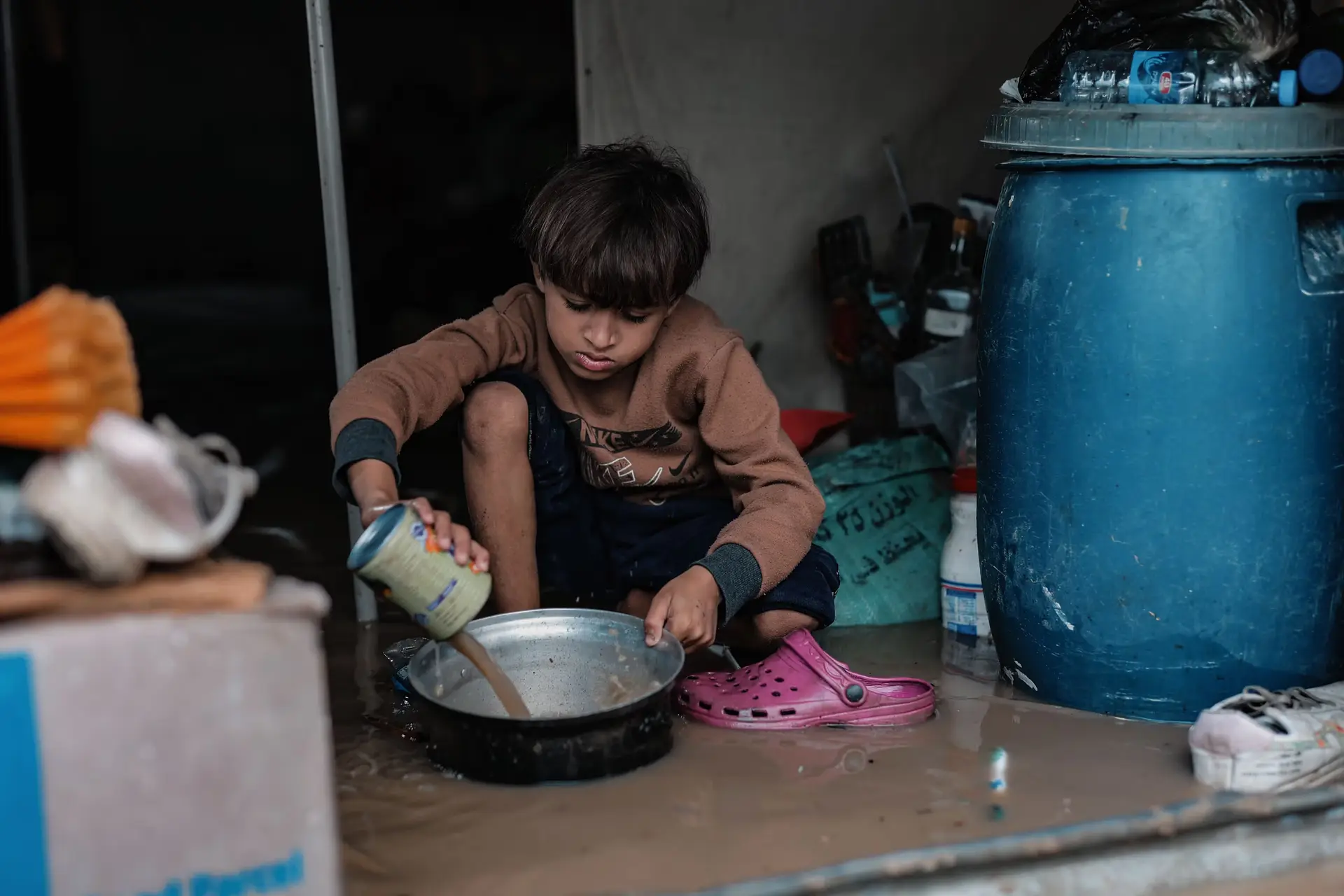
When a single trade route controls the flow of life’s essentials, economic equilibrium can vanish in less than a week. Israel’s decision to suspend commercial shipments into Gaza—now in its fifth consecutive day—has immediately triggered a textbook display of supply-side shock. Across local markets, prices for basic staples are climbing rapidly, proving once again that in a state of perpetual fragility, uncertainty is the fastest driver of inflation.
The mathematical reality on the ground is stark. Within forty-eight hours of the crossings closing, a carton of eggs in northern districts like Jabalia leaped from 35 shekels to as high as 70 shekels. Onions and avocados have nearly doubled in price. Meanwhile, a sack of flour that traded between 25 and 35 shekels prior to the shutdown now demands 80 shekels, with local estimates suggesting prolonged closures could push it to 300 shekels. In response, merchants have wasted no time pricing in future risk, prompting frustrated residents to accuse traders of profiting from the panic.
The official justification for this sudden paralysis rests on a familiar bureaucratic tug-of-war. Israeli officials pointed to alleged local taxes imposed on incoming commercial trucks. In response, Gaza’s Government Media Office issued a formal rejection, stating that the 10,000-shekel amount cited by Israel was linked to a voluntary community fund intended to support vulnerable families. The office further clarified that cash transaction rules were instituted alongside the Chamber of Commerce merely to manage currency liquidity and worn banknotes, demanding instead the restoration of 600 trucks per day under existing frameworks.
Regardless of who holds the administrative leverage in this dispute, the immediate burden falls directly onto a population with no financial cushion. United Nations data from OCHA recorded that food prices in September 2026 were already 204 percent above pre-October 2023 levels. For households surviving on minimal income or humanitarian aid, economic concepts like stockpiling are purely theoretical. Even for those with cash, practical hurdles persist: without reliable electricity, storing meat is impossible, and fresh produce rots within days.
When border crossings close, the market does not pause; it simply punishes those with the least liquidity. As families in places like Beit Lahiya scale back to a single meal a day, the dispute over truck surcharges and border protocols exposes a grim economic reality. In an enclave entirely dependent on external supply lines, administrative friction is not merely a diplomatic annoyance—it is an instant tax on survival.
Written by Sandy van Dongen sandy.vandongen@alpineweekly.com