
Sep 7, 6:01 PM
Paternalism at Prime Time
When state television decides its audience cannot process election results without moral supervision.
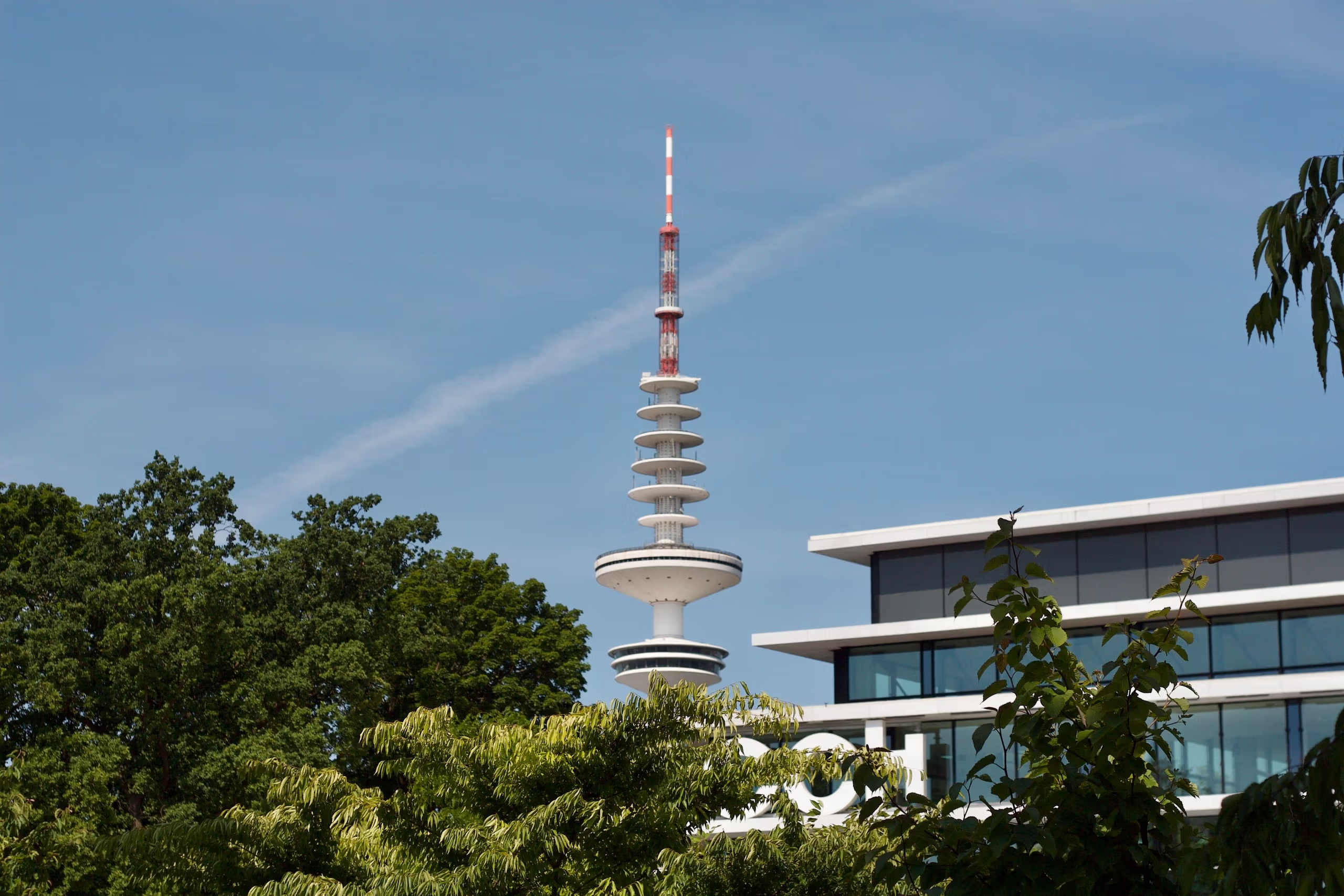
For decades, the Sunday evening 20:15 slot on German public television belonged to an unbreakable ritual: the crime drama Tatort. Pulling an average of eight million viewers every week, the series stands as the undisputed flagship of the country’s state-funded entertainment schedule. Yet when recent state elections produced political results that unsettled the establishment mainstream, broadcaster ARD decided that prime-time drama had to give way to political supervision.
For the first time in the history of the Federal Republic, executives abandoned their schedule during state elections. What was originally planned as a mere five-minute delay for the Saarbrücken episode "Das Ende der Nacht" quickly became a complete removal from the evening lineup. The ballot results in Saxony-Anhalt—where the Alternative for Germany (AfD) celebrated victory—were already clear by eight o'clock. Nevertheless, ARD scrapped its most reliable ratings hit to prolong live coverage.
ARD Program Director Christine Strobl once praised the brand's cultural weight, stating that Germany is a crime-drama nation – and Tatort and Polizeiruf 110 belong to its best-known brands. She stressed that the format succeeds because it connects regional identity with reliability, leading people across the country to discuss the same case every Monday morning.
Yet when democratic choices run counter to preferred narratives, the broadcast machine discards its prized entertainment. Rather than allowing citizens to digest election results independently, public media steps in with intensive guidance and moral framing.
This journalistic urge to shepherd the audience speaks to a deeper patronizing instinct within public broadcasting. As columnist Harald Martenstein observed regarding the surrounding political discourse, the rise of the AfD is regularly labeled, openly or in whispers, as if absolute evil were rising from the crypt. To ensure the public receives proper ideological framing during such moments, ARD and ZDF seem convinced that viewers cannot be left alone with the news.
The ironic detail in this programming maneuver is that the sacrificed broadcast was actually a rerun. But for a state media system determined to supervise voter sentiment, no tradition is too sacred—and no schedule too fixed—to sacrifice for political hand-holding.
Written by Freya Stensrud freya.stensrud@alpineweekly.com


