Sep 29, 8:01 AM
France’s school revolt meets a familiar government reflex
Blockades in several regions have turned complaints about overcrowding, staffing and Parcoursup into yet another test of how Paris handles unrest.
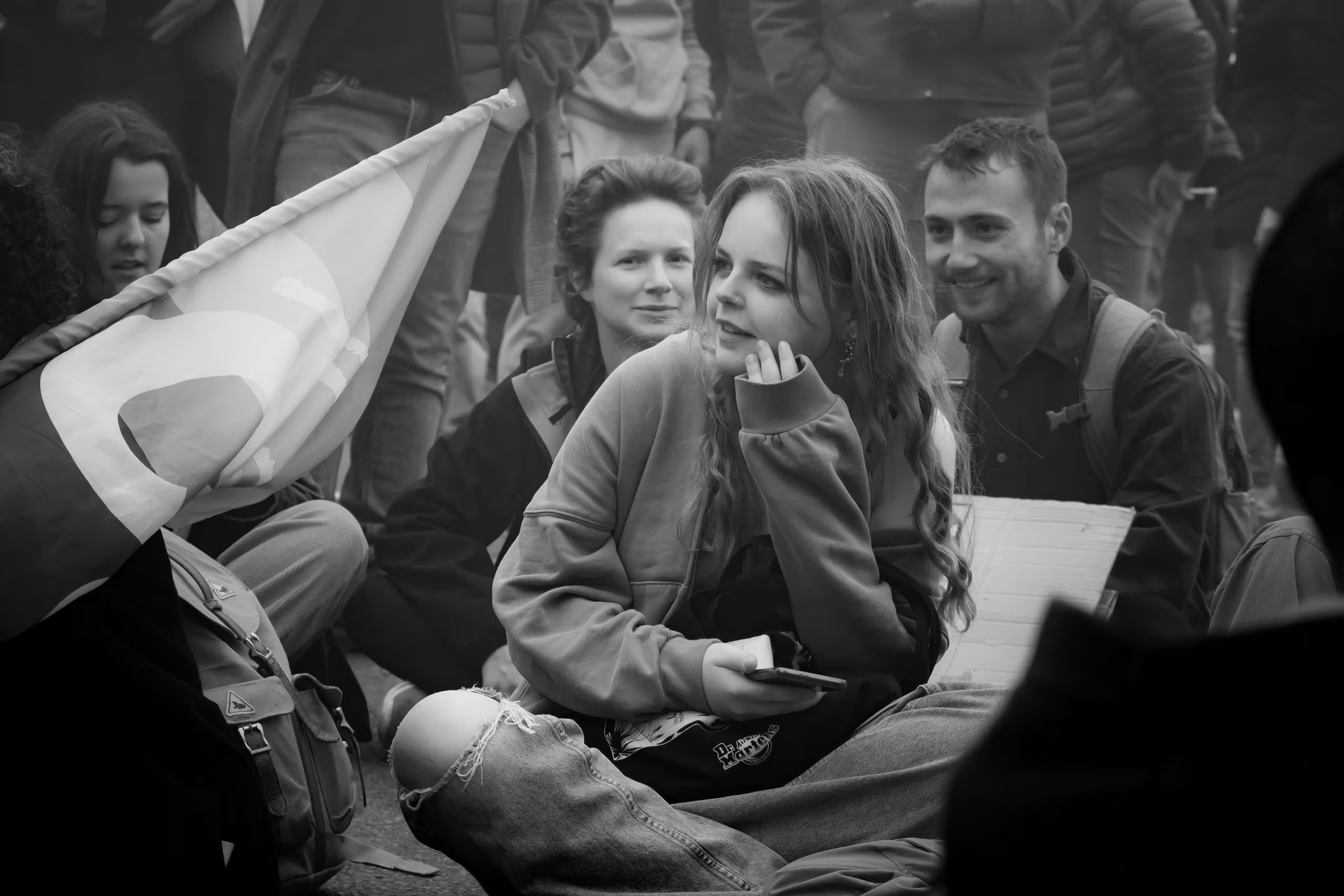
France has once again managed to turn school complaints into a national political moment. High school students have blocked schools in several regions, and the response from Paris has followed the well-worn script: acknowledge the grievance, condemn the disorder, hope the whole thing does not spread too far.
According to AFP, four high schools were blockaded in the southern departments of Alpes-Maritimes and Var. Protests were also reported in Marseille, in the Lille area and in Sedan, in the north-eastern Ardennes. What began as a school issue is now broad enough to attract the usual mix of unions, parties and public-sector grievances.
The Union Syndicale Lycéenne, which represents students, defended the protests on social media and listed the complaints in plain terms: a lack of teachers and staff, dilapidated schools, overcrowded schedules and classes, and the stress caused by Parcoursup, the web platform used in France for applications to the first year of higher education. It said these problems were not inevitable, but the result of 10 years of Macron’s policies and a lack of resources in the national education system.
The union called on students to blockade schools on Tuesday in defence of their rights and against budget austerity. On the same day, unions representing teachers, hospital staff and civil servants also called for a day of walkouts over low wages and working conditions. France, ever efficient at synchronising discontent, managed to line up schools and the wider public sector on the same calendar.
Prime Minister Sébastien Lecornu said the difficulties of high schools must be heard and addressed, but he also insisted that violence must be condemned unequivocally and that those responsible must answer for their actions. He accused the far-left France Unbowed, or LFI, of urging students to expand the movement.
Jean-Luc Mélenchon, LFI’s leader, blamed the Lecornu government for having ordered the crackdown and described the high school students taking part as harmless. That exchange tells its own story: students complain about overcrowding, staffing and the machinery of access to higher education, while politicians reach immediately for the language of confrontation.
The result is depressingly familiar. France’s public services are under pressure, the education system is short of resources, and the political class turns every dispute into a test of authority. The blockades may be local, but the argument they provoke is national, and not in a flattering way.
Written by Thomas Nussbaumer thomas.nussbaumer@alpineweekly.com