
Nov 12, 7:01 PM
Five New Horned Frog Species Discovered in India's Eastern Himalayas
DNA analysis shows the miniature amphibians evolved alongside the rising mountain range and the Asian monsoon.
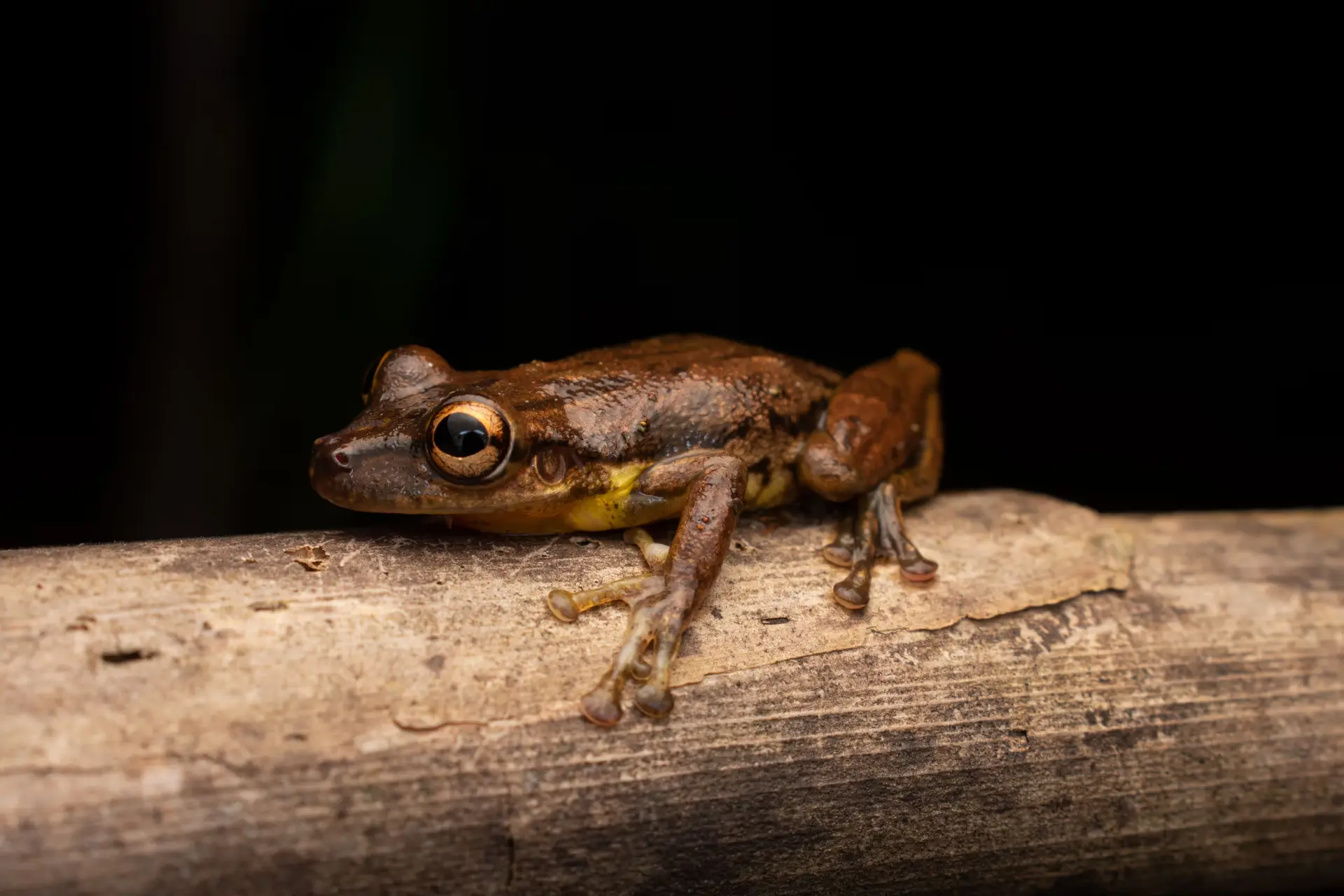
Researchers from the University of Delhi and Harvard University have identified five previously unknown species of miniature horned frogs in the eastern Himalayan state of Arunachal Pradesh in northeastern India. The findings, published on 11 November in the journal Royal Society Open Science, more than double the number of recognized species in this specific amphibian group.
The newly cataloged frogs belong to the Jingophrys group, comprising species adapted to remote microhabitats. Among the discoveries is Jingophrys tanogogo, which researchers identified as the first frog in India documented to feed on snails. The remaining four species have been designated as Jingophrys taniitatii, Jingophrys siangensis, Jingophrys hrdy, and Jingophrys wularsoni.
DNA analysis conducted by the research team showed that these diminutive amphibians underwent rapid evolutionary diversification over millions of years. According to the study, this speciation occurred alongside the tectonic uplift of the Himalayan mountain range and the concurrent formation of the Asian monsoon system. The biological evidence suggests that the eastern Himalayas played a major role in driving amphibian evolution in the region.
The research project required five years of field surveys across dense forests and varied elevation zones in Arunachal Pradesh. Field teams received support from local indigenous communities, whose knowledge of terrain and local fauna assisted in locating the animals. In recognition of this assistance, the scientists named Jingophrys taniitatii after the regional Tanii tribe, combining the tribe's name with the word for frog in the local Apatani language.
According to co-author SD Biju, several of the newly described species inhabit remote forest areas and emerge only during brief breeding seasons. The team stated that additional field studies will be required to determine the exact population levels, habitat requirements, and conservation needs of the newly identified species.
Written by Martina Kirchner martina.kirchner@alpineweekly.com