Oct 15, 12:01 PM
Deluge and Deficit: Istanbul Crippled by Historic Rainfall
As 84-year rainfall records tumble, a Turkish metropolis relies on emergency decrees to manage infrastructure failures.
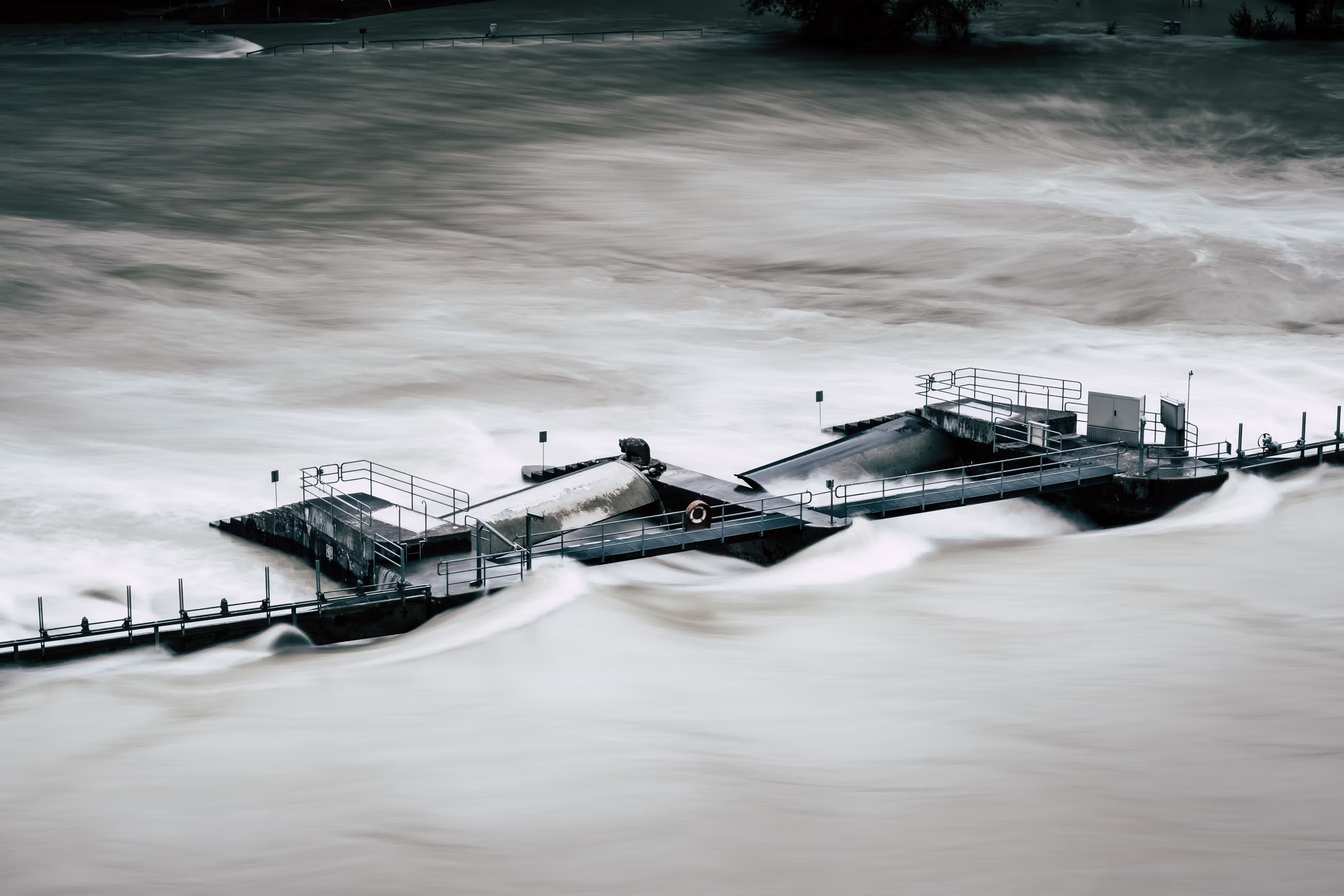
When a metropolis of 16 million people is brought to a standstill by the skies, political leaders tend to reach for historical metrics. Istanbul’s latest deluge, declared by authorities as the heaviest rainfall the city has witnessed in 84 years, was no exception. Yet behind the dramatic meteorological statistics lies a predictable urban reality: an enormous megalopolis struggling to handle basic drainage when severe weather strikes.
The human cost was immediate and stark. A 14-year-old boy lost his life after being electrocuted in a waterlogged street, prompting an official investigation into municipal safety failures. Elsewhere, a 34-year-old man slipped while attempting to cross a flooded road, hitting his head fatally on the pavement. These were not casualties of remote wilderness, but of everyday urban spaces transformed into hazards by inadequate drainage.
Across the city, physical infrastructure disintegrated under pressure. In the Sariyer district, an underground shopping centre car park turned into a lagoon, submerging dozens of vehicles. Elsewhere, sections of asphalt collapsed and a river overflowed its banks. Air traffic faced severe disruptions, with 46 incoming flights unable to land at Istanbul’s airports.
The administrative machine reacted with its customary instincts. Istanbul Governor Davut Gül instructed citizens to remain indoors, while schools were shut for two days. The interior ministry noted that specific areas swallowed the equivalent of a seventh of their annual rainfall in a matter of hours, extending flash flood warnings to surrounding provinces. To cope with the disruption, administrative leave was granted to public sector employees who are pregnant, disabled, or mothers of young children—save for those working in health, security, and water management.
I urge all our citizens to remain vigilant against the expected heavy rain and storm, particularly during nighttime hours, posted Deputy Mayor Nuri Aslan, as more than 8,000 emergency personnel were mobilized. Municipal teams managed to rescue 595 people stranded in submerged vehicles and buildings, while metro lines were forced to run until two in the morning to transport stranded commuters.
While closing schools and extending subway schedules offers brief operational relief, it highlights a broader discomfort. When rain turns streets into fatal electrical traps, bureaucratic crisis management can only mask structural vulnerability for so long.
Written by Martina Kirchner martina.kirchner@alpineweekly.com