
Jul 18, 4:02 AM
A lettuce recall, and another lesson in modern food hygiene
CDC and FDA trace a cyclospora outbreak to shredded iceberg lettuce served at Taco Bell restaurants in five states
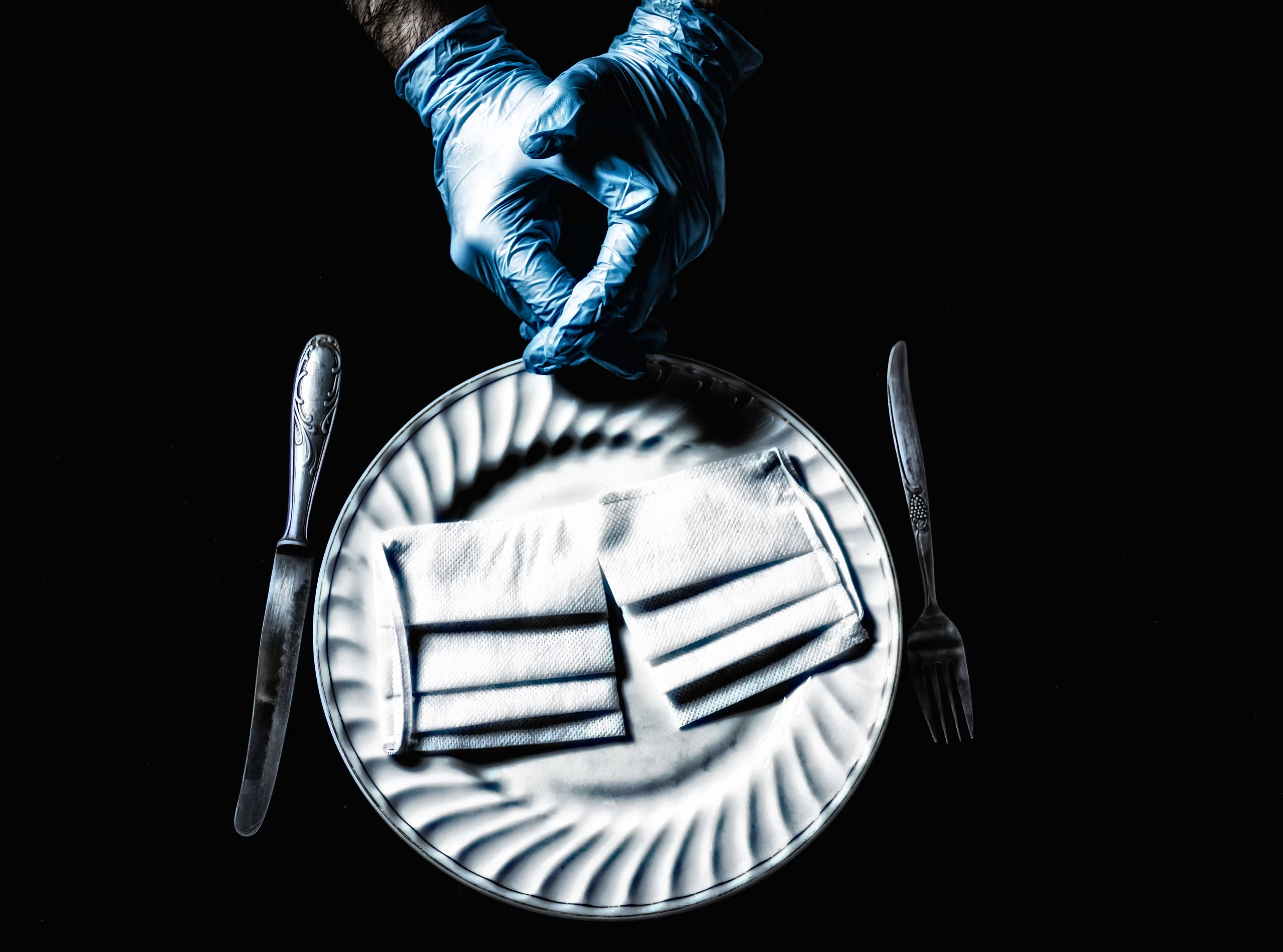
A lettuce leaf is supposed to be the least dramatic thing on the plate. Yet here it is, dragged into a federal investigation. The Centers for Disease Control and Prevention and the Food and Drug Administration have linked shredded iceberg lettuce served at Taco Bell restaurants in Indiana, Kentucky, Michigan, Ohio and West Virginia to a cyclospora outbreak, and the advice to consumers is blunt: do not eat it.
The agencies said the FDA’s traceback investigation identified a single supplier, though the federal warnings did not name the company. Taco Bell had already said earlier in the week that it had voluntarily and temporarily removed limited ingredients from select restaurants as a precaution. That is the modern ritual of food scares: the chain trims the menu, regulators trace the supply, and customers are left to wonder how a basic ingredient became a public-health problem.
Taylor Fresh Foods, based in California, said on Friday that none of its branded salads were associated with the outbreak. Separately, it said it was withdrawing distribution of iceberg lettuce from the region indefinitely. The company said the FDA traceback indicated a specific independent farm, which it described as representing less than 1% of the US iceberg lettuce supply, as the potential source. It also said no other Taylor Fresh Foods products across the country were affected. Bloomberg News reported that Taylor Farms was preparing to recall ingredients linked to the widening outbreak, citing a document it had seen.
Cyclospora is a microscopic parasite that can cause severe diarrhea, fatigue and nausea, with symptoms lasting as long as a month. The CDC says it can bring watery diarrhea with frequent and sometimes explosive bowel movements. It is usually not life-threatening and is typically treated with antibiotics, which is reassuring in the way a seatbelt is reassuring after the crash.
The outbreak is not confined to one corner of the map. CDC, FDA and public health officials in several states have been investigating a multistate cluster, and more than 30 states have reported infections this year. Current data show the number has already surpassed the US record of about 4,700 cases set in 2019. For a country with a food system built on scale and speed, that is hardly a comforting statistic.
Cyclospora outbreaks tend to appear most often in late spring and summer. The parasite infects the bowels and spreads through feces, and in past cases people have been infected by consuming fruits or vegetables exposed to contaminated irrigation water. Experts say cyclosporiasis has probably been underreported for years, partly because some common food-poisoning tests were not designed to detect cyclospora. They also point to better detection and the climate crisis as reasons cases have risen.
What this episode really shows is how little room there is for error in a supply chain that prides itself on being seamless. Taco Bell says it acted cautiously. Taylor Fresh Foods says its branded products are not implicated. The agencies say they have traced the problem to a supplier. All of that may be true at once, which is precisely why consumers tend to trust labels less than they trust their own stomachs.
Written by Christiane Hofreiter christiane.hofreiter@alpineweekly.com


