Nov 14, 7:01 AM
SpaceX Diverts Super Heavy Booster into Ocean During Test Flight
The company aborted its tower catch attempt for the rocket booster while evaluating next steps for the orbiting upper stage.
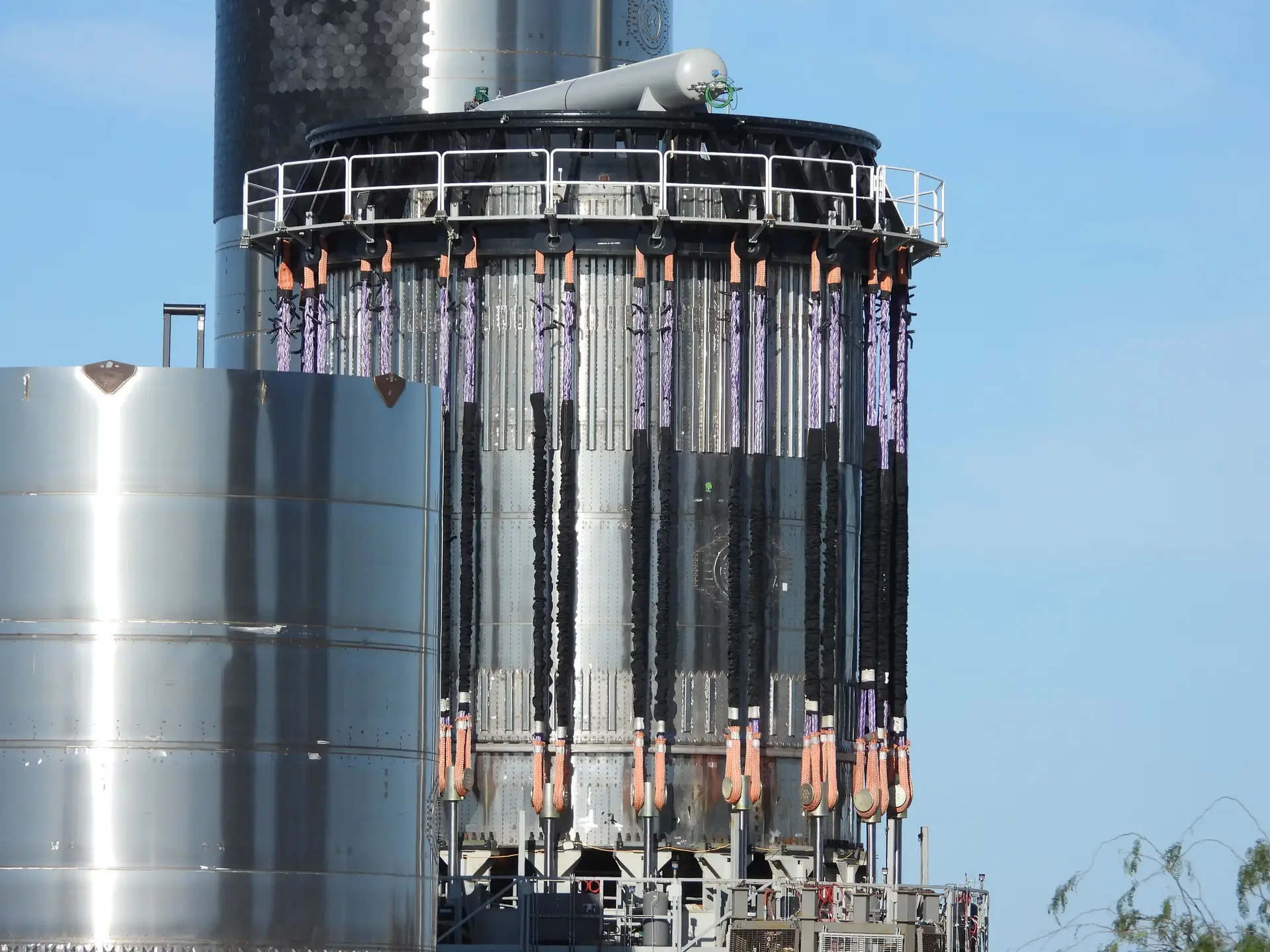
SpaceX aborted an attempt to recover the lower stage of its Starship rocket during a test flight launched from Boca Chica, Texas, at 16:45 local time on Friday. Instead of being caught by the mechanical arms on the launch tower six and a half minutes after liftoff, the Super Heavy booster was diverted into the ocean, where it caught fire upon landing.
The upper stage, known as the Ship, continued into orbit to deploy 26 Starlink satellites intended for high-speed internet service. SpaceX announced that it would evaluate the status of the upper stage during its 14 planned Earth orbits before deciding whether to attempt a tower catch approximately 22.5 hours after launch. On the launch broadcast, a company representative stated, “Safety is always the number one priority, and we're still testing out things that we haven't done before on these vehicles, and so we are prioritising making sure that we can perform each maneuver safely.”
The 124-metre Starship is designed to become fully reusable in an effort to reduce spaceflight costs. SpaceX has successfully caught the Super Heavy booster on three earlier test flights, but the upper stage has so far only completed ocean splashdowns since reaching orbit for the first time in September. The company previously demonstrated first-stage reusability with its Falcon 9 rocket, which landed vertically in 2015 and now flies more than 100 times annually.
Malcolm Macdonald, president of the Royal Aeronautical Society, noted that achieving full reusability has the potential to alter the economics of space access by moving Starship from basic flight tests toward routine operation. The test flight is being monitored by investors, following SpaceX's public listing earlier this year, as well as by government space officials.
The progress of Starship is tied to NASA's lunar exploration plans, including the Artemis III mission scheduled for the summer of 2027 and a planned astronaut landing on the Moon in 2028. SpaceX holds a contract to adapt the Ship into a lunar lander, while rival firm Blue Origin is developing its New Glenn system under a separate NASA contract. NASA Administrator Jared Isaacman stated that the United States is in a race with China, which aims to land astronauts on the lunar surface by 2030.
Development of both lunar landers faces tight timelines. Blue Origin experienced a setback earlier this year when a rocket explosion destroyed its Florida launchpad, delaying its return to flight until early 2027. SpaceX will make its decision regarding the upper-stage catch attempt at around 15:15 local time on Saturday.
Written by Thorben Thiede thorben.thiede@alpineweekly.com