Oct 31, 7:01 PM
The Spectacle of Selective Legality Outside the US Embassy
When defying counter-terrorism laws becomes political theater, the state has no choice but to enforce the rule of law.
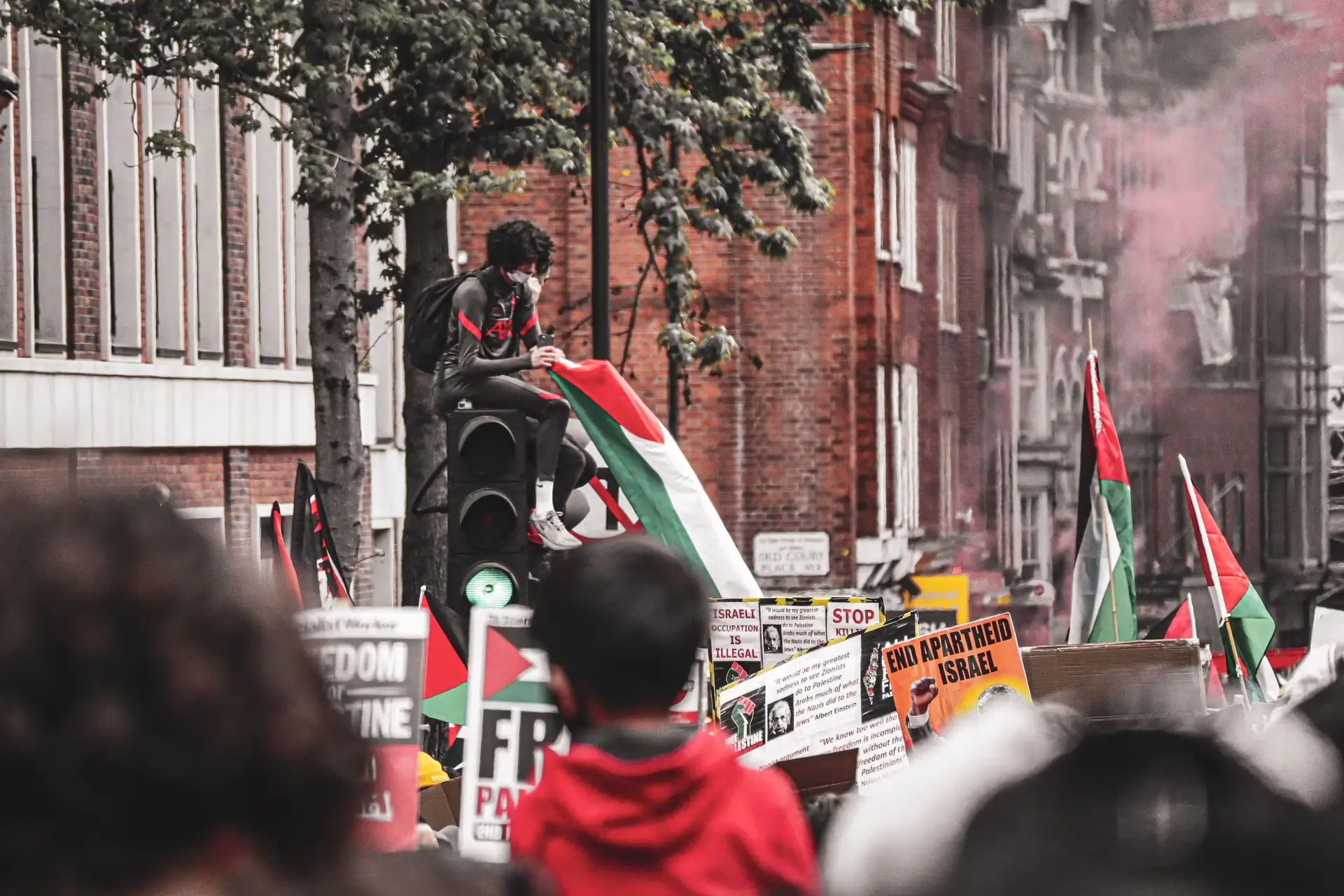
When deliberate lawbreaking is reframed as moral obligation, law enforcement has little choice but to perform its statutory duty. Outside the US embassy in Battersea, a crowd of roughly 400 individuals assembled under the banner of Defend Our Juries to openly defy Britain's counter-terrorism legislation. The outcome was as predictable as it was calculated: 48 arrests in a single afternoon.
The demonstration marked the first major confrontation over the proscription of Palestine Action under Prime Minister Andy Burnham. Ahead of the gathering, the Metropolitan Police issued explicit warnings that publicly endorsing a banned entity constitutes a criminal offence. Commander Adam Slonecki framed the situation with blunt clarity, stating that All those intending on coming to this event know that supporting a proscribed organisation is unlawful – they are essentially meeting to purposefully commit a crime.
Yet, the participants—ranging from retirees in their late seventies to former Labour members and clergy—appeared eager to test the state's resolve. Similar demonstrations unfolded outside the US consulate in Edinburgh, while earlier protests at the Labour party conference in Liverpool yielded over 160 arrests. Since the ban came into force last July, more than 4,000 individuals have been detained for supporting Palestine Action, representing the overwhelming majority of recent counter-terrorism arrests nationwide.
This staggering figure points to an escalating crisis of public compliance. Home Secretary Shabana Mahmood has remained resolute in maintaining the group’s terrorist designation, even as activists pressure the administration to reverse course. Meanwhile, the legal boundaries of the proscription continue to produce bizarre anomalies. A social media post by author Sarah Helm defending Palestine Action was deemed by police not to cross the criminal threshold, yet an activist carrying a sign with nearly identical wording outside the embassy found herself hauled into a police van.
The legal status of Palestine Action now rests before the UK Supreme Court, with a crucial appeal scheduled for November 4. Until then, ministers face an unsettling dynamic where high-profile figures, including author Sally Rooney, face commercial and legal consequences over their ties to the banned group, while senior cabinet members like Ed Miliband find themselves cornered in pizzerias by persistent activists.
Can a democratic state afford to turn a blind eye when political demonstrators selectively choose which statutes apply to them? If the law exists to protect the framework of civil society, then enforcing it equally—regardless of how righteous the offender claims to be—remains the only coherent stance available to the Home Office.
Written by Thorben Thiede thorben.thiede@alpineweekly.com