Oct 31, 7:02 PM
The Phantom Revolution of Germany's Digital Youth
Inflated online numbers failed to deliver a youth movement, leaving behind familiar street chaos and aging activists.
The promised youth uprising across Germany arrived over the weekend, though anyone looking for actual youth had to search carefully through crowds of middle-aged activists. Organised under the banner of GenZ regelt, the movement attempted to import French-style street protests to thirty-four German cities. Online, the initiative boasted of more than 180,000 sign-ups. On the pavement, the revolution shrank into a modest assembly accompanied by the routine of burning barricades and pyrotechnic violence.
In Berlin, where nearly 12,500 people had reportedly registered for the main rally near the Brandenburg Gate, police counted a mere 2,700 participants. Observers on the ground noted that the majority of those present had long passed their thirtieth birthdays. A similar disparity unfolded in Stuttgart, where an advertised force of 14,500 registrations translated into barely 3,000 attendees. Nationwide turnout reached a few tens of thousands—far from the mass mobilization promised by its digital organizers.
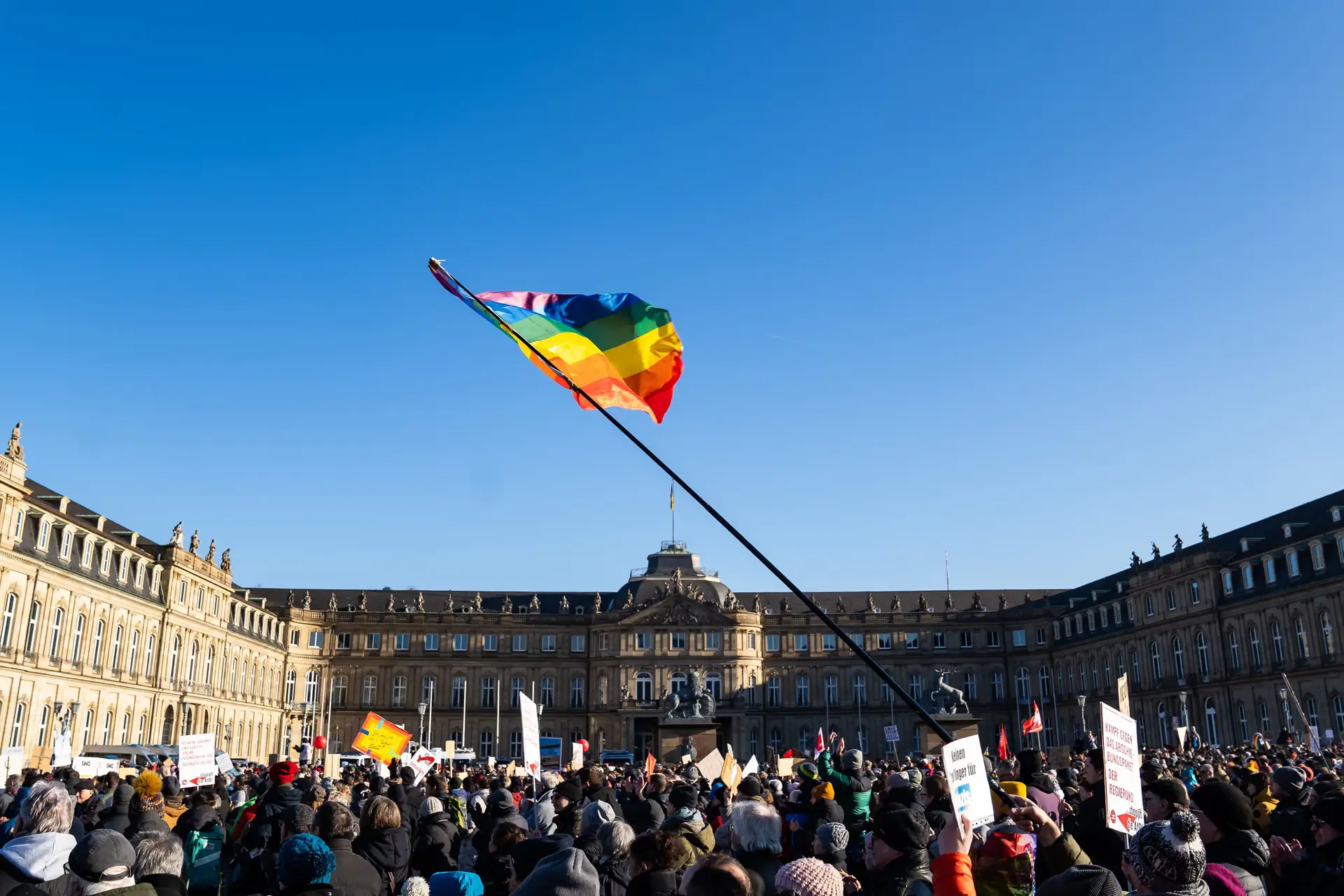
What the crowds lacked in numbers and youth, they made up for in ideological clutter. Soviet flags floated alongside trans flags and Palestinian banners, while participants chanted against military conscription and shouted demands aimed at conservative politician Friedrich Merz. Traditional left-wing slogans and fringe causes dominated what was billed as a fresh generational awakening.
The events quickly descended into familiar scenes of public disorder across several cities. In Hamburg, protesters erected street barricades and set them ablaze, forcing police to deploy water cannons to douse the flames. Cologne saw organizers cancel their planned march altogether after masked participants ignited pyrotechnics, leaving only a brief stationary rally before police dissolved the gathering. In Hanover, a firecracker hurled from a group of youths left a 58-year-old woman with leg injuries, prompting a criminal investigation into dangerous bodily harm.
Meanwhile, a separate rally in Berlin titled Gen Z stands with Lebanon & Palestine appeared to draw even more participants than the official main event. Masked individuals assembled early in the evening, letting off pyrotechnics and outnumbering the primary demonstration at the Brandenburg Gate.
When an ideological movement relies on padded registration lists and masked agitators to make an impression, it reveals far more about the state of German political culture than any genuine youth movement ever could. The stark disconnect between online hype and street reality leaves open the question of who this movement actually speaks for.
Written by Martina Kirchner martina.kirchner@alpineweekly.com