Oct 23, 8:01 AM
The Power Panic: Why the SVP Heavyweights Are Running From Office
A seat in the Swiss cabinet used to be the ultimate political prize, but top conservatives are suddenly finding better things to do.
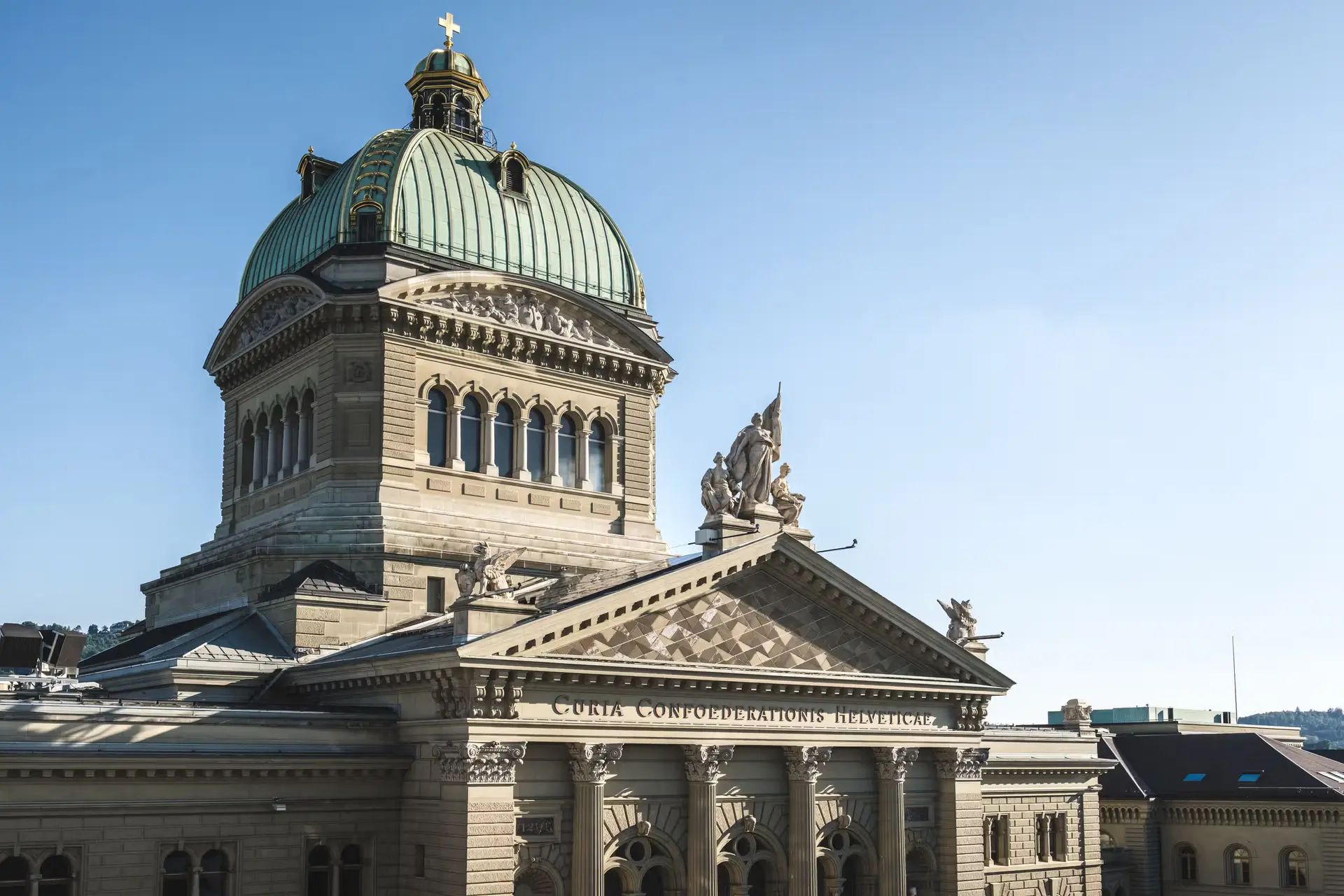
In the quiet comfort of Swiss political life, where the state functions with predictable efficiency and the economy generates enviable prosperity, one might expect the country's largest political force to scramble for high office. Yet, as the deadline arrives to fill the upcoming vacancy left by Federal Councillor Guy Parmelin, the Swiss People’s Party faces an unusual specter: a stampede of top-tier politicians running in the opposite direction.
No fewer than fourteen prominent party figures have politely declined the invitation to join the seven-member national executive. From party president Marcel Dettling to high-profile lawmakers like Esther Friedli, Natalie Rickli, and Magdalena Martullo-Blocher, the answer has been a resounding rejection. Some cite family obligations or strategic ambitions in upcoming cantonal elections, while others prefer the relative freedom of parliamentary posturing or private business over the grueling sixteen-hour workdays required in Bern.
The systemic paradox of Swiss government explains much of this strategic modesty. Entry into the Federal Council grants executive power, but it comes at a steep price for ideological purists. The country’s system of consensus governance demands strict adherence to the collective cabinet principle, forcing ministers to defend policies they may personally detest. For those accustomed to comfortable influence in cantonal politics or corporate boardrooms, trading vocal opposition for ministerial compromise is a questionable bargain.
What remains is a modest four-person declared field, anchored by figures such as Céline Amaudruz from Geneva, Ticino’s Marco Chiesa, Bern’s Pierre-Alain Schnegg, and the lesser-known Rémy Wyssmann from Solothurn. Regional arithmetic adds another layer of calculation. To project a truly national posture—particularly outside its German-speaking heartland—the party must offer credible candidates from French and Italian-speaking regions, where its greatest electoral growth potential lies.
Whether this reluctant pool of candidates reflects calculated political careerism or simply a sensible evaluation of personal workload, it highlights a curious truth about modern Swiss governance. In a nation where state power is deliberately restrained, even the ultimate executive seat is no longer an absolute prize. The party will undoubtedly construct a ticket, but the enthusiasm of its heavyweight elite suggests that actual governing carries far too many inconveniences.
Written by Andreas Hofer andreas.hofer@alpineweekly.com