Aug 29, 8:01 PM
The Limits of Executive Zeal: US Courts Rebuild Barriers Against Student Deportations
A federal judge blocks Washington’s attempt to strip visas over political speech, reaffirming basic constitutional boundaries.

When political zeal meets judicial scrutiny, the result is rarely flattering for the executive branch. In California, District Judge Noel Wise issued a sharp rebuke to the Trump administration, ruling that federal attempts to deport foreign students for their pro-Palestinian political expression violated basic constitutional protections. The 90-page decision reinforces a foundational legal principle: executive power over immigration does not grant blanket authority to silence ideological dissent on university campuses.
The case centers on the administration's aggressive deployment of the Immigration and Nationality Act. Under Secretary of State Marco Rubio, the State Department and the Department of Homeland Security weaponized a clause allowing the exclusion of foreign nationals whose presence might trigger adverse foreign policy consequences. In practice, however, the administration transformed a narrow statutory tool into an instrument of speech control, revoking student visas and detaining individuals who publicly criticized American or allied foreign policies.
Judge Wise observed that the administration pursued a standardless pattern of targeting noncitizens who voiced views critical of favored political causes. The constitutional framework of the United States guarantees freedom of speech to all people within its jurisdiction, regardless of whether they hold a passport or a visa. Forcing students and foreign residents to self-censor under threat of immediate deportation undermines the integrity of civil discourse and the rule of law.
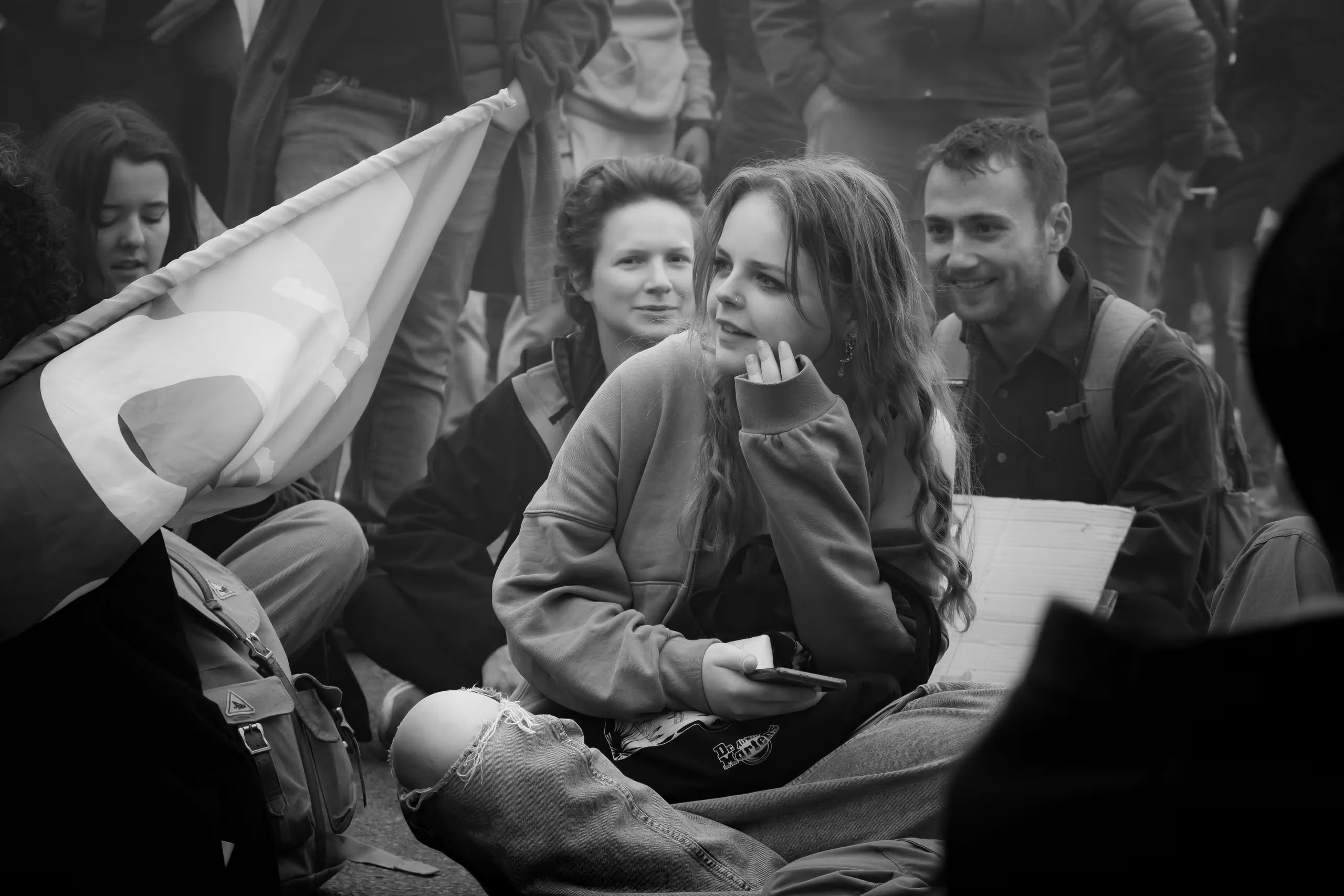
This judicial confrontation was set off by high-profile campus detentions, beginning in March 2025 with Mahmoud Khalil, a Columbia University graduate student and permanent resident who served as a negotiator during campus demonstrations. By August 2025, the Foundation for Individual Rights and Free Expression launched a formal lawsuit against Rubio on behalf of the Stanford Daily student newspaper and several anonymous international students. Their argument was straightforward: the government’s aggressive posturing created an atmosphere of fear that effectively silenced noncitizen writers and researchers.
This ruling in California is not an isolated legal setback for Washington’s policy. A federal court in Massachusetts reached a similar conclusion in September 2025, finding that federal officials infringed on First Amendment rights when attempting to expel noncitizen academics and students. When executive departments treat statutory foreign policy exemptions as a loophole to bypass constitutional rights, the judiciary inevitably steps in to restore balance.
Written by Martina Kirchner martina.kirchner@alpineweekly.com