Aug 2, 10:01 AM
The Family Business: How Political Dynasties Thrive in the Swiss Parliament
Switzerland prides itself on a supposedly egalitarian citizen legislature, yet federal mandates are increasingly treated as inherited assets.
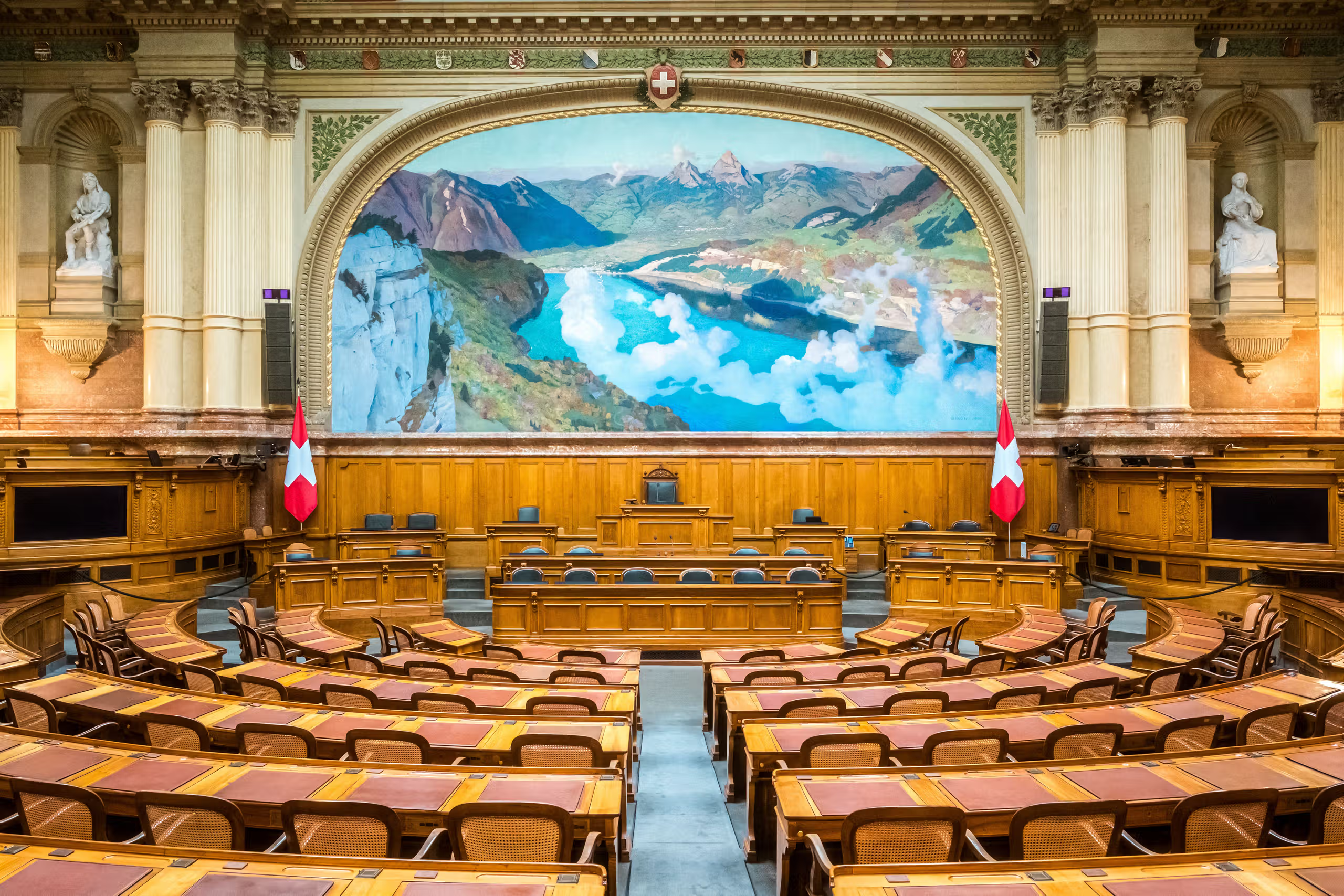
Switzerland loves to view its political system as an egalitarian marvel. The myth features a well-oiled machine where citizens briefly step away from a healthy economy to serve the state. Yet, the Federal Assembly reveals a reality that feels distinctly aristocratic. Ten current members of the national parliament boast a parent who previously occupied a seat in the very same chambers. In a country priding itself on modest pragmatism, federal mandates are frequently treated like family heirlooms.
Take Marianne Binder-Keller, representing The Centre in the Council of States. The Aargau politician did not just inherit a party affiliation; she inherited a specific portfolio. Her late father, Anton Keller, used his time in the National Council to advocate for a robust military. Today, his daughter sits on the security committee, carrying forward a vision of national defence shaped by her father's wartime childhood. The political enterprise is a comprehensive family operation. Her husband manages her campaigns, his father was an influential parliamentarian, and their son currently sits in the cantonal legislature.
This phenomenon is entirely bipartisan. On the left, Kilian Baumann of the Green Party occupies a National Council seat, mirroring the trajectory of both his parents. Before handing over their organic farm to their son, Ruedi and Stefanie Baumann sat in the national parliament for the Greens and the Social Democrats. While the younger Baumann insists he forged his own path by founding a youth environmental group, the dinner table advantage is undeniable. The arrangement is remarkably comfortable: his parents, who emigrated to France, return to Switzerland during sessions simply to babysit, ensuring the family's political footprint remains undisturbed.
On the populist right, the Swiss People's Party offers Benjamin Giezendanner, who seamlessly absorbed his father Ulrich's National Council seat. Elected to the Aargau cantonal parliament at eighteen, Benjamin benefited immensely from the brand recognition of his loud, emotionally driven father. However, the younger Giezendanner represents a sleek, modernised version of the family business. Where Ulrich was a booming patriarch, Benjamin operates with structured pragmatism, showing a willingness to compromise both in the legislature and at the helm of the family transport company. He is now seeking a Council of States seat, aiming to clear a hurdle his father could never manage.
This dynastic tendency highlights a certain coziness in Swiss democracy. For a wealthy nation comfortably enriched by its position outside the European Union, the political sphere remains a familiar, somewhat insular club. The state system functions exceptionally well, but it clearly relies on a polite, modest form of nepotism to keep the legislative machinery humming.
Written by Martina Kirchner martina.kirchner@alpineweekly.com