Sep 11, 2:01 PM
The Cold Feet of Brussels: Why the EU Is Backing Away From Russian Assets
Facing legal hurdles and Belgian resistance, the European Commission quietly shelves plans to tap €210 billion in frozen funds.
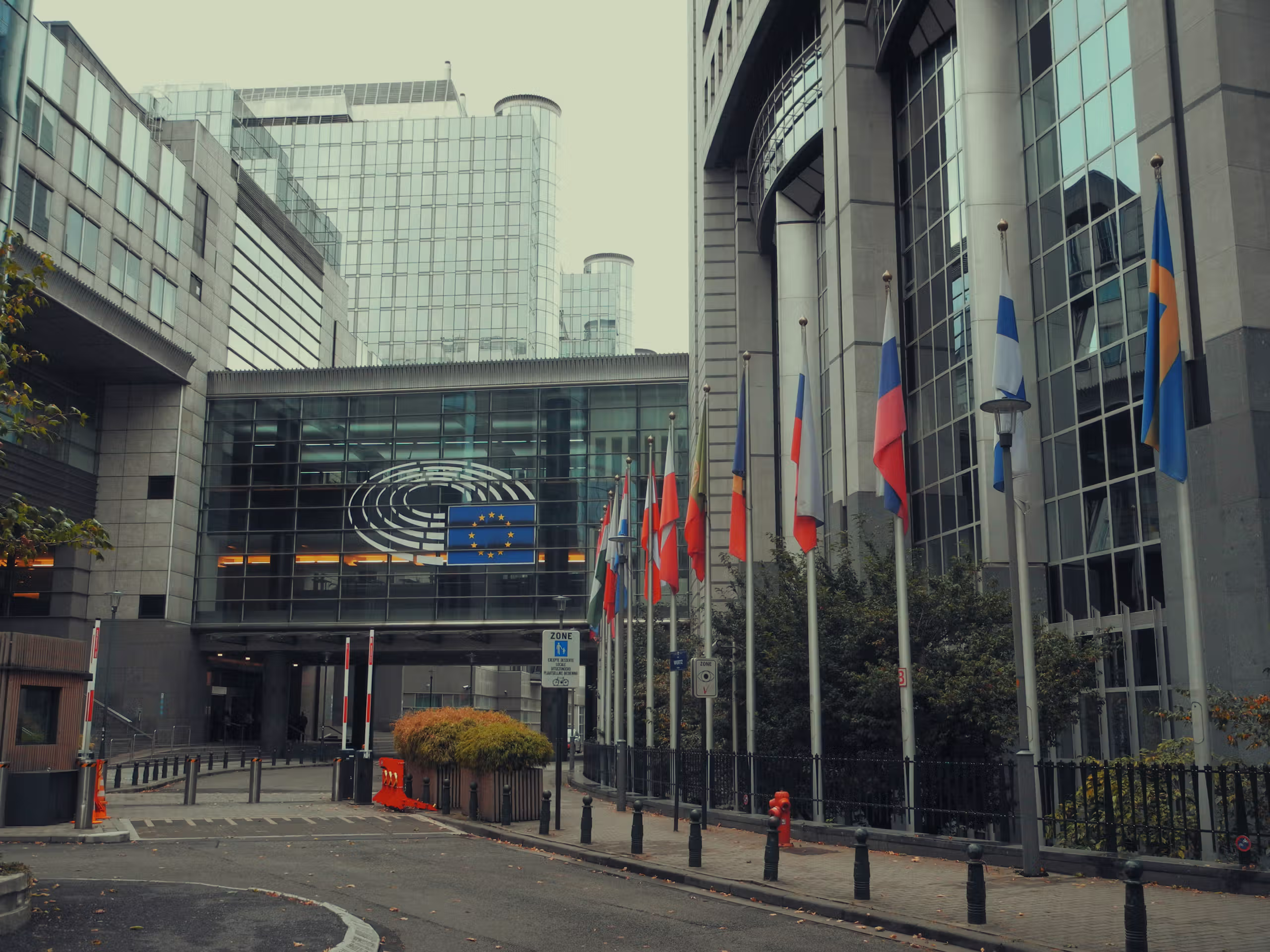
The bureaucratic apparatus in Brussels has an exquisite talent for quiet retreats whenever administrative ambition collides with political reality. Tapping €210 billion in immobilized Russian Central Bank assets to fund Ukraine was once hailed as an elegant financial solution. Today, the European Commission has quietly put the enterprise on ice, choosing instead to stick to predictable accounting exercises and bureaucratically comfortable loan disbursements.
Official explanations from the Berlaymont make the shift explicit. Commission spokesperson Paula Pinho confirmed that that's not the primary focus when questioned about the immobilised capital, adding that executive energy has shifted elsewhere. The Commission now prioritizes managing a previously agreed €90 billion loan package and conferring with the International Monetary Fund to assess the full extent of Ukraine's fiscal gaps.
This strategic retreat leaves several member capitals in an uncomfortable position. A diverse coalition consisting of Poland, Sweden, the Netherlands, and Spain—supported by 122 European Parliament lawmakers—had actively campaigned for legal alternatives. Their goal was clear: establish an EU-owned custodian to circumvent the stubborn resistance of Belgium, whose Euroclear depository holds the bulk of the funds. But Belgium has shown little desire to assume massive legal exposure while Moscow's Central Bank mounts court challenges against the depository.
The financial reality, however, refuses to wait for European consensus. Ukrainian President Volodymyr Zelenskyy recently alarmed Western backers by disclosing an unexpected $27 billion deficit within his defense ministry, alongside a projected €32.6 billion shortfall for next year. Spreading these costs among European taxpayers is politically sensitive; using frozen assets offered an appealing alternative that Brussels now seems unable or unwilling to deliver.
Economy Commissioner Valdis Dombrovskis indicated that his services remain open to exploring legal avenues, provided member states deliver upfront guarantees of unanimous support. In Brussels, waiting for guaranteed consensus before taking action is the standard formula for guaranteeing inaction.
Written by Thomas Nussbaumer thomas.nussbaumer@alpineweekly.com