Oct 21, 8:02 PM
Romanticising Chaos in Berlin
Die Linke's leadership attempts to turn French street violence into a useful domestic narrative.
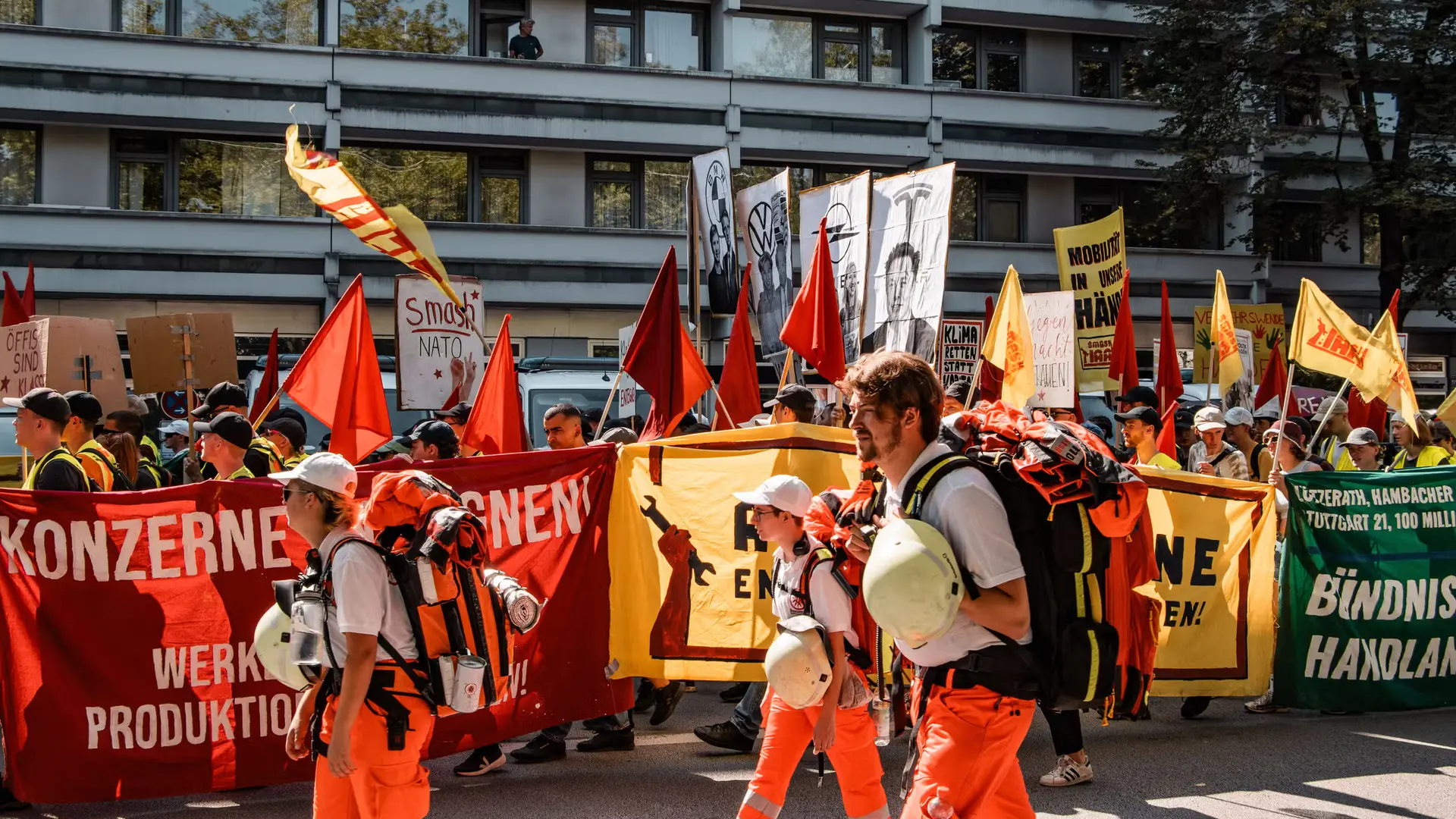
When lawlessness breaks out across European cities, the romantic instincts of Germany's political fringe inevitably kick in. Rather than seeing street violence as a breakdown of public safety or social cohesion, the radical left prefers to treat it as a recruitment tool. Speaking to an audience of the Socialist Democratic Students at the Free University of Berlin, Ines Schwerdtner made that calculus entirely explicit. The co-leader of Die Linke argued that the primary duty of contemporary leftists is to connect different social struggles and weave sporadic mass protests into a unified political narrative.
Her immediate inspiration was the wave of violent unrest that recently tore through France. The reality on the ground in French cities, however, offers a rather less heroic picture than the one peddled in Berlin lecture halls. Figures from the French Interior Ministry show that law enforcement officers arrested 2,397 individuals during the riots. Crucially, roughly ninety percent of those detained were adults between the ages of eighteen and thirty, composed almost entirely of young men rather than school-aged youth.
French police representatives categorized the perpetrators into two distinct groups. On one side were young men from economically troubled neighborhoods who seized upon urban chaos as a convenient opportunity for plunder. On the other were militant far-left extremists, including members of the notorious Black Bloc, who actively sought violent confrontation with law enforcement officers. It is a predictable coalition of failed integration and ideological violence, combining the consequences of disastrous social policies with organized anti-state aggression.
Yet for Schwerdtner, identifying these obvious components is merely a deceptive political strategy. In her address at FU Berlin, she dismissed the notion that migrants and far-left radicals bear responsibility for the destruction, characterizing such explanations as an imported political trick and insisting that the question of violence is being illegitimately instrumentalized.
By downplaying the reality of destroyed property and physical assaults on officers, party leaders attempt to sanitise street violence for domestic consumption. The strategy relies on converting real-world lawlessness into an abstract ideological cause, neatly ignoring the violent reality that French citizens have had to endure. For a party struggling for relevance in Germany, channeling foreign chaos into domestic activism seems to be the preferred substitute for practical governance.
Written by Sandy van Dongen sandy.vandongen@alpineweekly.com