Sep 1, 8:02 PM
Bureaucracy Aloft: The High Cost of Flying Empty Planes Across Europe
North Rhine-Westphalia's charter flight record exposes the paralysis of German and European migration policy.
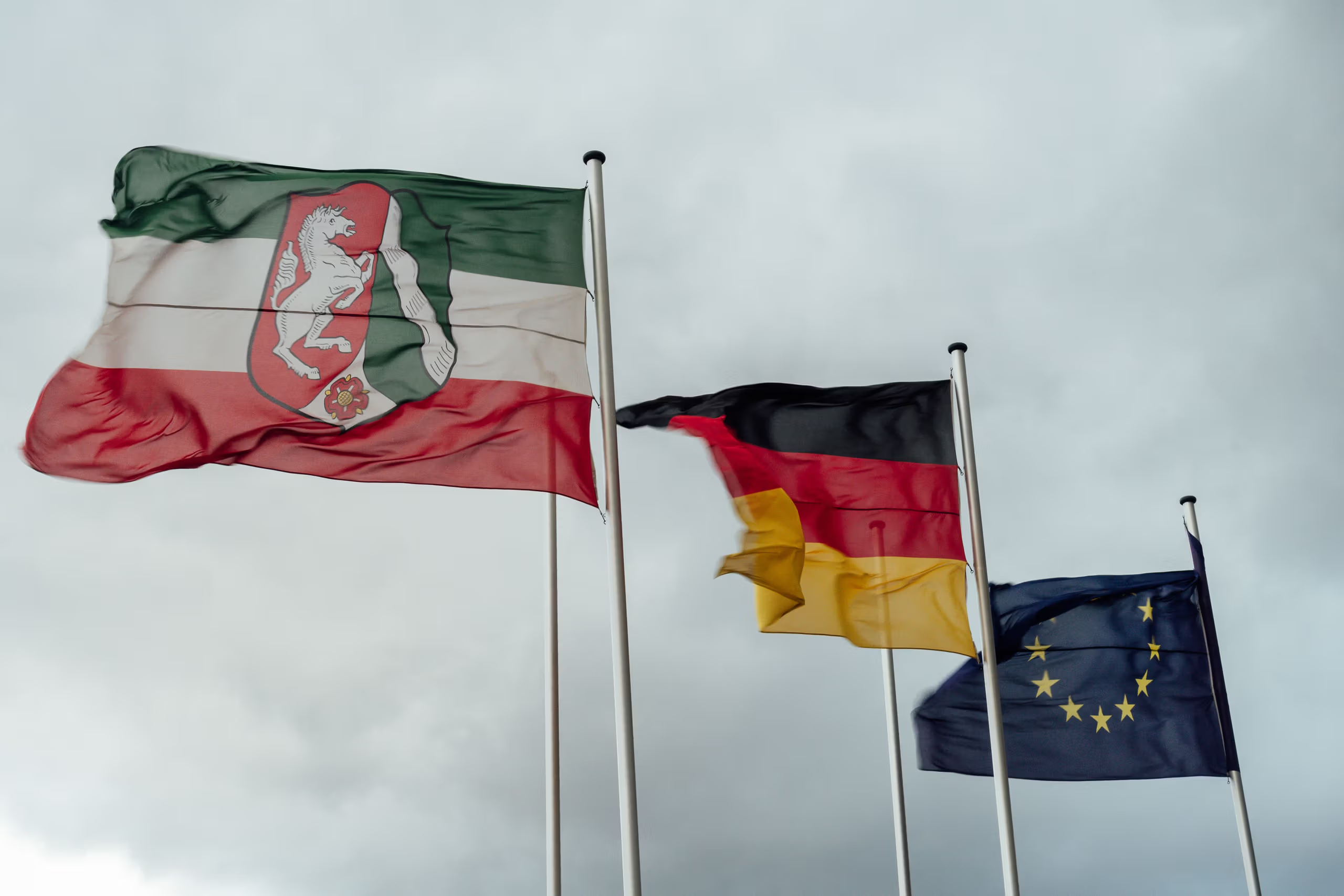
When administrative ambition meets real-world execution, the results often border on the grotesque. North Rhine-Westphalia’s recent migration enforcement record offers a textbook case of state inefficiency masked as compliance. Since the beginning of 2025, the government in Düsseldorf has commissioned fifteen dedicated charter flights to remove roughly 130 individuals. That averages out to less than ten passengers per flight—a staggering display of logistical absurdity financed directly by the taxpayer.
The precedent was set around a year and a half ago, when the state chartered an entire Airbus to fly exactly seven men—four Syrian and three Afghan nationals—to Sofia. Accompanied by a full flight crew and security escorts, the vast, mostly empty cabin flew across the continent to deliver a micro-fraction of the state's deportable population under the European Union’s Dublin regulations.
These operations do not even represent repatriations to countries of origin. They are administrative shuffles intended to return migrants to the EU member state where they were first registered. Yet, even this legal mechanism functions in slow motion. When queried by reporters regarding the shockingly low occupancy of these expensive flights, the Ministry for Refugees in Düsseldorf offered a predictable defence: recipient European states impose strict daily caps, frequently refusing to accept more than ten individuals per aircraft. A spokesperson for the refugee ministry noted that NRW can exercise no influence in this regard and remains bound by these specifications.
This helpless acceptance of paralyzing bureaucracy epitomizes the broader paralysis within German governance and European frameworks. Rather than challenging constraints that render state action laughably inefficient, regional officials quietly write the checks and charter more aircraft. The machine operates to satisfy its own procedural checklists, completely detached from fiscal prudence or effective outcome. When an entire state ministry acts as a passive client to foreign administrative caps, flying mostly empty jets across European airspace, it demonstrates a complete breakdown of political will and structural competence.
Written by Sandy van Dongen sandy.vandongen@alpineweekly.com