Sep 22, 12:01 PM
Berlin's Media Naivety and the Ugly Reality of Inclusion
When a platform for disenfranchised youth inadvertently showcases a hate crime suspect, scrubbing the text changes nothing.

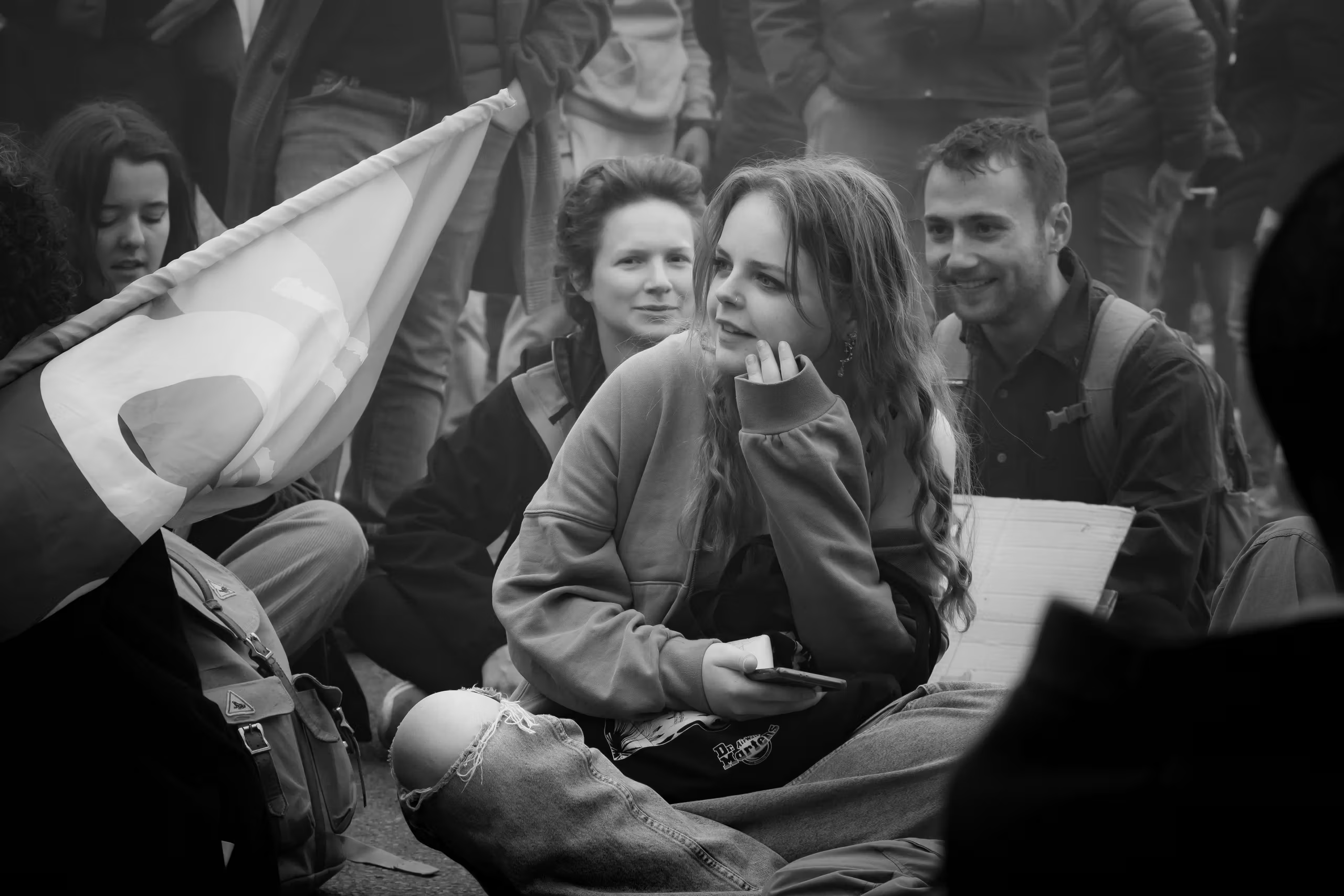
Berlin's political theatre rarely disappoints those with an appetite for grim irony. On a recent election Sunday, the Tagesspiegel set out to highlight the voices of the capital's young residents, showcasing an 18-year-old identified as Jihad A. Speaking at a youth event organized by the Burger Talk club for voters in troubled districts, the young man lamented his lack of political suffrage. It was simply unfair, he argued, that holding merely a residence permit barred him from the ballot box, given that foreigners live and work in the city.
The media outlet’s warm portrait of civic frustration rapidly unravelled. Attentive readers noticed a striking resemblance between the disenfranchised teenager and a perpetrator caught on video weeks earlier. In late July, two migrant youths had cornered a council member of the Kahal Adass Jisroel Jewish community on his way to a synagogue, threatening him with death while one repeatedly raised his arm in a Hitler salute on the open street. The incident, captured on film and shared online by Rabbi Shlomo Afanasev, had already caused public outrage.
Faced with the uncomfortable reality of who they had held up as an exemplar of excluded youth, the newspaper quietly deleted the interview from its report. Editor Alexander Fröhlich subsequently posted an explanatory note on X, stating that in an earlier version of this article, a young man was quoted who—as we only learned later—had reportedly shown the Hitler salute to a board member of a Jewish community on the street in the past.
This awkward editorial retraction offers a revealing snapshot of the capital's deeper ideological blindness. While media institutions and political activists eagerly champion expanding voting privileges to non-citizens, the obvious failures of integration policies over recent decades are systematically ignored until they become impossible to conceal.
The broader political shifts in the city reflect a similar trajectory. The Linke party emerged as the strongest force in Berlin's vote, heavily reliant on a specific voter demographic. Data from the Forschungsgruppe Wahlen, compiled for the Katholische Nachrichtenagentur, revealed that 51 percent of Muslim voters cast their ballot for Die Linke. By contrast, only four percent chose the AfD, with the remaining 45 percent distributed among other parties.
This electoral alignment brings radical rhetoric directly into the mainstream political arena. During the campaign, rapper Dahabflex performed at a Linke event, chanting slogans calling for intifada and death to the Israeli military. On election day itself, Neukölln Linke politician Bassem Said openly called for a voting intifada. When political platforms comfortably accommodate such hostility, quietly deleting an embarrassing interview does little to address the underlying reality.
Written by Thomas Nussbaumer thomas.nussbaumer@alpineweekly.com