Mar 2, 7:14 AM
US and Israel Strike Iran, Triggering Regional Retaliation
Coordinated attacks prompt Iranian missile and drone response against Israel and US bases across the Gulf
The United States and Israel carried out coordinated military strikes across Iran early Saturday, sharply escalating tensions in the Middle East and prompting retaliatory missile and drone attacks by Tehran against Israeli territory and US military installations in the Gulf. US President Donald Trump described the action as “major combat operations,” saying diplomatic efforts had failed and accusing Iran of developing missile capabilities capable of threatening Europe. He also called on Iranians to “seize control of your destiny,” while Israeli Prime Minister Benjamin Netanyahu said the objective was to weaken Iran’s military and intelligence infrastructure and create conditions for Iranians to “take their fate into their own hands.”
Iranian state media reported explosions in several cities, including Tehran, where witnesses described a blast near the compound of Supreme Leader Ali Khamenei. Authorities shut roads around the area, and Khamenei did not immediately make a public appearance. Iranian outlets said military facilities, intelligence sites and government-linked locations were among the targets. An official briefed on the Israeli operation, speaking on condition of anonymity, said the campaign focused on military command structures and strategic infrastructure, though no comprehensive list of targets has been released. Iran and Israel both closed their airspace to civilian flights, and Israel declared a state of emergency as sirens sounded across the country in anticipation of retaliation. Iranian authorities have not yet confirmed casualty figures.
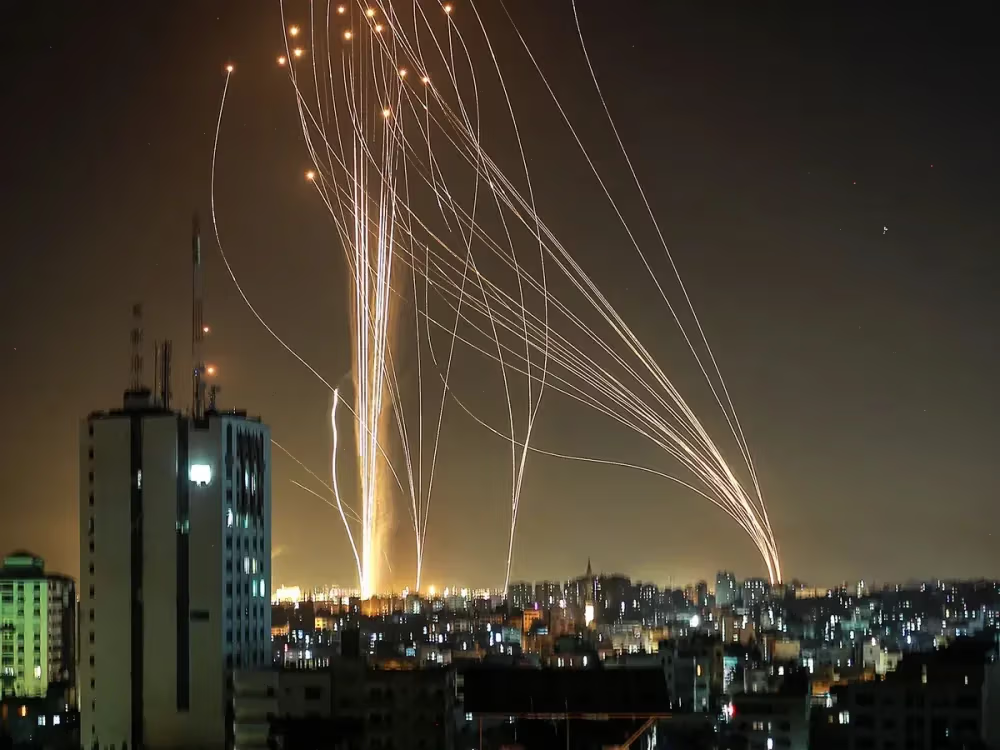
Within hours, Iran’s Islamic Revolutionary Guard Corps announced what it called the first wave of missile and drone strikes against Israel. Air defence systems were activated across multiple Israeli cities as projectiles were intercepted. Regional officials and journalists in the Gulf reported that Iran also targeted US military installations in Bahrain, Kuwait and Qatar. Iraq and the United Arab Emirates temporarily closed their airspace as a precaution. Iran’s Foreign Ministry said the country “will not hesitate” to defend itself. Two senior officials from Yemen’s Iran-backed Houthi movement, speaking anonymously, said the group intended to resume attacks on shipping routes and Israeli targets in support of Tehran, though no formal statement was issued by the group’s leadership.
European governments reacted with concern, convening emergency consultations amid fears of a wider regional conflict. The European Union began evacuating some diplomatic staff from parts of the Middle East, and EU foreign policy chief Kaja Kallas described the situation as “perilous,” urging restraint while reiterating concerns over Iran’s missile and nuclear programmes. Germany scheduled a crisis meeting, and France and Italy advised their citizens in the region to exercise extreme caution. Switzerland called on all sides to respect international law and protect civilians. Several European officials indicated they had received little advance notice of the strikes.
The confrontation marks one of the most serious direct escalations between Washington, Tel Aviv and Tehran in recent years. It follows months of heightened tension over Iran’s nuclear programme and its regional alliances. The extent of damage inside Iran and the full scope of retaliatory attacks remain unclear, and governments across the region are bracing for further developments as both sides assess their next moves.