Apr 14, 12:10 PM
EU Slashes Duty-Free Steel Imports by Nearly Half as Asian Competition Crushes European Mills
Bloc doubles penalty tariffs to 50 percent on excess shipments, with China, India, and Turkey in the crosshairs.
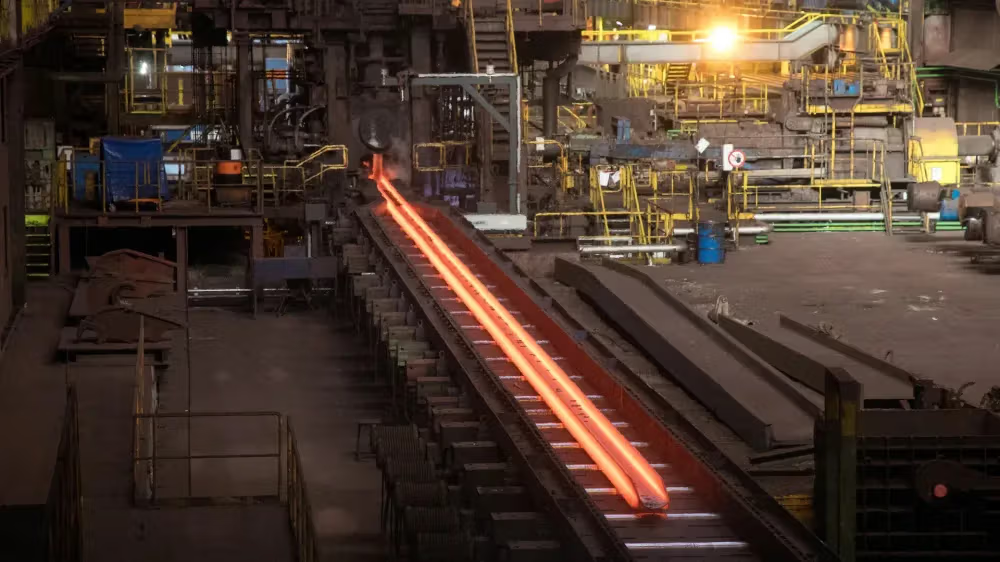
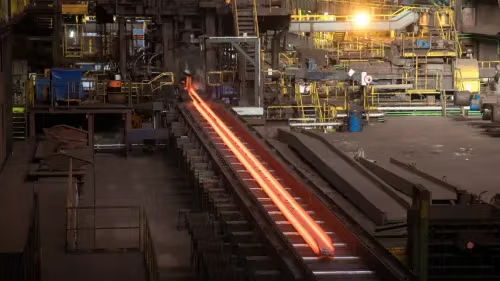
The European Union has moved decisively to erect higher walls around its struggling steel sector, agreeing overnight to slash the volume of duty-free imports by nearly half while doubling the penalty for shipments that exceed the new limits. Representatives of member states and the European Parliament reached the deal in the early hours of Tuesday, responding to mounting pressure from domestic producers who have watched cheaper Asian steel flood the market and undercut their viability.
Under the revised framework, the annual quota for tariff-free steel entering the EU will be capped at 18.3 million metric tons. This represents a reduction of approximately 47 percent compared to the previous allowance. Any imports that breach this threshold will now incur a punitive duty of 50 percent, a sharp escalation from the 25 percent rate that had been in place.
The measures are explicitly aimed at stemming the tide of low-cost steel from China, India, and Turkey, countries whose export-oriented mills have benefited from state subsidies and excess production capacity that European manufacturers simply cannot match. The agreement also stipulates how the reduced quota will be allocated among specific third countries, ensuring that the limited duty-free access is distributed according to a predetermined formula rather than claimed on a first-come basis.
In a concession to importers and downstream industries that rely on foreign steel, the new rules preserve a degree of operational flexibility. Unused portions of a quarterly quota may be carried forward to the following quarter, preventing artificial shortages that could disrupt supply chains for European manufacturers of automobiles, machinery, and construction materials.
The existing import regulation is set to expire on June 30. While the deal reached overnight requires formal endorsement from both the Council of member states and the European Parliament, this final step is widely regarded as a procedural formality. Once approved, the tighter restrictions will take effect immediately, offering European steelmakers a more protected home market even as they confront the deeper structural challenges of global overcapacity and the green transition.
Written by Martina Kirchner