May 21, 6:27 AM
US Indicts Cuba's Raul Castro on Murder Charges Over 1996 Plane Shootdown – But Trump Rules Out Military Action
The former president is 94 and remains influential. Trump called the indictment a "very big moment" but said "there won't be escalation."
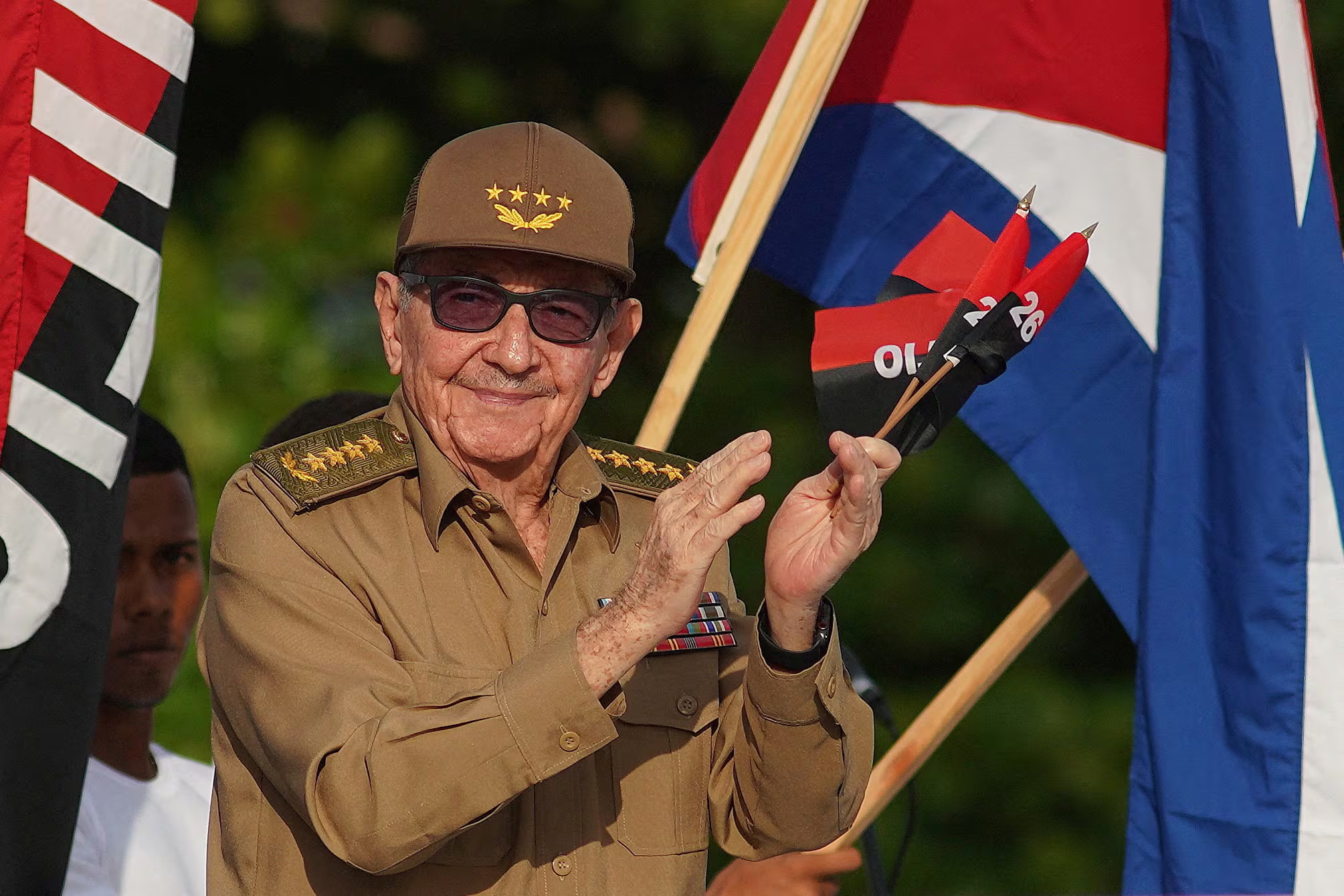
The United States on Wednesday indicted Cuba's former leader Raul Castro on murder charges, fuelling speculation that President Donald Trump will try to topple the communist state. The charges against the former president – who at 94 years old remains influential in Cuban politics – stem from the deadly 1996 downing of two civilian planes manned by anti-Castro pilots. Castro is the younger brother of Fidel Castro, the late iconic US nemesis who led Cuba's 1959 communist revolution.
"We expect that he will show up here by his own will or by another way and go to prison," acting Attorney General Todd Blanche told a news conference in Miami attended by cheering Cuban-Americans. In addition to murder, Castro has been charged with conspiracy to kill Americans and destruction of aircraft.
The US government previously capitalised on a domestic indictment to justify military action in January – an operation that toppled and captured Venezuelan president Nicolas Maduro, a staunch ally of Cuba. Trump hailed the indictment on Wednesday as a "very big moment" but played down prospects of moving in on Cuba, whose economy has been in deepening crisis for months amid a US oil blockade and economic pressure. "There won't be escalation. I don't think there needs to be. Look, the place is falling apart. It's a mess, and they sort of lost control," Trump told reporters in the Oval Office.
The Cuban government said in a statement that the 1996 shootdown was "legitimate self-defence" against an airspace violation. Cuban President Miguel Diaz-Canel wrote on X that the charges carry no legal basis and "add to the file they are fabricating to justify the folly of a military aggression against Cuba." Five other Cubans were also charged, including the air force pilots who shot down the planes.
Four people died in the 1996 incident, plummeting relations between the United States and Cuba. Two decades later, Raul Castro joined US president Barack Obama in an effort to reconcile. Trump reversed Obama's effort to improve relations and has been steadily tightening sanctions on the island, already under a US embargo almost continuously since the communist revolution. Washington's stunning ousting of Maduro has hit Havana hard, cutting off a supply of free Venezuelan oil and cash to the island, which has suffered major blackouts since losing that lifeline.
So the US has indicted a 94-year-old former president. Murder charges. Conspiracy to kill Americans. Destruction of aircraft. The Cuban government calls it legitimate self-defence. Diaz-Canel says it is fabrication to justify military aggression. Trump says it is a very big moment – but also says there will be no escalation. The place is falling apart, he says. It's a mess. They lost control. No need for US troops. The indictment is enough. The cheering Cuban-Americans in Miami might disagree. The White House is signalling restraint. But after Venezuela, no one is quite sure what restraint means. Castro is 94. He is not showing up in a US court voluntarily. The "other way" – extradition, capture – seems unlikely. Cuba is not Venezuela. The military calculus is different. The political risks are higher. But the indictment is on the table. The pressure is increasing. And the island, already crumbling, is being squeezed further. The planes went down in 1996. The indictment came down in 2026. Thirty years later, the US is still fighting the Cold War. Cuba is still standing – barely. And Raul Castro, whether he ever sees a US courtroom or not, is now officially a fugitive from American justice. In Miami, they are cheering. In Havana, they are bracing. In Washington, Trump is saying one thing and doing another. As always.