Apr 14, 9:56 AM
Germany Faces Fighter Jet Choice: Pay France's Price or Walk Away
Merz caught between saving Paris ties and protecting German industry as €100 billion FCAS project nears collapse.
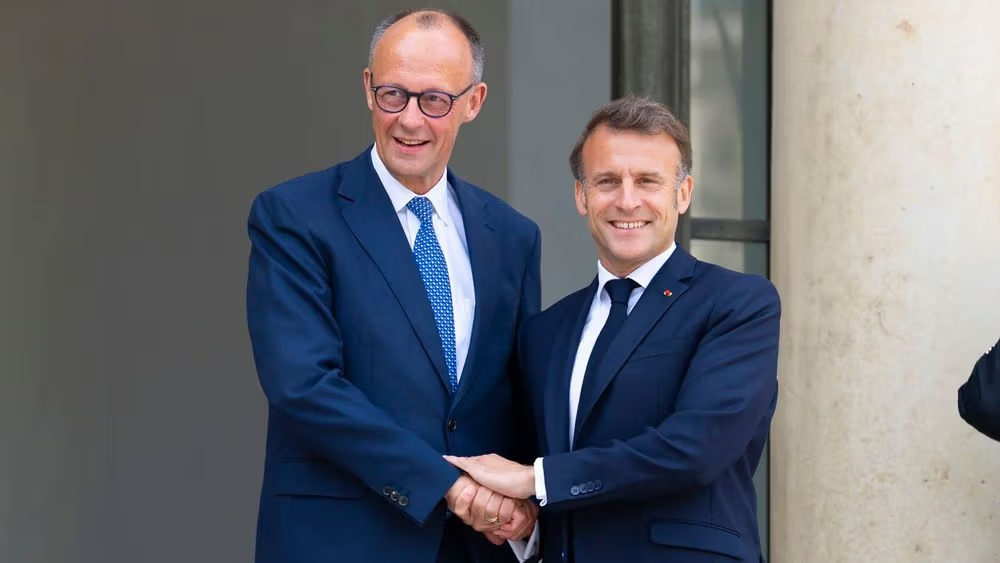
The Future Combat Air System, a flagship defense project launched in 2017 by Emmanuel Macron and Angela Merkel, is teetering on the edge of collapse. Designed as a joint endeavor between Germany, France, and Spain to develop a next-generation fighter jet, the €100 billion initiative was meant to pool resources, cut costs, and symbolize a new era of European defense cooperation. Instead, it has become a source of persistent friction between Berlin and Paris, and Chancellor Friedrich Merz now faces a decision with no good options.
The core dispute is straightforward and seemingly intractable. Éric Trappier, the head of French defense contractor Dassault, has repeatedly insisted that his company must lead the project. The position from Paris is that Airbus, the German partner, lacks the requisite experience and cannot credibly claim a leadership role. France has shown no willingness to negotiate on this point. Germany, for its part, has refused to accept this verdict, leaving the project in a state of paralysis. Three deadlines have already passed, and a final mediation attempt is currently underway, with a decision expected later this month.
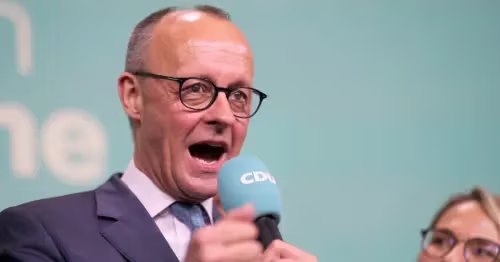
Macron continues to press Merz for concessions, but the German chancellor has publicly voiced skepticism. In February, he noted that German and French operational requirements for the aircraft differ. In a late March interview with the Frankfurter Allgemeine Zeitung, Merz admitted he had nearly decided to "pull the plug," seeing little remaining chance for success. He paused, he explained, because he did not want to be told in five or ten years that he should have tried one more time.
Merz must now weigh three competing considerations: the health of Franco-German relations, the broader project of European defense integration, and Germany's own strategic and industrial interests.
On the bilateral front, the stakes are high. Every German chancellor regards the Paris relationship as foundational to the European project. Despite occasional overtures toward Italy's Giorgia Meloni or talk of a stronger partnership with Poland, Merz has consistently returned to the reality that Berlin and Paris remain the EU's indispensable heavyweights. Yet the relationship is strained. While both leaders agree on the need for a more cohesive Europe in the face of Russian aggression, Chinese ambition, and American unpredictability, their visions diverge sharply on specifics. Merz wants more market and less bureaucracy in the EU; Macron favors common debt. Berlin pushes for new trade deals; Paris regularly obstructs them. Geostrategic gaps are also evident: France is more willing to confront Washington, while Germany clings to the transatlantic security partnership. Macron sought dialogue with Putin, which Merz opposed. When Merz moved to freeze Russian assets in the EU, Macron offered no support. An open failure of FCAS would be a public admission that Franco-German cooperation is burdened by significant friction.
A collapse would also damage efforts to consolidate Europe's fragmented defense industry. Brussels has recently launched initiatives like Security Action for Europe and the European Defence Industry Programme to encourage joint procurement and overcome national protectionism. EU Defense Commissioner Andrius Kubilius has been touring capitals to advocate for closer collaboration. If FCAS, the largest and most symbolic joint defense project, were to fail, it would represent a severe setback for the vision of an integrated European defense industrial base.
Yet conceding to French demands carries its own heavy costs. German industrial interests would suffer a significant blow. According to reports in the Handelsblatt, the expertise Germany developed through the Tornado and Eurofighter programs would atrophy, and thousands of high-skilled jobs within Airbus Defence and Space would be placed at risk. Under French leadership, the fighter would likely be tailored primarily to French military specifications, with German requirements receiving secondary consideration. Germany's role would shift toward land systems rather than combat aviation.
Merz could opt for a clean break. Alternatives to FCAS do exist. Germany could pursue a national fighter program while cooperating with France on drones. Or it could seek entry into other ongoing projects: the Global Combat Air Program with Italy, Britain, and Japan, or a partnership with Sweden as it plans a successor to its Gripen fighter.
Angela Merkel treated defense as a secondary concern, making it easy to launch FCAS as a political gesture toward Paris. Those times have passed. Military capability and readiness have acquired new urgency. Germany must now build reliable, independent defense capacities, not only for its own security but for the defense of Europe as a whole. Merz will not be able to evade this imperative.