Facebook Blocks Pro-Government Hungarian News Pages Weeks Before Election
Media association calls move an attack on press freedom as Meta says restrictions were imposed “in error”
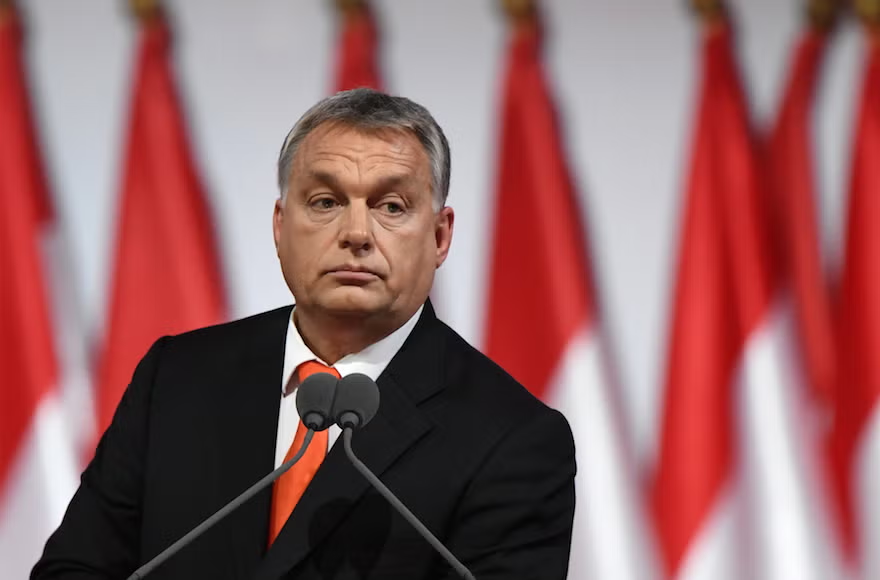
Facebook has blocked the pages of three Hungarian news outlets seen as supportive of Prime Minister Viktor Orbán, just weeks before parliamentary elections in the country.
The pages of Bama.hu, Szabolcs Online and Kisalföld.hu were made inaccessible on Friday, with the platform citing violations of its community standards. The outlets, all part of the Mediaworks Hungary group, issued a joint statement condemning what they described as an unjustified decision and said they would appeal the ban.
The timing has sparked political controversy. Hungary is set to hold parliamentary elections in early April, where Orbán’s ruling Fidesz party faces mounting pressure from the pro-EU opposition Tisza Party.
The Hungarian National Media Association denounced the move as an attack on press freedom, arguing that references to non-compliance with Meta’s community principles were vague and open to interpretation. In a statement, the association suggested the tech company could be “punishing right-wing news portals” for publishing warnings about the risk of war escalation in Europe.
Hungary has frequently clashed with Brussels over EU policy on Ukraine and Russia. Orbán has been among the bloc’s most outspoken critics of deeper EU involvement in the war, arguing that such engagement risks dangerous escalation.
Later on Friday, Meta told Hungarian outlet Telex that the pages had been “erroneously restricted” and that access had been restored. However, as of Saturday evening, two of the three affected pages remained unavailable.
Orbán has previously accused the European Union of attempting to undermine his government and influence Hungarian elections. He has also alleged coordination between Brussels and Kyiv aimed at weakening his leadership.
The episode echoes broader tensions across Europe over social media moderation and election integrity. Similar accusations of foreign interference surfaced in Romania’s 2024 presidential election, where the Constitutional Court annulled the first-round result following intelligence claims of outside meddling.
With Hungary’s vote approaching, the dispute between Meta and pro-government media outlets is likely to intensify debate over digital platforms’ role in shaping political discourse — and over where the line lies between content moderation and political intervention.