Mar 11, 1:50 PM
US Destroys Iranian Naval Vessels Near Strait of Hormuz as War Escalates
Washington says 16 Iranian mine-laying boats were destroyed after Tehran threatened to block oil shipments through the strategic waterway used for about one-fifth of global crude exports.
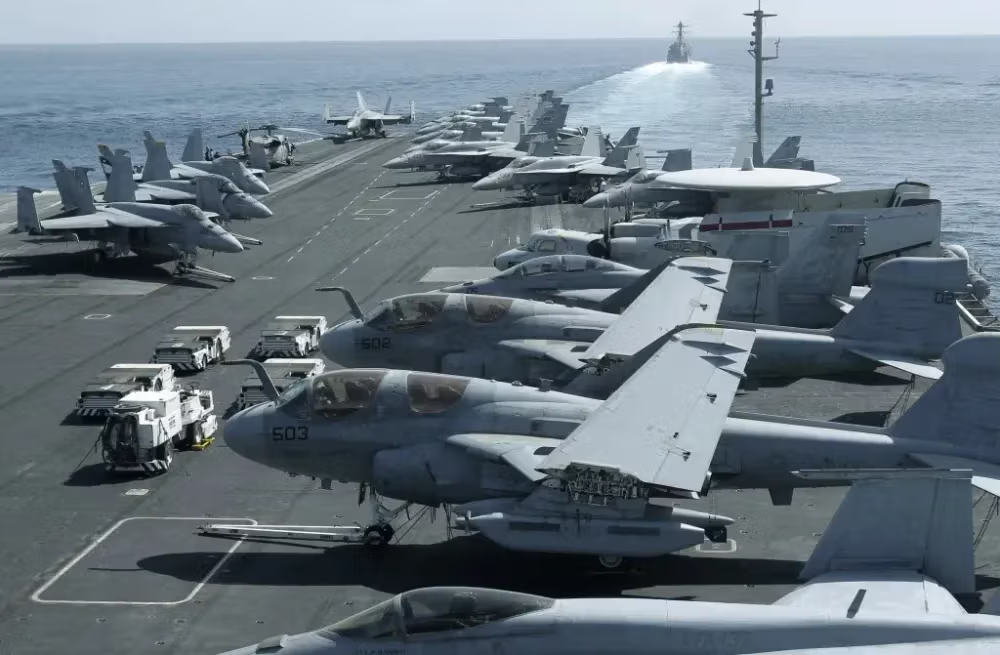
The United States claims it has taken out 16 Iranian vessels thought to be equipped for laying naval mines near the Strait of Hormuz, following Tehran’s warnings to block oil shipments through this vital shipping route.
U.S. officials say the strike happened Tuesday, responding to Iran’s threats to halt oil exports to nations it deems hostile. This narrow, crucial waterway between the Persian Gulf and Gulf of Oman normally channels about one-fifth of the world’s crude oil supply.
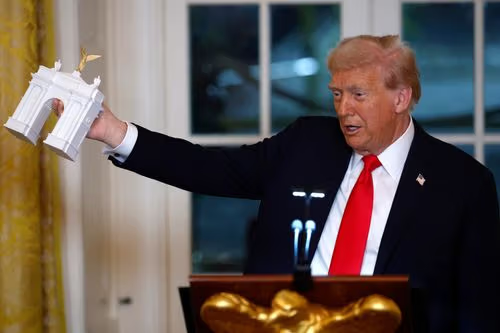
President Donald Trump first announced the assault on his social media, stating American forces had destroyed several boats reportedly meant for mine-laying missions. Later, U.S. Central Command updated the figure, confirming the destruction of 16 vessels.
Washington framed the operation as a preemptive measure against Iran’s warning to shut down energy exports through the strait. Officials argue such an action would cause major upheavals to global shipping and energy markets.
This naval offensive unfolded as tensions between the U.S., Israel, and Iran entered their second week. With Tuesday marking day eleven of active hostilities, residents in Tehran reported some of the fiercest attacks since the conflict began.
Earlier, U.S. Defense Secretary Pete Hegseth suggested military efforts would ramp up further. Pentagon data released Tuesday indicated U.S. casualties remained steady at seven dead and roughly 140 wounded. Iranian forces have consistently targeted American bases, vessels, and diplomatic sites across the region, according to officials.
Meanwhile, Iran’s missile and drone attacks have continued against Israel and multiple Gulf countries hosting U.S. troops. On Tuesday, Saudi Arabia, the UAE, Qatar, and Kuwait all reported Iranian assaults, signaling the conflict’s spread beyond its initial flashpoints.
Neighboring nations have also been pulled into the fray. Early Wednesday, Kuwaiti air defenses intercepted eight drones identified as Iranian in origin. Saudi Arabia announced shooting down five drones aimed at its eastern Shaybah oil field.
Israel confirmed overnight strikes on targets in both Tehran and Lebanon. Prime Minister Benjamin Netanyahu vowed the campaign would persist until Iran and its regional proxies no longer threaten Israeli security.
Simultaneously, fighting intensified in Lebanon. Israeli forces say their operations seek to dismantle Hezbollah’s infrastructure, the Iran-backed group. Lebanese reports stated that Israeli strikes on Tyre and Sidon on Tuesday killed at least seven people and injured dozens more.
The conflict has sparked a deepening humanitarian crisis in Lebanon. United Nations data cited by officials reveals about 667,000 displaced persons due to Israeli attacks in the last two weeks. Lebanese authorities estimate the death toll in the conflict has surpassed 397.
Diplomatic paths seem bleak for the moment. Iranian leaders have dismissed talks with the U.S., accusing Washington of bad faith and referring to negative past negotiation experiences.
Despite rising violence, U.S. and Israeli leaders appear to diverge on how long the war might last. Netanyahu has expressed readiness for a protracted struggle against Iran and its allies, while Trump told Republican lawmakers that joint efforts with Israel are going well and hinted the conflict might wrap up relatively quickly.
With the Strait of Hormuz at the heart of this confrontation and attacks reverberating across the Middle East, the threat of broader disruption to global energy supplies—and regional stability—remains very real.