India and Canada Agree Uranium Deal in Bid to Reset Strained Ties
Modi and Carney aim to finalise broader economic partnership by year’s end after years of diplomatic tensions
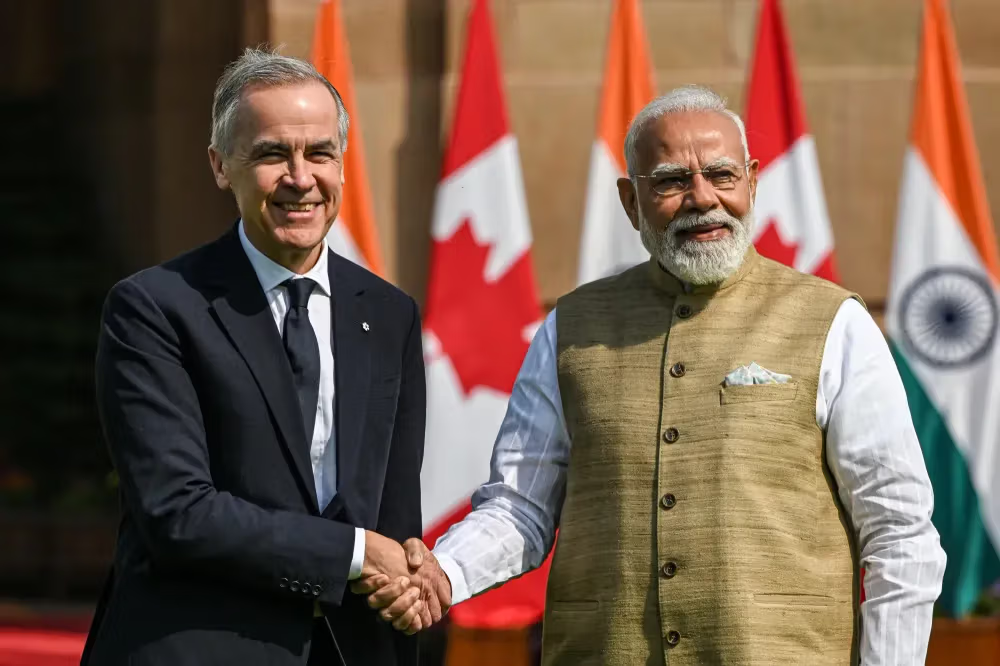
India and Canada have agreed on a long-term uranium supply deal and pledged to conclude a broader economic partnership by the end of the year, marking a significant step toward repairing relations strained for nearly three years.
Following talks in New Delhi, Canadian Prime Minister Mark Carney said he and Indian Prime Minister Narendra Modi had committed to finalising an economic partnership agreement before year’s end.
The agreements signal an effort by both governments to reset ties that deteriorated sharply in 2023, when then–Prime Minister Justin Trudeau said there were “credible allegations” linking India to the killing of a Sikh separatist leader on Canadian soil. The accusation triggered diplomatic expulsions and a prolonged freeze in high-level engagement.
Under Carney’s leadership, Ottawa has sought to rebuild economic and strategic cooperation with New Delhi, particularly as Canada faces tariff pressures from its largest trading partner, the United States.
The uranium supply agreement is seen as particularly significant. India relies on nuclear energy as part of its long-term strategy to diversify its energy mix and reduce dependence on fossil fuels. Securing stable uranium imports is expected to strengthen its energy security at a time of geopolitical uncertainty.
Beyond nuclear cooperation, the two leaders announced plans to deepen collaboration in critical minerals, clean energy, space technology and higher education. Officials said these sectors were identified as areas of mutual strategic interest, with potential for joint research, investment and industrial development.
Analysts describe the announcements as a pragmatic recalibration rather than a full reconciliation. While political tensions have not disappeared, both sides appear eager to prioritise trade and long-term economic growth.
For India, closer ties with Canada could secure access to critical resources and advanced technologies. For Canada, engagement with one of the world’s fastest-growing major economies offers an opportunity to diversify trade relationships amid shifting global supply chains.
Whether the momentum holds will depend on progress in negotiating the broader economic partnership agreement. But after years of diplomatic frost, the two governments are signalling that economic pragmatism is once again taking precedence over confrontation.
Written by Andreas Hofer