OpenAI Strikes Deal With Pentagon After Anthropic Ban
Agreement follows Trump administration move to bar Anthropic technology from US government use
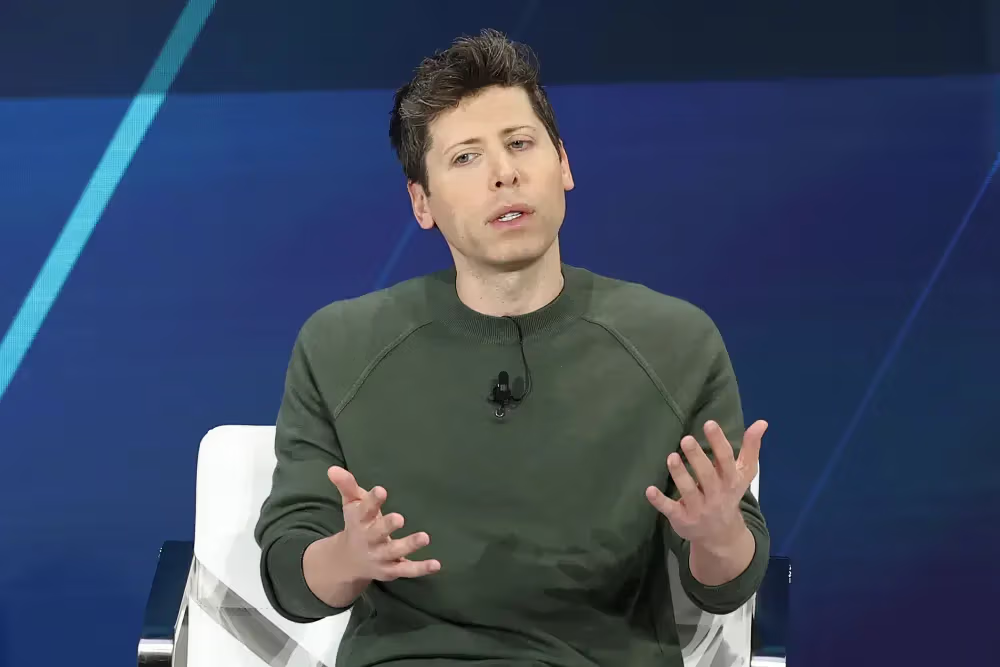
OpenAI has struck a deal with the US Department of Defense to roll out its artificial intelligence models inside the Pentagon’s secure network, according to the company’s CEO, a move that comes just days after Anthropic, a rival in the AI space, was effectively shut out from government contracts..
Sam Altman took to X to announce that OpenAI had hammered out an agreement with the Defense Department for deploying its technology within classified military environments. Notably, Defense Secretary Pete Hegseth amplified Altman’s post, making it clear this wasn’t just idle chatter, but carried official weight.
Here’s what stands out: The finer points of this arrangement remain under wraps for now.. No word yet on which specific OpenAI models will be involved or precisely how they’ll be put to use on military projects.
Still, Altman made it plain that two non-negotiable safety commitments are baked into this pact,first, there’s an outright prohibition against domestic mass surveillance; second, any use of force (especially involving autonomous weapons) must have human oversight built in from day one. The Pentagon has agreed not only to adopt these principles, but also to lock them down in law and policy as well as in their contract language. So why does this matter. Well, all of this is happening against a backdrop of mounting tensions between the Pentagon and Anthropic. Anthropic pushed hard for strict guardrails around how its AI could be used by US defense agencies, essentially refusing support for broad domestic monitoring or letting machines make lethal decisions without people calling the shots.
But last week brought a dramatic turn: Hegseth officially labeled Anthropic as a “Supply-Chain Risk to National Security,” shutting military contractors and partners off from doing business with them moving forward. That doesn’t mean everything stops overnight; current services can run up to six months while officials steer toward what they’re calling “a more reliable and patriotic” supplier,in other words, someone else entirely. This clampdown came right on the heels of President Donald Trump directing federal agencies across the board to halt deployment of Anthropic technologies altogether. All things considered, these moves shine a spotlight on just how fierce competition has become between OpenAI and Anthropic over lucrative government deals.
Washington is clearly treating AI integration into defense operations as mission-critical nowadays, with policymakers laser-focused on safeguarding national security while maintaining America’s tech edge globally.
Altman didn’t mince words either: He urged Pentagon officials to hold every AI vendor,including his own, to similar standards when cutting contracts going forward because these core principles ought to be industry norms rather than exceptions carved out behind closed doors.
He also stressed that OpenAI would layer technical controls atop legal ones so its models operate strictly according to plan inside sensitive military systems. Bottom line. This agreement marks a real turning point in how Washington is teaming up with private-sector AI leaders,and underscores just how pivotal advanced machine learning is becoming within America’s national defense apparatus.
Written by Thorben Thiede