European Stocks Slide as Gulf Exchanges Remain Closed After Iran Strikes
Oil and gold surge while US futures fall amid escalating Middle East tensions
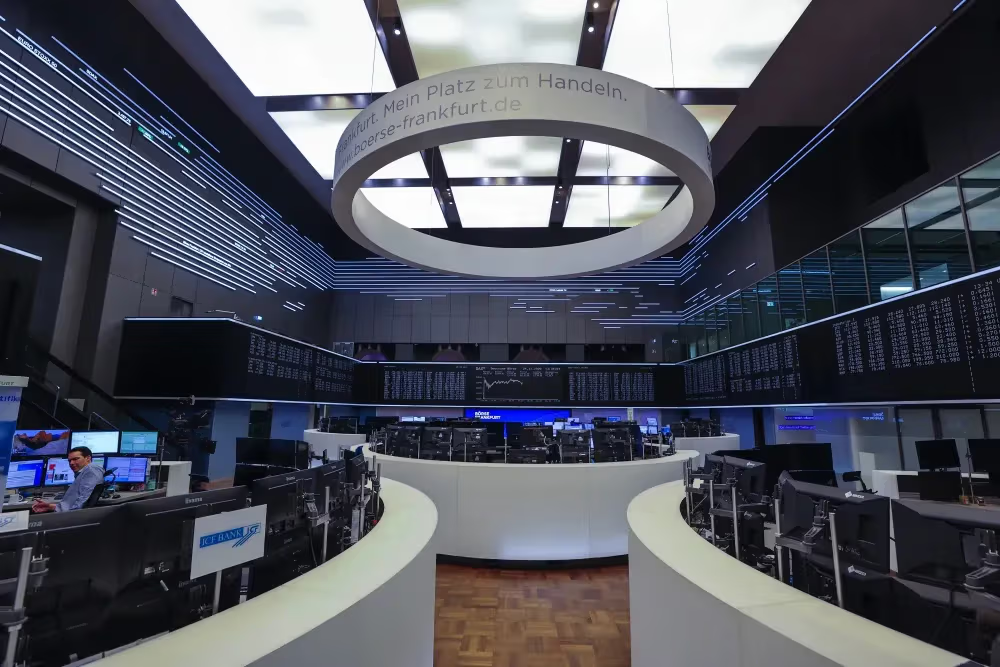
European markets opened sharply lower on Monday as investors reacted to escalating conflict in the Middle East following US and Israeli strikes on Iran.
The Euro Stoxx 50 fell 2% at the opening bell, while the broader STOXX Europe 600 dropped 1.8%. Selling pressure spread across the continent as concerns mounted over disruptions to energy supplies and shipping routes.
Germany’s DAX declined around 1%, France’s CAC 40 fell more than 1.4%, and Italy’s FTSE MIB slid roughly 1.8%. Spain’s IBEX 35 posted one of the steepest losses, down more than 2%.
In London, the FTSE 100 proved more resilient, dipping about 0.3%, helped in part by gains in energy stocks that tend to benefit from higher oil prices.
Markets in Asia had already signalled investor anxiety. Japan’s Nikkei 225 fell more than 2.3% earlier in the session. In the United States, futures pointed to a weaker open, with the E-mini S&P 500 down over 1.6% and the E-mini Nasdaq falling more than 2%.
Meanwhile, financial markets in the Gulf remained shut. Authorities suspended trading on both the Abu Dhabi Securities Exchange and the Dubai Financial Market for two days. Regulators said the closures were intended to prevent panic selling after a wave of missile and drone attacks targeting the UAE over the weekend.
Energy markets moved in the opposite direction to equities. Crude oil prices jumped in early trading as investors assessed the risk of supply disruptions, particularly through the Strait of Hormuz, a key artery for global oil shipments.
US benchmark crude initially surged around 8% before easing to trade about 5.9% higher at $71 per barrel. Brent crude climbed 6.2% to roughly $77.38 per barrel.
Safe-haven assets also rallied. Gold rose approximately 2.5%, while silver gained 2% and platinum advanced 1.2%.
With tensions still high and no clear signs of de-escalation, analysts warn that further volatility could lie ahead. Much will depend on whether the conflict disrupts oil exports on a sustained basis — a development that could deepen market losses and amplify inflationary pressures worldwide.