Jul 20, 2:03 PM
Azerbaijan’s German Connection Is Becoming a Logistics Story
What began as an energy relationship is turning into something wider: trade, transport and industrial cooperation, with gas still in the background.
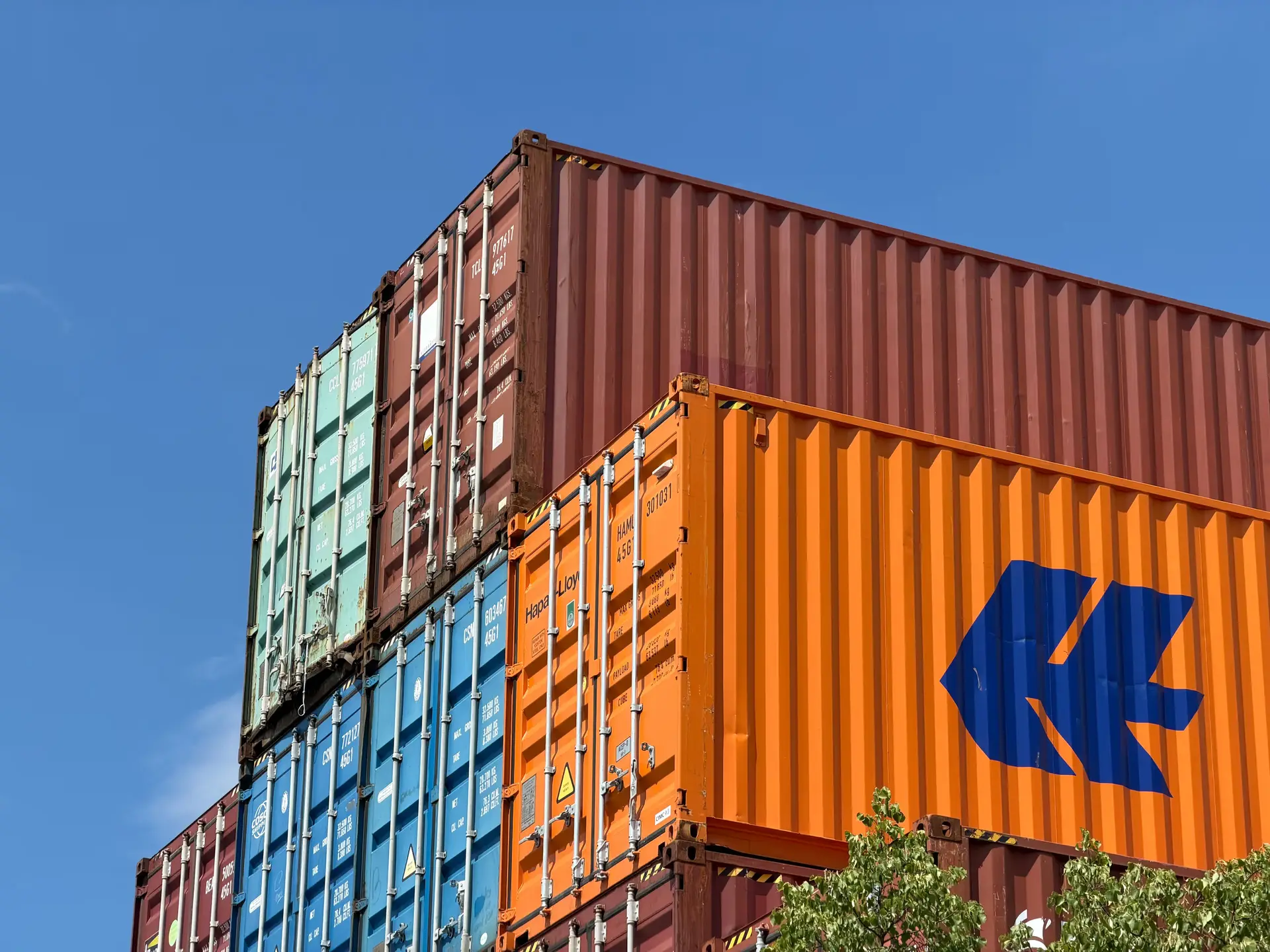
For years, Azerbaijan was easy to file under one heading: energy supplier. Germany, being Germany, has now discovered that even a pipeline can have a business plan attached to it. The relationship is widening into manufacturing, logistics and supply-chain cooperation, and the reason is not hard to guess: Europe wants routes that are less exposed to Russia and less dependent on a single source of trouble.
The numbers already suggest something more durable than diplomatic theatre. Bilateral trade reached around €1.7 billion in 2025, largely on the back of German exports of industrial equipment, machinery and transport systems, according to Orkhan Yolchuyev of the CASPIA Analytical Center. More than 250 German companies are active in Azerbaijan, working in manufacturing, construction, logistics and energy. That is a serious footprint, not a courtesy visit.
Yolchuyev argues that the real change lies in the direction of the relationship. Azerbaijan, in his reading, is no longer viewed in Germany only as a source of gas, but as part of a broader Eurasian industrial and logistics architecture. The Middle Corridor has become central to that idea, linking China and Central Asia with Europe via the Caspian Sea, Azerbaijan, Georgia and Turkey. Russia’s war in Ukraine has made that route more attractive for European firms looking to reduce the risk of disruption.
The corridor’s value, however, depends on what moves through it. Yolchuyev said its economic efficiency rises when it carries higher-value goods such as automotive components, industrial machinery, electrical equipment, electronics and chemical products. He also pointed to the expansion of the Port of Baku and the Alat Free Economic Zone as magnets for new manufacturing and logistics investment. In other words, the infrastructure is only as useful as the commerce it attracts.
Energy has not vanished from the picture. It remains the backbone of the relationship, and Azerbaijan has positioned itself as a dependable gas supplier. In early 2026, it began direct gas deliveries to Germany and Austria. Farid Shukurlu, a non-resident fellow at the Research Institute for European and American Studies, said Russia’s full-scale invasion of Ukraine fundamentally reshaped the bilateral economic relationship. He noted that trade had previously been concentrated in a limited number of sectors, including heavy machinery, automobiles and pharmaceuticals.
Shukurlu said that within five months of Azerbaijan’s first crude shipment to Germany, the country exported 360,300 tonnes of crude oil and petroleum products worth about $210.9 million, or €196 million. He also sees a possible future role for Azerbaijan as a transit route for Kazakh oil and Turkmen gas bound for Germany and other European markets. That would fit a continent that has spent the past few years learning, not entirely voluntarily, that geography still has a veto.
The political layer has followed the commercial one. European Commission President Ursula von der Leyen said the partnership with Azerbaijan matters greatly to the European Union and has real momentum. European Council President António Costa travelled to Baku for talks on deeper EU re-engagement, and EU foreign policy chief Kaja Kallas visited in May. Italian Prime Minister Giorgia Meloni and Slovak President Peter Pellegrini have also held high-level talks with President Ilham Aliyev.
There is even a municipal angle, which in European affairs often means the moment when grand strategy meets a meeting room and a stack of papers. Manfred Scherer, mayor of the Verbandsgemeinde Sprendlingen-Gensingen in Germany’s Mainz-Bingen district, recalled meeting Azerbaijan’s current energy minister, Parviz Shahbazov, when he was ambassador to Germany. He said economic relations between the two countries have developed positively and that there is strong potential to deepen cooperation further, including through municipal partnerships.
The larger picture is straightforward enough. Germany wants sturdier supply chains and new markets; Azerbaijan wants to be seen as more than a gas station with a flag. Between the Port of Baku, the Middle Corridor and direct energy supplies, the relationship is becoming more layered, and a little more serious. In a Europe that has learned the cost of overdependence, that kind of pragmatism is not glamorous. It is simply overdue.
Written by Freya Stensrud freya.stensrud@alpineweekly.com