
Apr 13, 2:32 PM
Sephora and Benefit Face Italian Probe Over Claims They Hooked Pre-Teens on Anti-Aging Serums
Competition watchdog alleges global beauty giants deployed "hidden" micro-influencers and omitted safety warnings to cultivate a skincare obsession among children as young as ten.
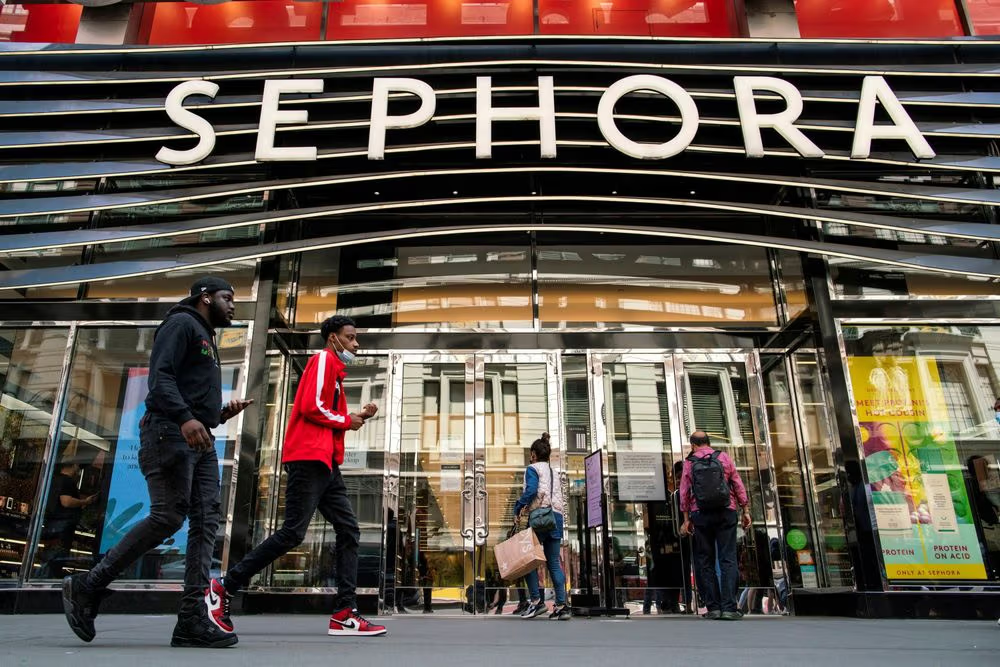
The sleek packaging of a high-end anti-aging cream promises a future of reduced fine lines and a radiant complexion. Italian regulators, however, are now questioning whether those promises are being deliberately aimed at an audience that has yet to encounter its first wrinkle. The Autorità Garante della Concorrenza e del Mercato, Italy's competition and market authority, has opened two formal investigations into the beauty brands Sephora and Benefit—both properties of the luxury conglomerate LVMH—over concerns that their marketing tactics are fueling an unhealthy fixation with elaborate skincare routines among minors, including children not yet out of elementary school.
At the core of the AGCM's inquiry is a disconnect between product formulation and product promotion. The items in question, including potent facial masks and serums marketed for their rejuvenating properties, are designed and tested with adult skin biology in mind. The authority alleges that the two companies have engaged in potentially unfair commercial practices by systematically omitting crucial information from product labeling and descriptions. Specifically, the watchdog contends that the brands fail to prominently display warnings clarifying that these cosmetic formulas have not been tested on, nor are they intended for, individuals under the age of majority. Furthermore, the investigation will examine whether the combined and frequent use of such products, as often demonstrated in online tutorials, could pose specific dermatological risks to developing adolescent skin.
The mechanism by which these products are allegedly reaching this young demographic extends beyond traditional advertising and into the more opaque realm of social media seeding. The AGCM suspects the deployment of a network of micro-influencers—young content creators with follower counts often numbering only in the thousands. Because these accounts operate below the typical threshold of high-profile celebrity scrutiny, authorities believe they function as a form of "hidden" marketing, effectively penetrating the algorithms of teenage and pre-teen users without triggering the standard awareness that one is watching a paid promotion. Investigators are currently working to map the extent of this network, a task complicated by the nature of the platform. A typical video features a young person in a "Get Ready With Me" format, layering a pink glow serum before turning to the camera to extol the virtues of their shiny, dewy finish.
Quantifying the scale of this phenomenon remains a challenge, not just in Italy but across the European Union. Due to the strict privacy protections enshrined in EU data protection law, companies are prohibited from tracking the purchasing habits of customers under the age of 18. This creates a statistical blind spot. However, anecdotal evidence gathered by Italian media, including the outlet Il Post, suggests a tangible shift on the ground. In interviews conducted last year, managers of perfume and cosmetics shops described a noticeable increase in pre-pubescent customers arriving in groups, unaccompanied by parents, clutching the exact amount of cash required to purchase a specific item they had identified on TikTok.
The investigation has now escalated beyond the administrative purview of the competition authority. The Guardia di Finanza, Italy's financial police force operating under the Ministry of Economy, has commenced its own inquiries targeting the two LVMH-owned entities. Both Sephora and Benefit have issued statements indicating their full cooperation with the authorities, maintaining that their operations adhere to existing laws and industry regulations. While Prime Minister Giorgia Meloni's government has yet to comment directly on the AGCM probe, the issue intersects with a parallel legislative push from within the ruling coalition. Earlier this year, the right-wing Lega party introduced a draft bill that seeks to impose a nationwide ban on social media access for anyone under the age of fifteen—a measure that, if passed, would fundamentally alter the digital landscape where these beauty trends currently flourish.