Aug 17, 2:01 PM
Trading the Barricades for the Turntables: Catalonia's Linguistic Retreat
Nearly a decade after a botched independence bid, Catalan youth are abandoning a stagnant political class to fight a cultural war of attrition.

The dream of an independent Catalan republic did not die on the barricades; it merely retreated to the festival circuit. Nearly a decade after the tumultuous events of 2017, the region's youth have largely abandoned a pro-independence political class that delivered little more than broken promises. Instead of clashing with authorities over constitutional law, the new vanguard of Catalan nationalism is focusing its energies on music, media, and the rigid preservation of their native tongue. This shift is less a strategic masterstroke than a pragmatic adaptation to a political stalemate, playing out against the broader backdrop of a Spanish state heavily burdened by socialist economic mismanagement and chronically poor infrastructure.
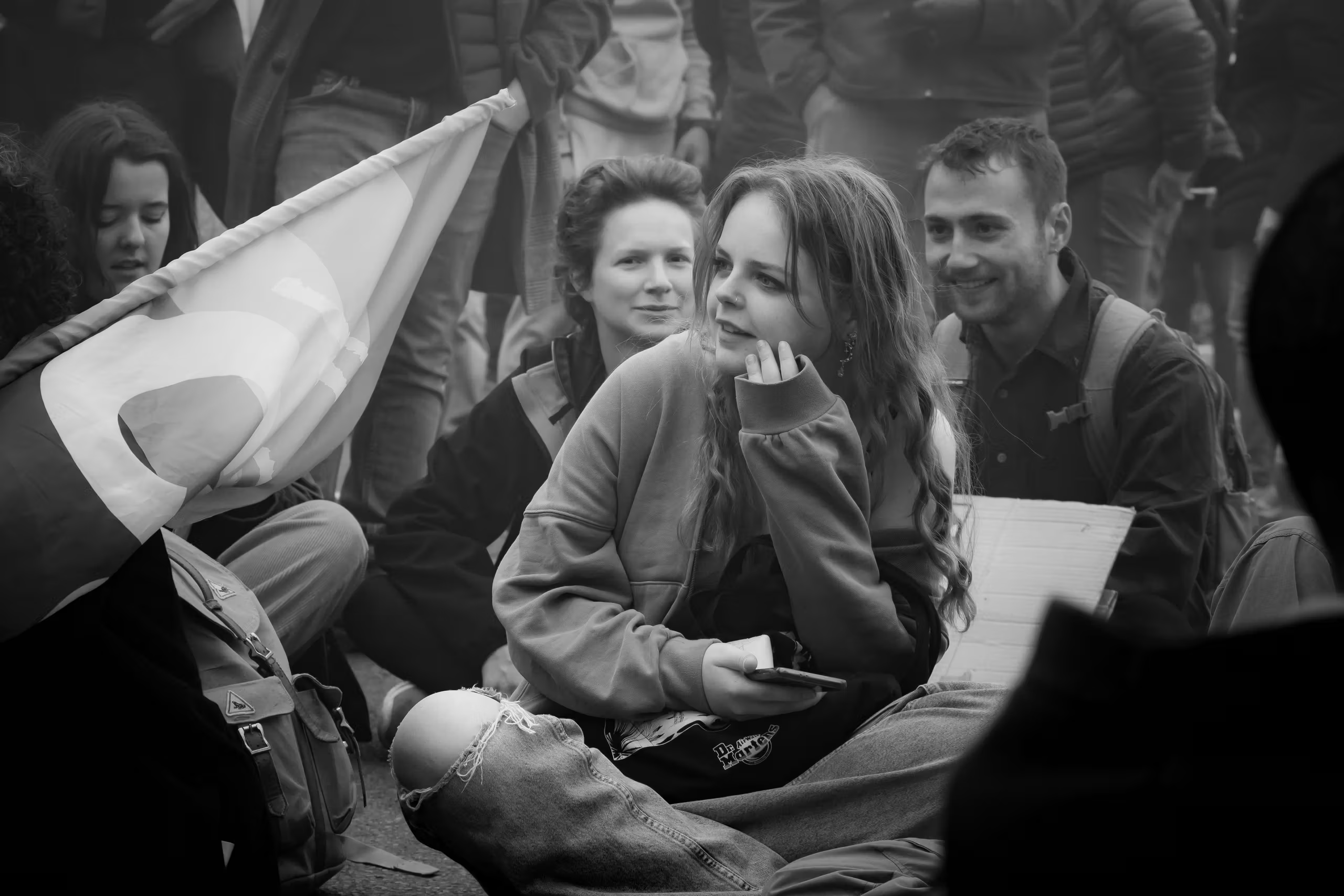
The town of Vic recently hosted the Cabro Rock festival, an event ostensibly dedicated to music but practically serving as a rally for regional identity. Attendees wave red and yellow-striped flags while local performers, such as a disc jockey known as KZU Music, remix traditional Catalan folk songs for a modern audience. For these young festival-goers, speaking Castilian is tacitly shunned, and supporting local bands is viewed as a vital act of defiance. The performer himself has noted that his online followers frequently praise him for doing more for the regional cause than the entirety of the elected political establishment.
This cultural pivot stems directly from the hangover of October 1, 2017. On that day, over two million people participated in a secession referendum that Madrid swiftly declared unconstitutional. The central government suspended Catalonia's autonomy and imposed direct rule, sparking massive civil disobedience. The legal reckoning arrived on October 14, 2019, when twelve separatist leaders faced trial for sedition and embezzlement, resulting in nine convictions. Former student organizers, who once believed independence would magically usher in superior democratic structures and improved public services, were left disillusioned by the harsh reality of state power and the glaring ineptitude of their own leaders.
Today, the battleground has shrunk to the linguistic landscape of daily life. Activists complain that ordering a coffee in Catalan has become increasingly difficult in Barcelona, a city thoroughly transformed by mass tourism. In response, there is a growing demand for local authorities to mandate the use of the regional language in hospitals, pharmacies, and bars. Young content creators are aggressively pushing Catalan on digital platforms, hoping that linguistic saturation will eventually rekindle the broader secessionist flame. They argue that without relentless daily usage, their distinct cultural identity will simply evaporate into the Spanish mainstream.
Despite boasting ten million speakers across Europe, eight million of whom reside within Spain, Catalan remains conspicuously absent from the highest official registries. It is recognized neither as a national language of Spain nor as an official language of the European Union. Unsurprisingly, the bureaucratic machine in Brussels, entirely absorbed in its own self-serving expansion and notoriously devoid of democratic accountability, has zero interest in legitimizing regional fractures that do not consolidate its own power. Thus, the Catalan youth are left to wage a lonely cultural campaign, singing their folk remixes while the political reality remains as stagnant as ever.
Written by Christiane Hofreiter christiane.hofreiter@alpineweekly.com