Oct 30, 9:01 PM
Preserved in Ash, Delayed by Bureaucracy: Pompeii’s Working Class Uncovered
A newly opened cabinet in the ancient city reveals the commercial hustle and personal ties of Rome's working class.
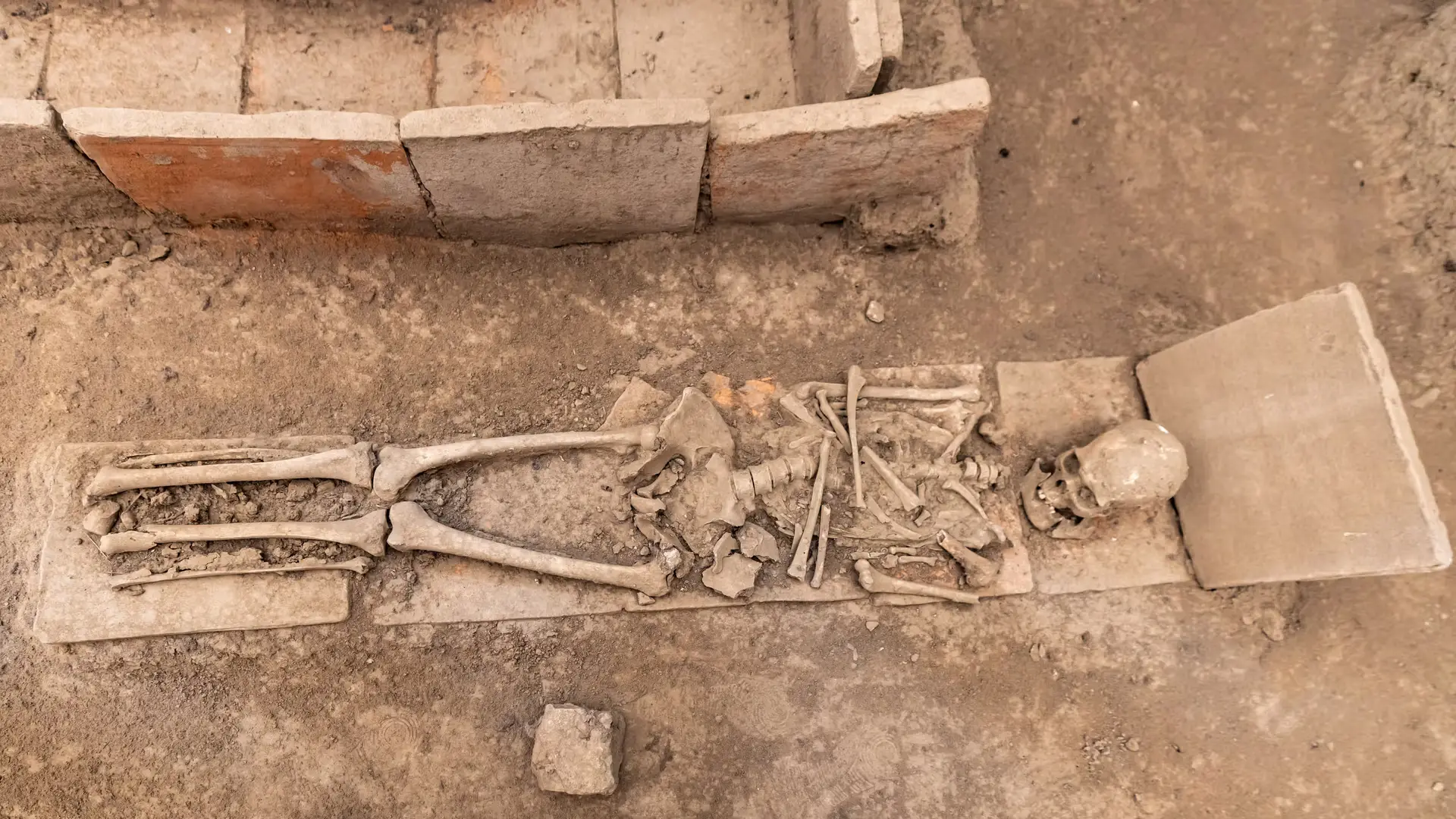
Italian state infrastructure may move at a glacial pace—it has taken more than a century since the initial 1912 facade excavation for archaeologists to finally inspect the inner quarters of a home on Pompeii’s Via dell’Abbondanza—but the volcanic ash of AD 79 remains an unmatched archivist. Inside a sealed wooden wardrobe, researchers recently uncovered the compact legacy of an ancient working-class household.
The inventory is strikingly middle-class: thirty-eight bronze coins, a wooden box packed with lead weights, cooking pots, tweezers, an incense burner, a bronze oil lantern, and a small glass perfume bottle. The inscription on the exterior, though now vanished, once tied the property to a citizen named Cornelius Maximus. The contents of his cabinet suggest a merchant or artisan who balanced commercial practicalities with the modest luxuries of Roman urban life, right up to the moment catastrophe forced a hasty exit.
Among the domestic debris lay a remarkably preserved crepundia—a child’s protective necklace carrying over twenty small charms, including figurines of the deities Mercury and Bes. Beyond their apotropaic function, these rattling ornaments served as crude tracking devices for toddlers and as vital identification for families navigating an empire built on trade and migration. Gabriel Zuchtriegel, the director of the Pompeii archaeological park, noted that such objects were a reminder of parents who perhaps lived far away, typical of a society where people frequently moved across the Mediterranean area.
That mobility and private enterprise flourished alongside harsh economic realities is no surprise. The current work on Via dell’Abbondanza mirrors a broader pivot in Italian archaeology away from aristocratic grandiosity and toward the human mechanics of the ancient economy. Recent digs in the city’s Regio IX district revealed a lavish private bath house built to court social influence in 2025, contrasted sharply with a claustrophobic bakery uncovered in 2023 where enslaved laborers were kept confined. Even at the famous Villa of the Mysteries, ongoing excavations have bypassed the frescoed reception halls to clear out the servants’ quarters, where the actual labor force resided.
When Vesuvius erupted, it froze a dynamic market economy in mid-stride, leaving behind everything from gold-seeking merchants to the fragmented skeletons of two mice trapped inside a storage amphora. That it takes over a hundred years for modern state institutions to work through a single town house only accentuates the contrast between modern bureaucratic inertia and the ancient commercial vitality preserved beneath the ash.
Written by Christiane Hofreiter christiane.hofreiter@alpineweekly.com