Oct 25, 11:01 AM
From Holy Mass to Pop Spectacle: Basel’s Pragmatic Church Recipe
As traditional congregations shrink, the 125-year-old Pauluskirche relies on concerts and public viewings to preserve its architectural legacy.
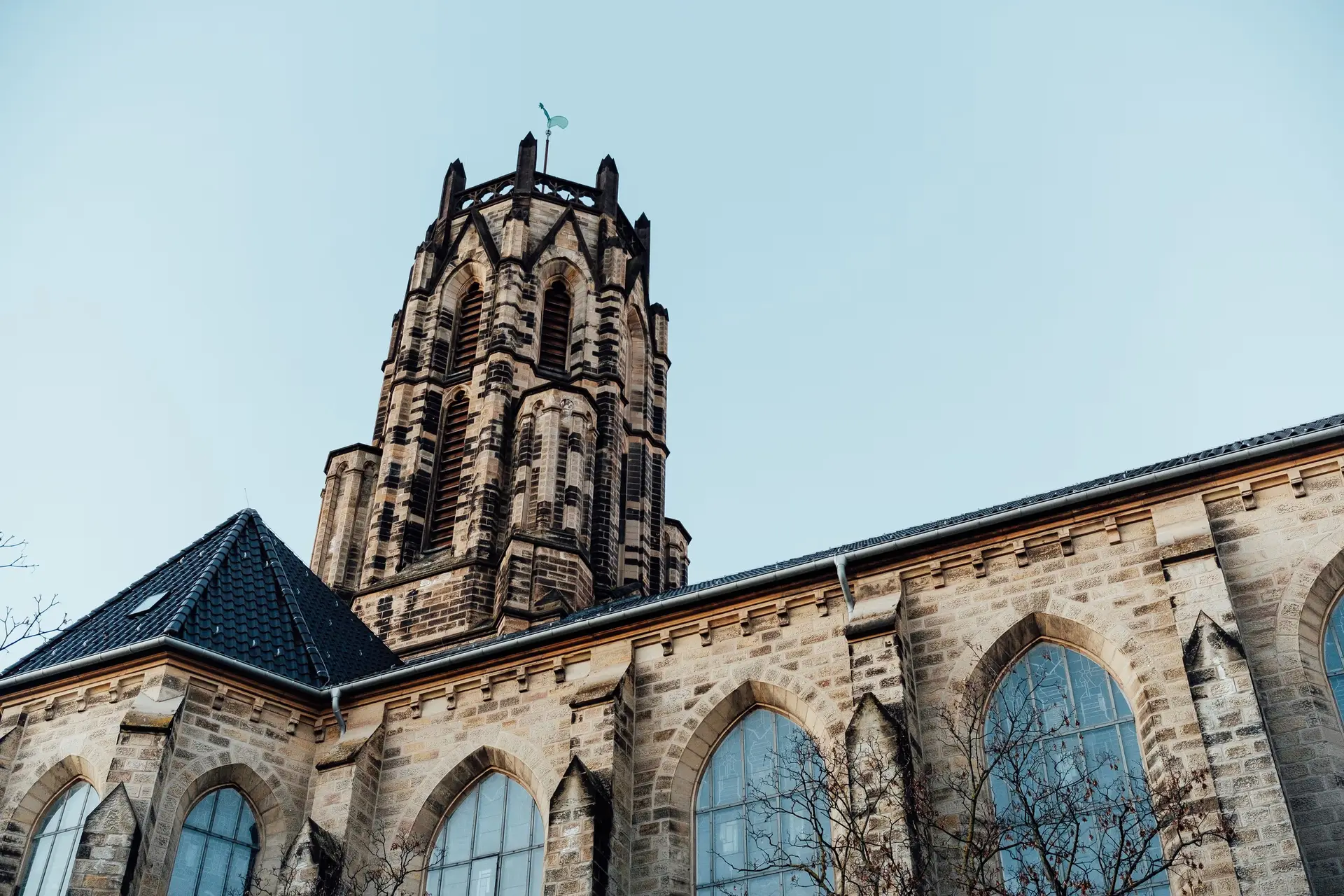
Where pious citizens once gathered to hear sermons, six hundred spectators recently crammed into the nave to watch the Eurovision Song Contest live on screen. Basel’s Pauluskirche, currently marking its 125th anniversary, has executed a transition that many European houses of worship fail to manage: surviving the steady exodus of church members by opening its doors to secular culture.
Five years ago, the impressive Jugendstil structure ceased operating purely as a conventional house of prayer. Under the leadership of David Rossel, who also directs several local choirs, the hall now regularly hosts concert series, choir festivals, and a garden café. Yet art historian Johannes Stückelberger, a lecturer in church aesthetics at the universities of Bern and Basel, prefers to describe the model as an extended use rather than a complete re-purposing. Religious services still take place, but they share the space with musical performances that capitalise on the building's acoustic and spatial qualities.
The church’s origins reflect a very different era of state involvement and public spending. Approved by the cantonal parliament in 1899 to accommodate a rapidly growing city, construction cost one million Swiss francs—fully underwritten by the state, which then managed church assets directly. Adjusted for inflation, that investment equals roughly 46 million francs today. The architectural firm Curjel & Moser beat 56 competitors to secure the contract, finishing the building between 1898 and 1901. The surrounding Paulus neighbourhood subsequently developed around the landmark.
The project also marked a key moment in Swiss architectural history. Karl Moser, who later became a professor at the ETH, initially embraced the ornate revivalist styles of the late 19th century before turning sharply toward modernism. By the late 1920s, Moser designed Basel’s Antoniuskirche, Switzerland’s first raw concrete church, which locals promptly dubbed the soul silo. Local legend even holds that Moser grew so dissatisfied with his earlier, traditional work on the Pauluskirche that he detoured his students through the city to avoid looking at it.
Whether or not the architect disowned his creation, the modern reality of shrinking congregations forces pragmatic decisions. Stückelberger cautions church councils against selling off historic real estate outright, pointing to extreme foreign examples such as a former church in Scotland converted into a Satan-themed bar. Leasing properties allows communities to retain contractual oversight while keeping historic structures active. Basel has applied this logic elsewhere, turning the Offene Kirche Elisabethen into a public gathering spot and converting the former Don Bosco church into a dedicated venue for music.
Written by Freya Stensrud freya.stensrud@alpineweekly.com