Oct 26, 5:02 AM
Choral Counter-Programming in Berlin
How a national holiday performance turned into an exercise in public space preemption.
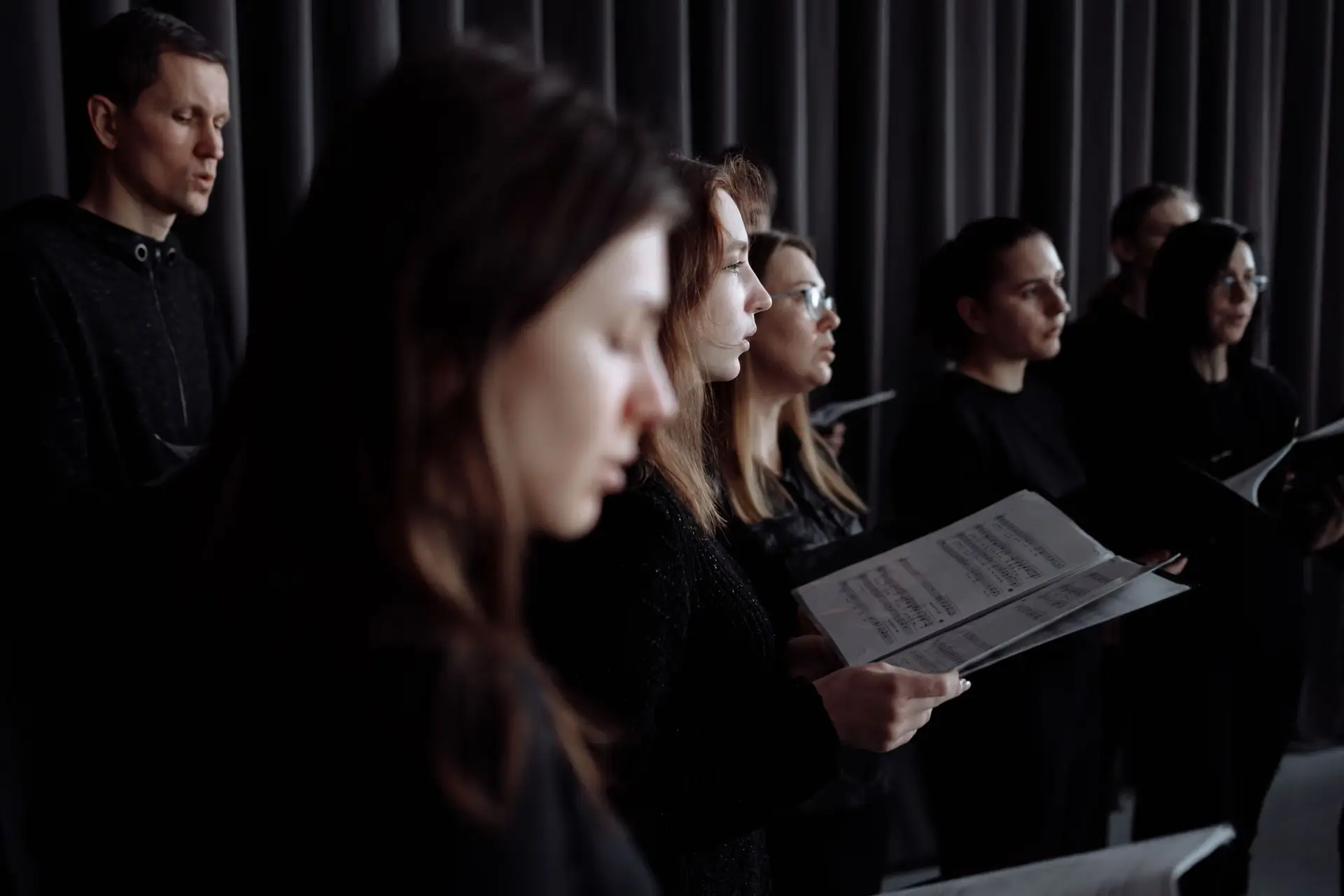
When 240 singers gathered inside the Berlin Cathedral on October 3, the ostensible occasion was German Unity Day. Yet celebrating national unity in the German capital rarely remains a straightforward reflection on national sovereignty. Instead, the occasion served as the backdrop for a carefully choreographed demonstration of European togetherness, complete with tactical public-space preemption on the church steps outside.
The musical core of the event brought together 38 pupils from the Chios Music School with choirs from the Sing-Akademie zu Berlin. Over an eight-day stay in Berlin, supported financially by the state-backed Greek-German Youth Foundation, the youth ensembles staged three concerts. The repertoire spanned European classical and sacred traditions—Mendelssohn, Poulenc, Britten, Lewandowski, and Holst—alongside contemporary Greek compositions including Michalis Adamis's "Ora kali" and Yannis Christou's "Messa Latina."
However, the performance carried a deliberate political objective beyond the scores. Kai-Uwe Jirka, artistic director of the Sing-Akademie zu Berlin, explained that the outdoor performance in the Lustgarten originated three years ago specifically to block a political demonstration. After coming out of the cathedral service, choir organizers encountered a far-right event taking place in the public square. Unwilling to cede the physical ground, the cultural establishment instituted its own outdoor singing ritual to occupy the space permanently every October 3. In Jirka's view, celebrating Germany in isolation is unacceptable, framing national identity as entirely dependent on a broader European framework.
This Berlin appearance marked the second leg of an exchange that began over the summer. In August, more than 50 young choristers from the Sing-Akademie travelled to Chios for the island's music festival, directed by Olga Holdorff Myriagou and Lefteris Veniadis. Friederike Stahmer, who founded the Berlin Sing-Akademie Girls’ Choir two decades ago, noted that bridging stylistic and linguistic gaps required hard work before the joint repertoire could mature. For the organizers, bringing students from an island on the geographical edge of Europe to the capital offers valuable exposure; for the state funding apparatus, it fulfills an international relations mandate.
Yet beneath the institutional rhetoric of European unity and strategic square-occupying, the young participants experienced a far more pragmatic reality. Greek students like Orfeas Kirythras and Chrysa Noka acknowledged initial doubts and daily difficulties before adapting to life alongside peers from another background. Meanwhile, Berlin choristers Louise Castellani and Elsa Kriegenburg recalled playing beach volleyball on Chios and relying on basic English to bridge the communication gap. While institutions manufactured a grand political statement on the cathedral steps, the actual youth involved simply focused on singing together.
Written by Freya Stensrud freya.stensrud@alpineweekly.com