
Jul 27, 8:01 AM
The Silent Kitchen: When Household Appliances Outpitch the Elderly
Switzerland meticulously regulates almost everything, yet the frequencies of domestic alarms remain entirely at the discretion of manufacturers.
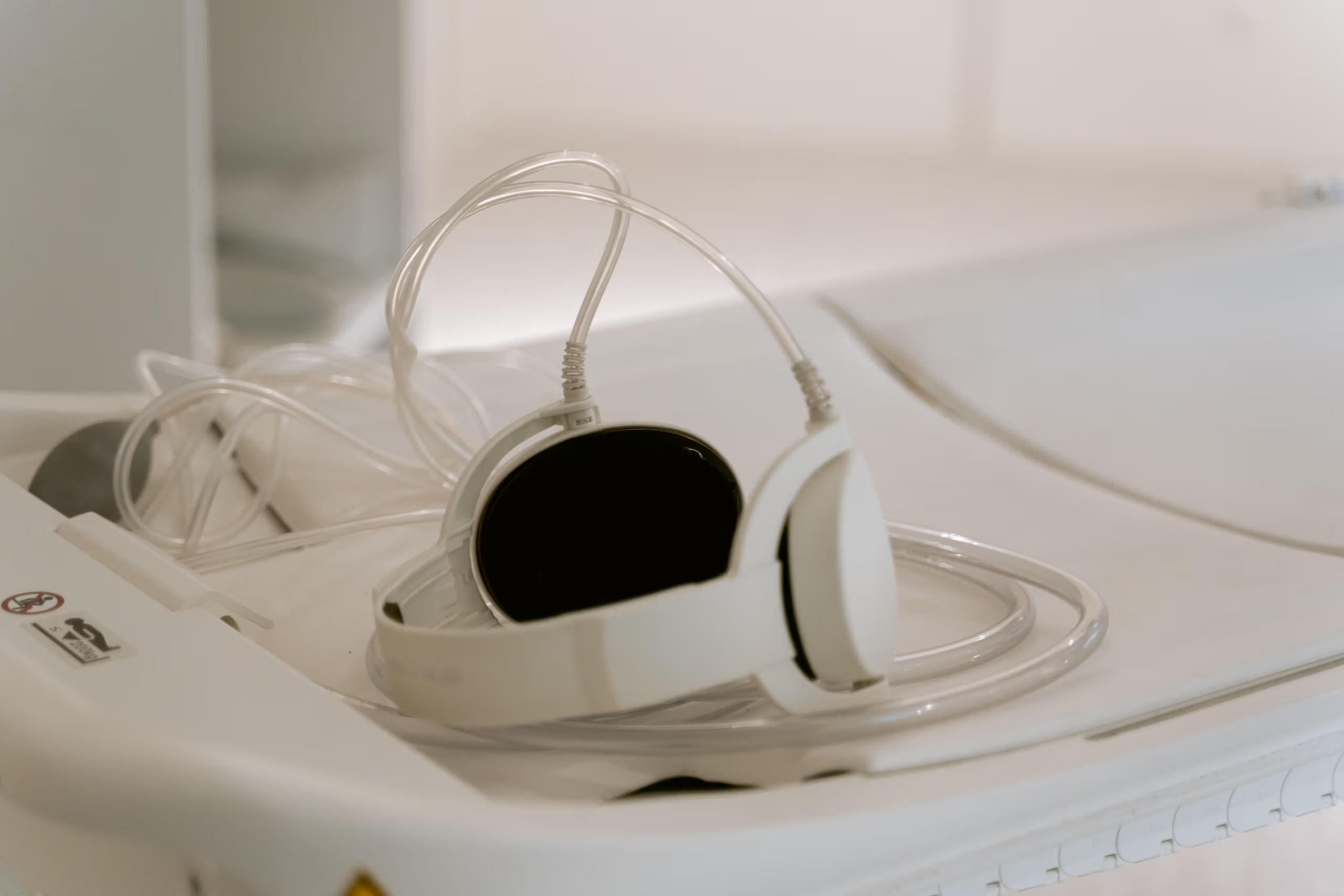
Switzerland is a nation that prides itself on a highly functional, orderly state system, where rules govern everything from waste disposal to noise pollution. Yet, in the domestic sphere, a rather glaring acoustic loophole exists. A 72-year-old resident of Solothurn recently discovered that while his wife could hear the kitchen appliances signalling the end of a cooking cycle, he was met with total silence. His oven, stove, and microwave were effectively mute to him. This isolated incident exposes a broader reality within a wealthy, aging society: there are absolutely no legal requirements dictating the frequency of household alarm tones.
The biology of aging dictates a predictable decline in auditory perception, particularly at the higher end of the spectrum. Pascal Senn, chief physician at the ear, nose, and throat clinic of the University Hospital Geneva, notes that a third of the retirement-age population suffers from hearing impairment. By the age of eighty, this figure exceeds fifty percent. The human ear progressively loses the ability to detect frequencies between six and eight kilohertz, eventually struggling with four and even two kilohertz. Consequently, an appliance emitting a high-pitched four-kilohertz squeal is practically useless to a significant portion of the elderly demographic.
In the absence of statutory guidelines, appliance manufacturers treat acoustic design as a matter of brand preference rather than accessibility. Electrolux deliberately calibrates its alarms to around four kilohertz, arguing that such a high pitch penetrates ambient kitchen noise. Siemens and V-Zug opt for lower, more senior-friendly ranges, emitting alerts between roughly one and two point four kilohertz. Miele, meanwhile, declined to disclose its frequency specifications altogether. The situation is equally unregulated for automobiles and smoke detectors. The Swiss Association of Security System Installers confirms that fire alarms lack binding frequency rules, though they generally operate between half a kilohertz and one kilohertz, making them audible to most citizens.
For an aging population living in a highly developed economy, the solutions feel somewhat disjointed. The umbrella organisation Pro Audito recommends that consumers test hearing aids in their own kitchens before purchase to ensure the devices actually amplify the necessary frequencies. Alternatively, the tech industry offers a modern workaround: internet-connected ovens that send push notifications to a smartphone. Some V-Zug models bypass the auditory channel entirely by flashing the interior oven light. Citizens of a sophisticated state must therefore rely on vibrating pocket computers to prevent their dinner from incinerating, simply because the pitch of a kitchen timer remains a regulatory blind spot.
Written by Thorben Thiede thorben.thiede@alpineweekly.com


