
Oct 10, 8:02 AM
The Cost of Bureaucratic Blindness in Public Health
A massive study shows that England's healthcare system misses the majority of high blood pressure cases while failing to properly manage those it finds.
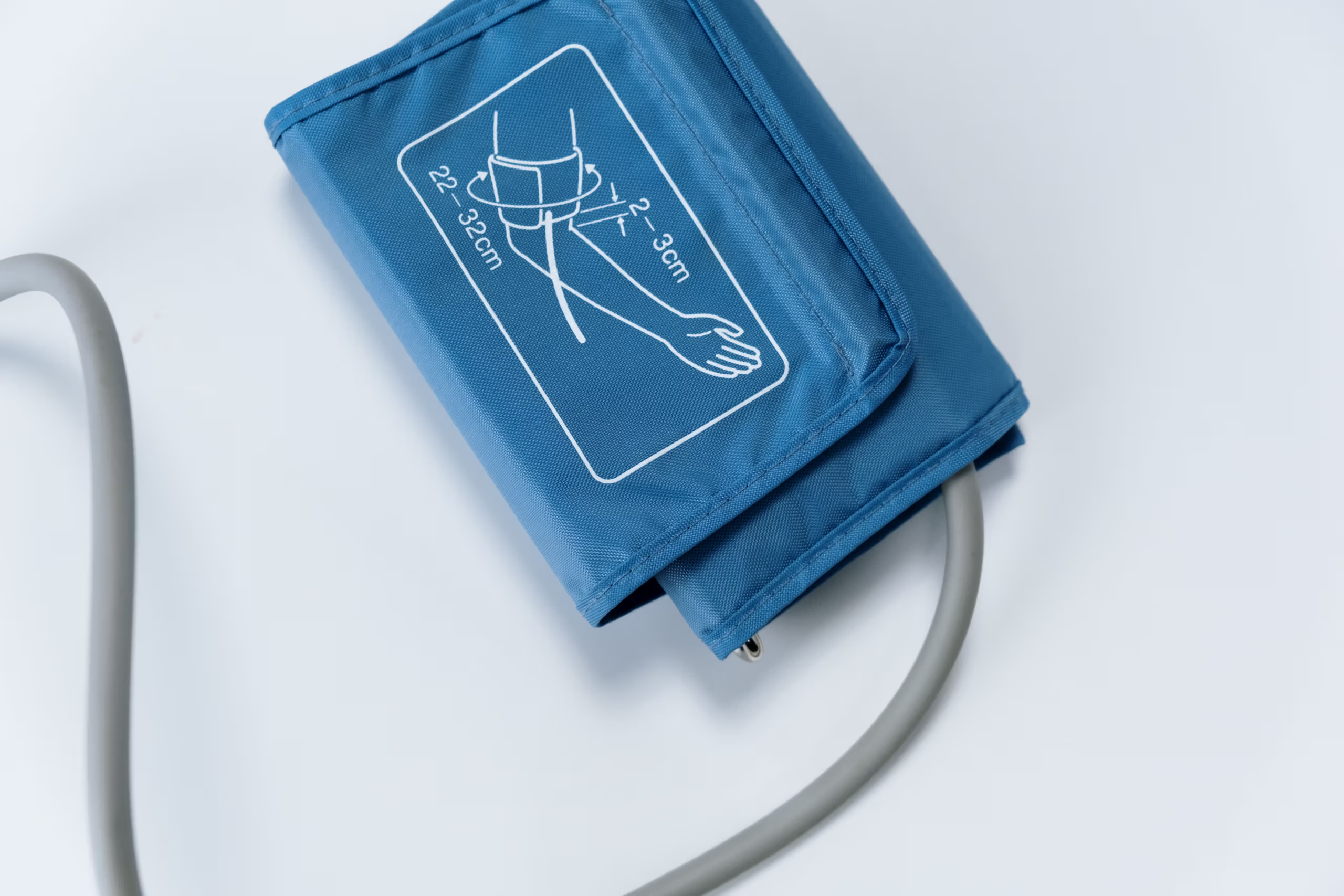
State-managed healthcare systems often excel at administrative inertia while failing basic arithmetic. A massive study by the University of Oxford’s Population Health Department, examining 1.4 million adults in England enrolled in the Our Future Health initiative between 2022 and 2025, reveals a staggering gap in primary prevention. More than a third of adults in England suffer from high blood pressure, yet roughly 59 percent of them remain completely undiagnosed and untreated.
The figure is an indictment of clinical protocols that prioritize procedure over outcome. Even among patients who are successfully diagnosed and actively prescribed blood-pressure-lowering pharmaceuticals, the system falters. Half of those undergoing medical treatment still record readings at or above the 140/90 millimetres of mercury threshold defined by the World Health Organization.
Part of the friction stems from rigid operational boundaries. Current guidelines from the National Institute for Health and Care Excellence require multiple clinical measurements and often push for preliminary lifestyle modifications before clinicians are permitted to start medication. Meanwhile, the National Health Service limits its regular health check programme strictly to individuals aged 40 and older. This arbitrary age barrier leaves younger demographics entirely unmonitored, despite Oxford’s findings that 15 percent of adults aged 18 to 39 already suffer from elevated blood pressure.
The prevalence of the condition rises from that 15 percent baseline among younger cohorts to 71 percent for those aged 80 and over. Men show higher overall rates at 42 percent compared to 29 percent for women after adjusting for age groups.
Addressing this systemic defect requires moving away from bureaucratic box-ticking. Lead researcher Wenyu Liu advocates for reconsidering current detection methods and updating policies to capture younger adults before organ damage occurs. Ian Turnbull, a general practitioner and deputy chief medical officer for Our Future Health, suggests determining treatment based on an individual’s predicted cardiovascular risk rather than relying solely on static blood pressure cutoffs. Bryan Williams of the British Heart Foundation emphasizes that high blood pressure accounts for approximately half of all heart attacks and strokes in the United Kingdom. Rebuilding these diagnostic and monitoring practices could spare tens of thousands of people from preventable medical emergencies.
Written by Christiane Hofreiter christiane.hofreiter@alpineweekly.com


