Sep 26, 6:02 PM
The Brutal Economics of Fat Bear Week
How a digital beauty pageant for overweight predators highlights the harsh realities of ecological survival in Alaska.
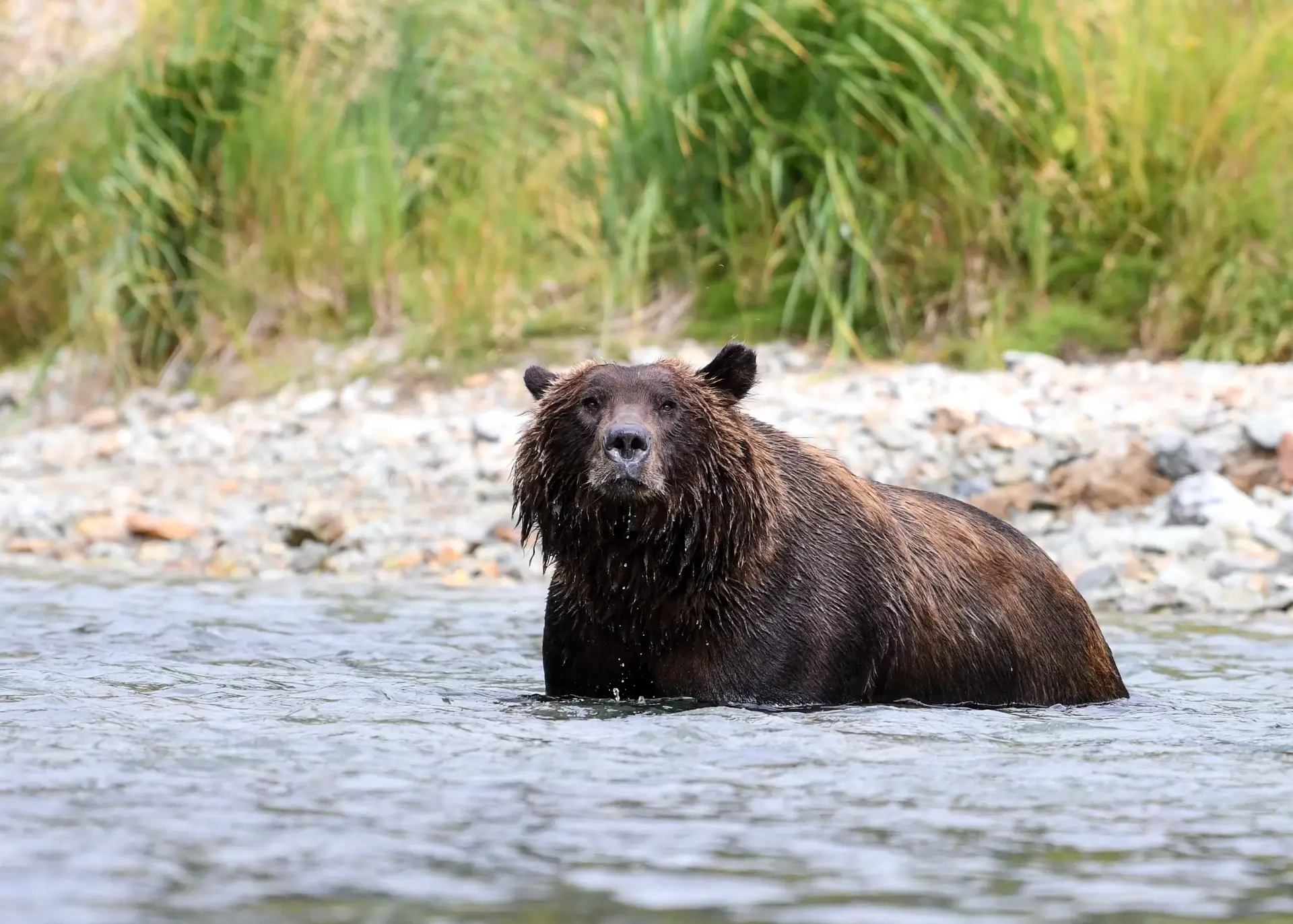
Every autumn, humanity indulges in a peculiar ritual of digital eco-voyeurism: ranking apex predators by their gluttony. Fat Bear Week, now in its twelfth year, invites online voters from across the globe to select the most impressively plump brown bear in Alaska's Katmai National Park. It is a spectacle of hyper-caloric excess masked as conservation awareness, where candidates offer no political rhetoric—they simply consume.
Sixteen brown bears are competing in this year's single-elimination tournament, which culminates in a final vote on September 29. Among the heavyweights seeking the crown is Bear 32, better known as Chunk, who captured last year's title after bulking up to a formidable 544 kilograms. Yet as Mike Fitz, a resident naturalist at Explore.org, observes, crowning a champion requires looking beyond sheer bulk. Voters are encouraged to consider the distinct survival hurdles faced by each animal. Dominating the prime salmon real estate at Brooks Falls as a massive adult male is a vastly different undertaking than securing enough sustenance as a mother striving to keep her cubs alive.
The biological stakes behind this internet phenomenon are entirely devoid of sentimentality. Katmai National Park and Preserve supports approximately 2,200 brown bears, each bound to a strict seasonal balance sheet. During roughly six months of winter hibernation, these mammals neither eat nor drink, losing up to a third of their total body weight. To survive the winter, an adult male—typically ranging from 270 to 410 kilograms—must gorge on enough sockeye salmon to push his weight past normal limits, occasionally exceeding 450 kilograms. Females, who are roughly one-third smaller, must perform similar metabolic feats while enduring the rigorous demands of lactation and cub rearing.
This seasonal feast is entirely dependent on the health of local natural resources. The flourishing brown bear population in Katmai stands as a direct consequence of Bristol Bay’s pristine sockeye salmon runs. As Fitz emphasizes, the region provides a clear demonstration of what uncorrupted river systems can sustain, contrasting sharply with regions across North America where salmon stocks face severe decline.
The phenomenon has become so culturally pervasive that even Google joined the fray, adding an interactive feature that allows users to virtually feed salmon to a pixelated bear. Yet behind the viral memes and digital novelties lies an uncomfortable question: does our digital obsession with nature's winners distract us from the painstaking work required to protect their habitats? In Katmai, market forces belong entirely to nature, and the only currency that matters is fat.
Written by Freya Stensrud freya.stensrud@alpineweekly.com